
Plants
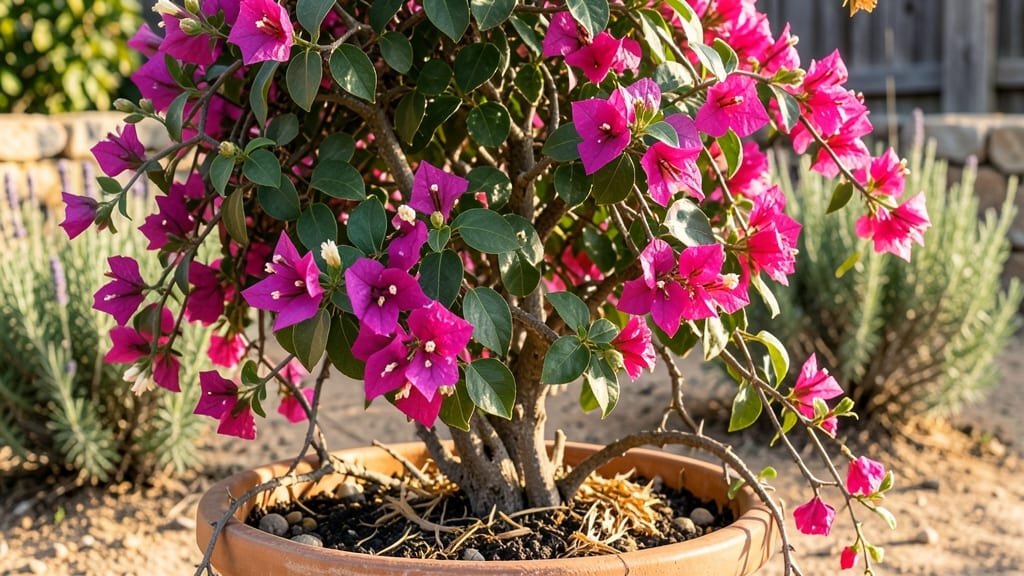
Bougainvillea plants are not perennial in cold climates, as they thrive only in USDA Zones 9–11. In colder regions, they die back annually but can be overwintered indoors or with protective measures to regrow each spring. Proper care extends their lifespan beyond a single season.
Bougainvillea's tropical nature makes it sensitive to frost, which is why it struggles outside Zones 9–11. 🌡️ When temperatures drop below 25°F, the plant's delicate stems and leaves freeze, leading to complete dormancy or death.
Even in mild winters, the plant may shed leaves but can recover with proper overwintering techniques. Many gardeners in colder climates treat bougainvillea as an annual, though with the right care, it can return year after year.
What sets bougainvillea apart is its ability to regenerate from cuttings or roots, even after severe cold damage. This resilience makes it worth the effort to protect during winter months. The key is understanding when to prune and how to store the plant safely until spring.
With these strategies, you can enjoy vibrant blooms season after season, regardless of your climate zone.
💡 In This Article
- Bougainvillea Cold Hardiness Zones Explained
- How to Overwinter Bougainvillea in Cold Climates
Bougainvillea cold hardiness zones explained
The USDA hardiness zones where bougainvillea thrives—Zones 9–11—reflect its tropical origins, where winter temperatures rarely drop below 25°F. These zones represent the average annual minimum temperatures of 20–30°F, creating ideal conditions for bougainvillea's semi-woody stems and thin leaves.
Outside this range, the plant's cellular structure freezes, disrupting water transport and causing irreversible damage to its vascular system.
Bougainvillea's sensitivity to cold stems from its evolutionary adaptation to warm climates. 🌡️ Its leaves contain high concentrations of water, which expands when frozen, rupturing cell walls—a process called cryodamage. Even brief exposure to 30°F or lower can trigger dormancy or death, depending on the plant's age and health.
In contrast, cold-hardy plants like roses or hydrangeas have developed protective mechanisms like antifreeze proteins or thick bark to survive -10°F or colder.
What makes bougainvillea unique is its ability to regenerate from woody cuttings or roots, even after severe frost damage. This trait allows gardeners in colder zones to propagate new plants each spring, though the parent plant may not survive.
The key difference between dormancy and death lies in the plant's ability to regrow from protected tissues—like the stem base—rather than relying on stored energy in roots or bulbs, as many perennials do.
Consider these critical temperature thresholds for bougainvillea care:
- 25°F: The absolute minimum for survival; leaves and new growth will freeze.
- 30°F: Leaves may blacken but stems often survive with proper protection.
- 35°F: Minimal damage occurs, but prolonged exposure can weaken the plant.
In Zone 8 or colder, bougainvillea requires year-round protection, such as growing in containers for indoor overwintering. The plant's tropical nature means it lacks the cold-resistant adaptations of native perennials, making it dependent on human intervention to persist beyond one growing season. 🌿
For gardeners in marginal zones (Zone 8a), the challenge lies in balancing protection with the plant's need for full sun and well-draining soil—a combination that's difficult to replicate indoors. This is why many treat bougainvillea as an annual, despite its potential for multi-year growth with proper care.