
Plants
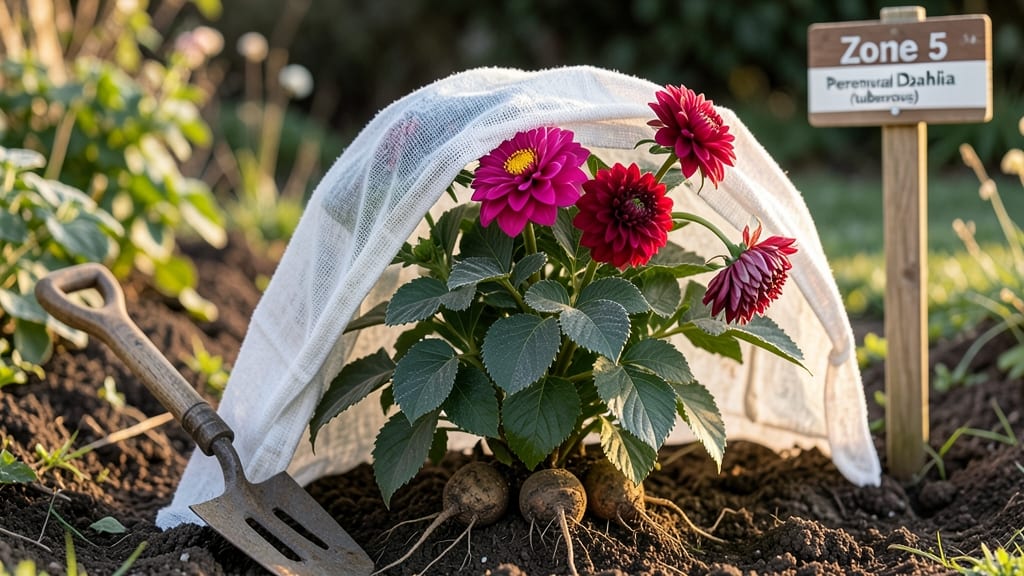
Dahlias are not true perennials in Zone 5—they die back to the ground each winter but must be dug up and stored indoors to survive. Without protection, their tubers freeze and the plant will not regrow in spring.
In Zone 5's harsh winters, dahlias behave more like seasonal plants than true perennials because their underground tubers lack natural frost resistance. 🌱 The key difference is that while some perennials survive winter dormancy in the soil, dahlia tubers need protection from temperatures below 20°F.
I've found that even a single freeze can damage tubers, and many gardeners mistakenly assume these plants will return year after year without intervention. The good news? With proper storage, you can enjoy the same dahlia varieties for decades.
This dieback cycle explains why many gardeners struggle with dahlia regrowth—what appears to be a "dead" plant in winter is actually a dormant tuber waiting for spring warmth to trigger new growth.
The storage process mimics nature's cues by replicating the ideal conditions these tubers would need to survive outdoors in warmer climates.
💡 In This Article
- Why Dahlias Die Back in Zone 5 Winters
- How to Overwinter Dahlias in Zone 5 Gardens
Why dahlias die back in Zone 5 winters
Dahlias enter a deep dormancy cycle when temperatures drop below 50°F, but their tubers lack the natural frost resistance of true perennials like peonies or hostas. The tuber's outer skin contains minimal protective compounds, making it vulnerable to freezing.
In Zone 5, where winter temperatures often plummet to -10°F or lower, unprotected tubers will develop ice crystals that rupture cell walls, causing irreversible damage.
This is why you'll see dahlia foliage blacken and collapse in early fall - it's not death, but the plant's survival mechanism kicking in to preserve its energy reserves underground.
The critical threshold is 20°F - any colder and tuber cells begin to freeze. What makes this especially tricky is that dahlia tubers don't have the protective bark layer found in woody perennials. Instead, they rely on a thin, papery skin that's easily penetrated by moisture and cold.
When you consider that Zone 5's average first frost occurs around October 15th, gardeners have just 6-8 weeks to properly prepare tubers for storage before winter sets in. The soil temperature must stay above 55°F for at least 2 weeks before digging to prevent shock to the tubers.
What most gardeners don't realize is that dahlia tubers actually need a period of cold exposure to break dormancy in spring. This process, called vernalization, occurs when tubers experience temperatures between 35-45°F for 4-6 weeks.
Without this cold treatment, stored tubers may sprout weakly or develop multiple shoots, resulting in stunted plants. This is why gardeners in warmer climates (Zones 8+) can leave dahlias in the ground - their winter temperatures naturally provide this vernalization period while remaining above freezing.
Here's what happens when tubers freeze: the starches stored in the tuber cells convert to sugars as a protective measure, but the ice formation creates sharp crystalline structures that pierce cell membranes. This damage is permanent and cannot be reversed even if you later store the tubers properly.
The visual difference between a healthy tuber and a frozen one is striking - healthy tubers have firm, papery skins with no soft spots, while frozen tubers develop mushy areas that smell slightly sweet and fermented when cut open.
Interestingly, dahlia tubers contain higher concentrations of phenolic compounds when exposed to cold, which actually helps protect cell membranes. However, this natural defense mechanism is overwhelmed by Zone 5's extreme cold.
The good news is that with proper storage techniques, you can maintain tuber viability for 5-10 years or more, making dahlias effectively perennial in your garden despite their biological limitations in cold climates. 🌱
Consider this comparison: while peonies can survive -20°F winters because their roots develop protective layers of insulation, dahlia tubers have no such adaptation. Their survival strategy relies entirely on being dug up before winter and stored in conditions that mimic their native tropical highland environments (where they originally evolved).
This is why proper overwintering isn't just about survival - it's about replicating the precise conditions these plants need to thrive year after year.