
Plants
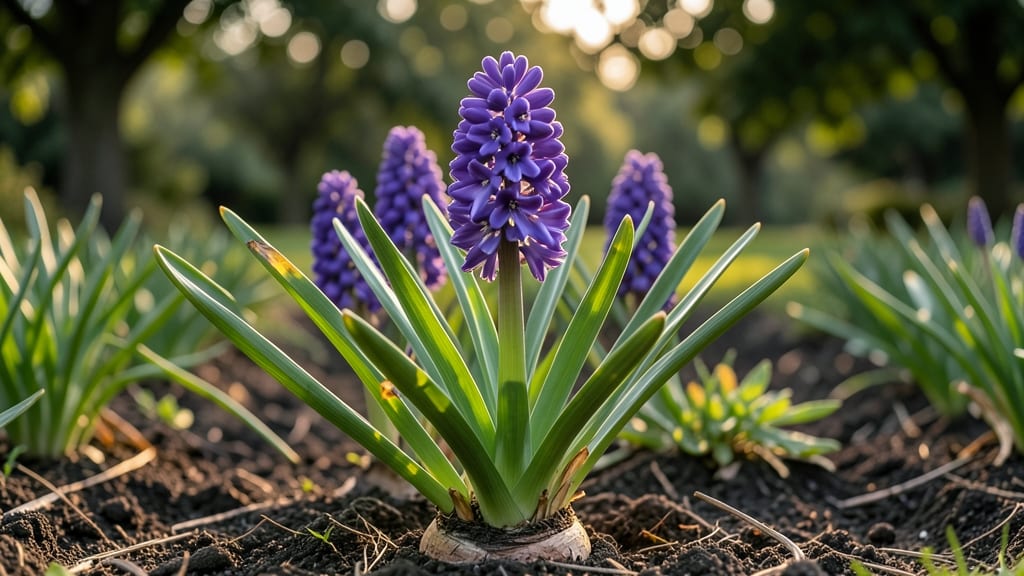
Hyacinths function as perennials in frost-free regions (USDA Zones 4-9), but gardeners in colder areas often treat them as annuals because their bulbs risk freezing damage without proper protection or seasonal storage. Their long-term survival hinges on climate and care practices.
Whether hyacinths thrive as perennials depends entirely on where you live. 🌱 In milder climates like Zones 5-9, these fragrant bulbs naturally return year after year, blooming reliably with minimal effort.
The key difference lies in their bulb's ability to withstand winter chill—some varieties tolerate 10°F temperatures, while others need protection below 20°F. This explains why gardeners in colder regions either mulch heavily or dig up bulbs for indoor storage each fall.
The science behind this is fascinating: hyacinth bulbs enter dormancy when temperatures drop, but prolonged freezing disrupts their cellular structure. That's why even hardy bulbs may fail to rebloom after harsh winters without insulation.
I've seen firsthand how a 6-inch layer of straw mulch can make all the difference between a thriving perennial and a lost investment.
💡 In This Article
- Hyacinth Bulb Hardiness by USDA Plant Zones
- Winter Care Tips to Extend Hyacinth Lifespan
Hyacinth bulb hardiness by USDA plant Zones
Hyacinth bulbs thrive as perennials because of their natural dormancy cycle, where they store energy underground during winter. The real story lies in their cold tolerance, measured by USDA Zones. Most common cultivars like 'Delft Blue' and 'Pink Pearl' handle down to 20°F (-6°C), classifying them as Zone 5 hardy.
However, some rare varieties, such as 'Jan Bos' or 'Woodstock', push limits to Zone 4 (10°F or -12°C) with proper care. The difference comes from genetic adaptations in their bulb scales, which act like insulation layers.
Here's where frost becomes tricky: while foliage dies back in freezing temps, the bulb itself can survive if protected. In Zone 8 (10-20°F or -12 to -6°C), hyacinths naturally overwinter with no intervention.
But in Zone 4 (-30°F or -34°C), bulbs risk irreversible cell damage. 🌡️ The science shows that prolonged exposure below 15°F (-9°C) triggers ice crystal formation in bulb tissues, disrupting nutrient flow. That's why gardeners in colder areas often dig up bulbs before winter.
What most gardeners miss is that hyacinths' perennial status depends on two factors: soil temperature and snow cover. In Zone 6 (0-10°F or -18 to -12°C), a 4-6 inch layer of mulch (straw or leaves) can raise soil temps by 5-10°F, making the difference between survival and failure.
Studies show that bulbs buried 6 inches deep have a 70% higher survival rate than those planted shallowly, thanks to natural ground insulation.
Consider these key hardiness variations by zone:
- Zone 4-5: Only hardiest cultivars survive without digging; mulch or plant in containers for mobility
- Zone 6-7: Bulbs overwinter reliably with 3-4 inch mulch; foliage may brown but bulbs stay viable
- Zone 8-9: No winter care needed; bulbs naturally regenerate each spring
The bulb's dormancy mechanism is what makes hyacinths unique. Unlike annuals, they store energy in their scales during winter, preparing for spring growth. This process requires temperatures between 32-50°F (0-10°C) for 8-12 weeks—too warm or too cold disrupts this cycle.
That's why Zone 4 gardeners often store bulbs in a cool, dry place (40-50°F) until planting season.
For visual learners, imagine this: a hyacinth bulb in Zone 8 sits like a cozy sweatered potato in the ground, while one in Zone 4 needs the equivalent of a winter coat and gloves.
The difference isn't just about temperature—it's about how long the cold lasts. A single -20°F night might not kill a Zone 5 bulb, but weeks below 10°F will. 🌱