
Orchid Care
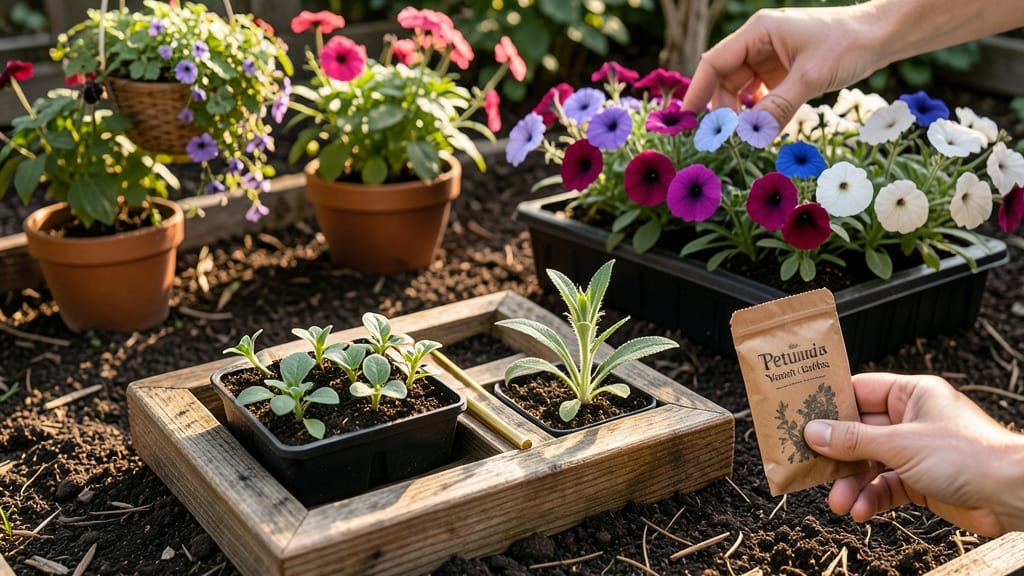
Whether petunias are annuals or perennials depends on your climate: they thrive as annuals in most U.S. regions but become perennials in frost-free zones (USDA Zones 10-12), where they regrow naturally each year.
This distinction comes down to temperature tolerance.
Petunias are tropical plants that can't survive freezing—frost damages their delicate cells and kills the roots, forcing gardeners in colder zones to replant yearly. 🌱 In warmer climates like Southern California or Florida, they happily return from their own roots after winter, making them true perennials.
The key difference lies in how well they handle dormancy: while they might look dead in winter, their roots can survive underground in mild climates.
For gardeners outside frost-free zones, there are still ways to extend their lifespan beyond one season through creative growing techniques. Many people successfully overwinter petunias in containers indoors or use heavy mulch to protect them from light freezes.
The science behind this is fascinating—petunias enter a dormant state when temperatures drop, and with the right care, they can break dormancy again in spring.
💡 In This Article
- Petunia Lifespan Science: How Freezing Temperatures Kill Them
- Growing Petunias as Perennials in Cold Climates: Step-by-Step
Petunia lifespan science: how freezing temperatures kill them
Petunias originate from South America's tropical regions, where temperatures rarely drop below 50°F. Their biological makeup is ill-equipped for freezing conditions—their thin, tender stems and leaves contain high moisture levels that crystallize when exposed to frost.
This ice formation ruptures cell walls, causing irreversible damage to the plant's vascular system. The roots, which are shallow and fibrous, are particularly vulnerable to cold soil temperatures below 40°F, leading to root rot or complete failure.
The critical threshold for petunia survival is 32°F—any colder, and the plant's metabolic processes shut down abruptly. Unlike hardy perennials that enter deep dormancy, petunias lack the protective mechanisms to survive prolonged cold exposure.
Their leaves turn brown and crispy within hours of frost, signaling the beginning of the end. Even a light freeze (28-32°F) can kill petunias, making them unreliable as perennials in most U.S. climates where winter temperatures regularly drop below freezing.
USDA Hardiness Zones 10-12 define the frost-free regions where petunias can persist year-round. In these zones, winter temperatures rarely fall below 40°F, allowing the plants to remain active or enter only a light dormancy.
The key difference is that in these climates, petunias experience winter as a mild season rather than a lethal one. Their roots remain viable underground, ready to sprout new growth when temperatures warm again in spring.
What most gardeners don't realize is how quickly frost damage occurs. A single night below 32°F can kill petunias planted in the ground, while container-grown plants may fare slightly better due to their ability to be moved indoors.
The damage isn't always immediate—sometimes the plant appears wilted but still alive, only to die off completely within days as the cold continues to stress its systems. This delayed reaction is why many gardeners mistakenly believe their petunias might recover from light freezes.
For comparison, consider how other plants handle cold: Hardy perennials like lavender or salvia can survive -10°F or lower through specialized adaptations like thick cuticles and deep root systems. Petunias, however, lack these protective features, making them fundamentally annuals in climates where freezing is common.
Their tropical origins mean they're more akin to houseplants than traditional perennials in terms of cold tolerance.
The USDA zone system helps predict this behavior by mapping average annual minimum temperatures. Zone 10 sees winters rarely below 30°F, while Zone 12 never drops below 50°F.
This gradient explains why petunias thrive as perennials in Hawaii or Southern California but must be replanted yearly in colder regions like the Midwest or Northeast.