
Vegetables
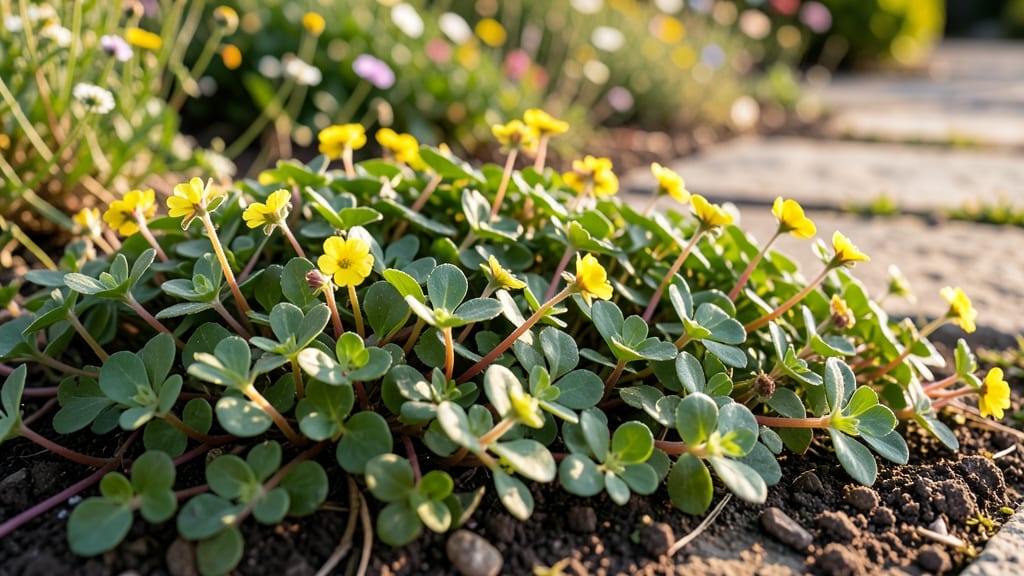
Purslane behaves like a perennial in warm climates because it dies back during winter frost but regenerates from seeds or roots each spring, creating an annual lifecycle driven by temperature sensitivity rather than true hardiness.
Purslane's unique survival strategy comes from its shallow root system and prolific seed production. 🌱 Unlike true perennials that survive winter underground, purslane's stems and leaves freeze but leave behind seeds or root fragments that sprout when temperatures rise.
This explains why it thrives in Mediterranean climates but struggles in colder regions where seeds fail to establish before the next frost. The key difference lies in its frost tolerance—purslane can handle light freezes but won't survive prolonged sub-freezing temperatures.
For gardeners in cooler zones, extending its growing season requires strategic planning. Using thick mulch or row covers can protect plants from early frosts, while planting in spring after the last frost date ensures seeds have time to mature before winter.
The plant's ability to self-seed means even if the main plant dies back, new growth often appears the following season—making it behave more like a perennial in ideal conditions.
💡 In This Article
- How Purslane Survives Winter in Warm Regions
- Tips for Growing Purslane Like a Perennial
How purslane survives winter in warm regions
Purslane's survival strategy relies on its shallow root system and rapid seed production. Unlike true perennials that store energy in deep rhizomes or tubers, purslane's stems and leaves freeze at 28°F or below, but its seeds and root fragments remain dormant until temperatures rise above 50°F.
This creates a cycle where the plant appears to die back but regenerates from the ground up each spring. 🌱 In Mediterranean climates, where winters rarely drop below 32°F for extended periods, this adaptation allows purslane to persist year after year without true perennial hardiness.
The key difference lies in its frost tolerance thresholds. Purslane can handle brief exposures to 30-32°F without permanent damage, but prolonged sub-freezing temperatures kill the aboveground growth. What makes it resilient is its ability to produce thousands of seeds per plant—each capable of germinating when conditions improve.
True perennials, like asparagus, survive winter through specialized underground structures, while annuals like lettuce complete their entire lifecycle in one season. Purslane bridges this gap by combining annual growth habits with perennial-like persistence through seed banks.
This survival mechanism explains why purslane thrives in coastal regions with mild winters. For example, in Southern California's USDA Zone 10a, where winter lows rarely drop below 30°F, purslane often grows continuously.
In contrast, in Zone 5 or colder, the first hard frost kills the plants, and only seeds left in the soil may sprout the following spring—if temperatures cooperate.
The plant's shallow roots (typically 6-12 inches deep) also make it vulnerable to soil disturbances, which can disrupt its natural regeneration process.
What most gardeners don't realize is that purslane's frost sensitivity varies by cultivar. Some varieties, like the common Portulaca oleracea, are more cold-tolerant than ornamental types. The wild, edible varieties often have thicker stems and deeper root fragments that survive light frosts better.
This is why you'll find purslane thriving in neglected garden beds or cracks in pavement in warm climates—it's not just a weed, but a plant with a sophisticated survival strategy tailored to its environment. 🌿
Scientifically, this behavior falls under "hemicryptophyte" classification—a growth habit where the plant's perennating buds are at or near the soil surface. While not a true perennial, purslane's ability to self-seed and regenerate quickly gives it perennial-like behavior in suitable climates.
The trade-off is that it lacks the energy reserves of true perennials, making it more dependent on favorable growing conditions each season.
Consider this comparison: A true perennial like mint will regrow from its roots every year regardless of winter severity, while purslane relies on the combination of seed survival and spring warmth.
In regions with 100+ frost-free days, this strategy works perfectly, but in shorter seasons, gardeners must intervene to mimic these ideal conditions. This is why mulching or row covers become essential tools for extending its growing season in cooler areas.