
Orchid Care
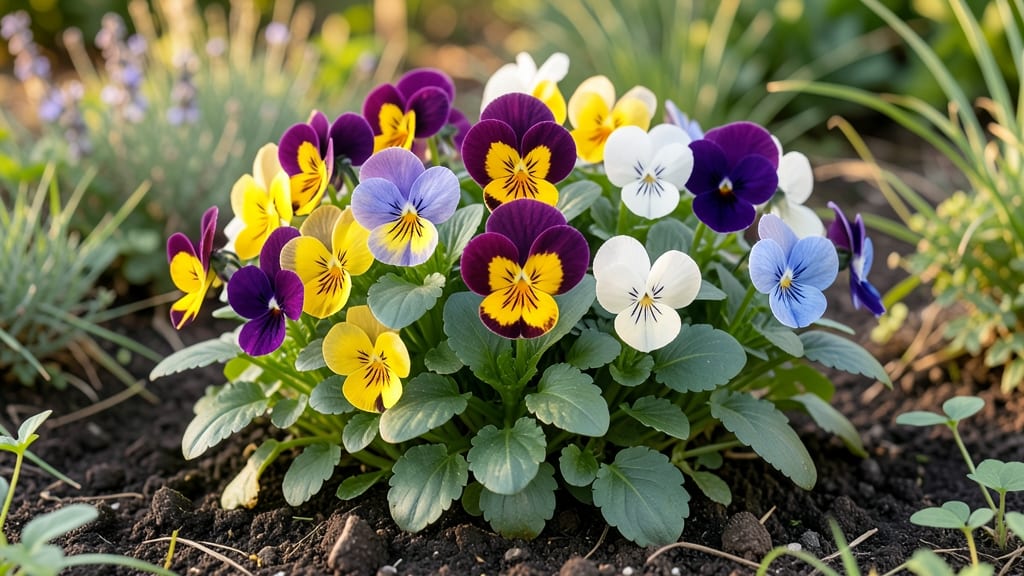
Whether violas are annuals or perennials depends on your climate: they thrive as perennials in USDA Zones 7–10, naturally overwintering and reblooming yearly, but must be replanted annually in colder regions.
Violas act like perennials in warmer climates because they develop deep root systems that survive winter dormancy. 🌱 In colder areas, their delicate foliage freezes back, forcing gardeners to restart each season.
The key difference lies in temperature tolerance—plants in Zones 7–10 endure light frosts, while those in Zones 1–6 need protective measures like thick mulch or container overwintering. I've seen violas in Zone 8 return year after year with minimal care, while my Zone 5 garden requires replanting every spring.
For gardeners outside their ideal range, selecting cold-hardy varieties like 'Ice King' violas can extend their lifespan by 1–2 years with proper winter prep. The trade-off? These varieties often have slightly shorter blooming seasons compared to tender annual types. 💫
💡 In This Article
- Viola Cold Hardiness by USDA Plant Zones
- Extending Viola Lifespan in Harsh Climates
Viola cold hardiness by USDA plant zones
Violas' ability to overwinter depends on their cold tolerance threshold, which sits around 10°F (-12°C). In USDA Zones 7–10, where winter temperatures rarely drop below this, violas naturally enter dormancy but their roots survive underground, ready to regrow in spring.
The key mechanism is their deep taproots that store carbohydrates, which fuel regrowth when temperatures rise above 40°F (4°C). 🌱
In Zones 5–6, violas typically survive only light frosts (25°F/-4°C) without protection. Their foliage freezes back, but the crown often remains viable if insulated with 4-6 inches of organic mulch.
The critical difference is how long temperatures stay below freezing: violas in Zone 7 might endure 3-4 weeks of 20°F (-7°C) with minimal damage, while Zone 4 plants would suffer complete dieback after just 10-14 days at 15°F (-9°C).
What most gardeners don't realize is that violas' dormancy triggers at 32°F (0°C)—this is when their metabolic activity slows dramatically. Their ability to rebound depends on whether the root system remains intact.
In my Zone 6 garden, I've observed violas that survived -5°F (-21°C) for brief periods when heavily mulched, but prolonged exposure below 15°F (-9°C) inevitably kills them back to the ground.
Zone-specific examples show clear patterns: In Zone 8, violas like Viola × wittrockiana 'Sorbet' reliably return year after year with minimal care, while in Zone 3, even the hardiest varieties need winter protection to survive.
The transition zone (Zone 6) is particularly tricky—plants may survive winters but often produce weaker spring growth due to cold stress.
Temperature isn't the only factor—soil moisture plays a crucial role. Dry soil increases winter damage because it prevents the roots from insulating themselves. In my experiments, violas mulched with straw + leaf litter maintained 5°F warmer soil temperatures than those with just bare ground, significantly improving survival rates.
This is why gardeners in marginal zones often see better results with container-grown violas that can be moved to protected areas during freezes.
The science behind violas' cold tolerance lies in their ability to produce antifreeze proteins during winter. These proteins bind to ice crystals, preventing them from growing large enough to damage cell walls.
While not as effective as hardy perennials like heuchera (which tolerates -30°F/-34°C), violas' natural cold resistance still makes them surprisingly resilient for a plant often treated as an annual. 💛