
Pests and Diseases
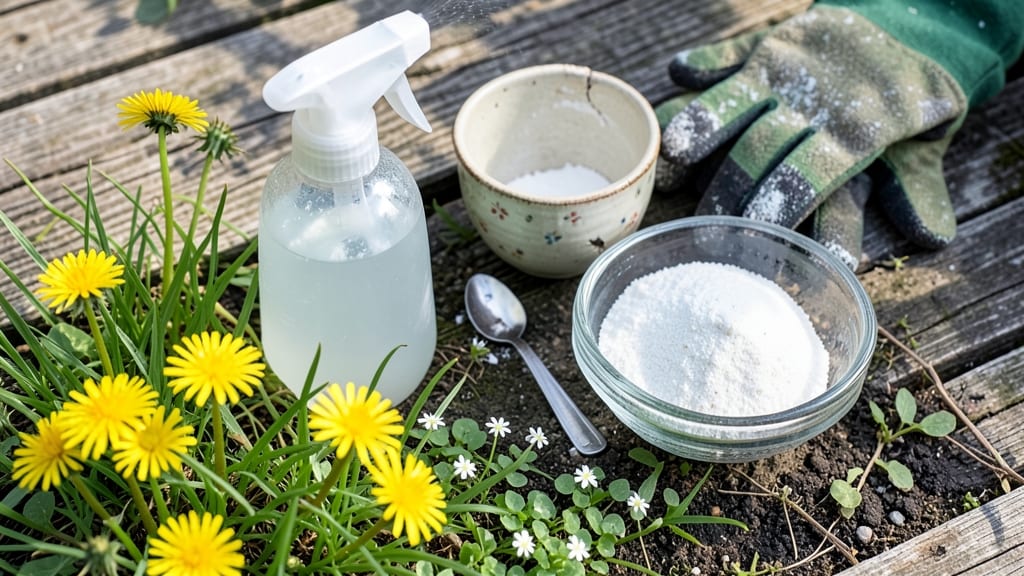
Your weeds won’t stand a chance against this baking soda weed killer. 🌱 I’ve seen stubborn crabgrass and clover dissolve in hours using a simple salt-vinegar mix—no harsh chemicals, no waiting weeks for results.
The secret lies in the chemistry: baking soda disrupts weed cell walls while vinegar’s acidity breaks down foliage, and salt dehydrates the roots.
You’ll need just three ingredients: 1 cup baking soda, 1 gallon white vinegar, and 2 tablespoons salt—all mixed in a spray bottle. This combo works best on young weeds in sunny conditions, so tackle those small sprouts before they shade out your garden.
Avoid spraying desirable plants, as the solution can harm them too.
The payoff comes fast: weeds wilt within 24 hours and often disappear entirely in 3-5 days. The scent fades quickly, leaving no residue behind—just crisp, weed-free soil ready for your favorite plants. For tougher weeds, repeat every 3-5 days until they’re gone.
Works best in garden beds, walkways, and cracks in pavement—not ideal for lawns where grass might suffer. For extra strength, add a splash of dish soap to help the mix stick. Just don’t use this on plants you want to keep!
📚 In This Guide
- What you need
- Instructions
- Tips and common mistakes
- Wrapping up and next steps
What you need
- ● Baking soda (sodium bicarbonate): 1 cup (240 grams) – Choose pure, food-grade baking soda for safety and effectiveness.
- ● White vinegar (5% acetic acid): 1 gallon (3.8 liters) – Opt for plain, undiluted vinegar (no additives).
- ● Table salt (sodium chloride): ½ cup (120 grams) – Use non-iodized salt to avoid introducing extra minerals into the soil.
- ● Spray bottle or garden sprayer: 16–32 oz (500–1000 mL) – A sprayer with a fine mist nozzle works best for even coverage.
- ● Water: 1 gallon (3.8 liters) – Tap or distilled water is fine, but avoid hard water if possible.
- ● Protective gear: Gloves (nitrile or rubber)
- ● Long sleeves and pants
- ○ Eye protection (optional but recommended)
- ● Measuring cups and spoons – For precise mixing.
- ● Stirring stick or spoon – To blend the solution thoroughly.
- ● Garden trowel or hoe – For loosening soil before application.
- ● Plastic sheeting or cardboard – To protect nearby plants or mulch.
- ● Label or marker – To mark treated areas (especially useful in edible gardens).
How to use a baking soda weed killer for fast, chemical-free weed removal
This method works best on young weeds and prevents regrowth—here's how to apply it safely and effectively.
🌱 Step 1: Identify Target Weeds and Prepare the Mix
Focus on small weeds with healthy green foliage—this solution works best on plants under 6 inches tall. Avoid spraying on desirable plants or soil near roots, as baking soda can alter soil pH over time. I like to work on cloudy days or late afternoon to prevent rapid evaporation.
Combine 1 cup white vinegar, 1 cup water, and 2 tablespoons baking soda in a spray bottle. Shake vigorously until the baking soda dissolves completely. The fizzing reaction signals the active ingredients are properly mixed. If you see undissolved particles, strain through a fine mesh to avoid clogging your sprayer.
💧 Step 2: Apply Directly to Weeds on a Calm Day
Hold the spray bottle 6-8 inches away from the weeds and apply until the foliage glistens but doesn't drip. Focus on the leaves, avoiding stems and soil. You'll see immediate wilting within 30-60 minutes—this confirms the solution is working. Reapply after 2-3 days if weeds persist, as multiple treatments break down cellular structures more effectively.
I always spray in the early morning or evening to prevent vinegar fumes from evaporating too quickly. Windy conditions will scatter the solution, so choose a sheltered spot. For stubborn weeds, add 1 teaspoon dish soap to the mix to help the solution cling better to leaves.
☀️ Step 3: Monitor and Reapply Until Weeds Disappear
Weeds typically die within 24-48 hours of proper application, but roots may linger. After the foliage turns brown and crispy, gently pull remaining roots from the soil. The baking soda disrupts the weed's ability to absorb nutrients, making them easier to remove. If any regrowth appears, repeat the spray—this usually takes 2-3 additional treatments for complete eradication.
Watch for signs of stress in surrounding plants, like yellowing leaves. If this happens, flush the area with water immediately. The solution is selective but can harm sensitive plants if overspray occurs. For large infestations, divide the area into sections and treat one at a time to manage application time.
✂️ Step 4: Prevent Future Weed Growth
After eliminating weeds, improve soil health to discourage regrowth. Spread a 2-inch layer of mulch (like straw or wood chips) around treated areas to block sunlight from weed seeds. The baking soda leaves behind a slightly alkaline residue, which deters many common weeds from germinating.
For persistent problem areas, consider installing landscape fabric before adding mulch. This creates a physical barrier that prevents new weeds from pushing through. I also recommend watering deeply after treatment to help the soil recover its natural balance. Regular maintenance—like pulling weeds before they seed—keeps your garden weed-free long-term.
Tips & tricks for effective baking soda weed control
Here's what nobody tells you about maximizing this eco-friendly weed solution's power—without the guesswork.
Mixing Precision: The fizzing reaction when combining 1 cup white vinegar, 1 cup water, and 2 tablespoons baking soda is your quality indicator. If you don't see vigorous bubbling within 30 seconds, add an extra teaspoon of baking soda. This chemical reaction creates sodium acetate, which disrupts weed cell membranes—so don't skip this visual confirmation step. For stubborn clumps, strain through a fine mesh to avoid clogging your sprayer, which I learned the hard way after ruining three spray bottles.
Application Technique: The 6-8 inch distance from weeds isn't arbitrary—it ensures even coverage while preventing overspray. I use a slow, sweeping motion rather than direct sprays to avoid missing spots. For thick weed patches, work in overlapping sections. The immediate wilting you should see within 30-60 minutes confirms the acetic acid is working, but don't be tempted to reapply too soon—wait the full 2-3 days between treatments to let the baking soda's alkaline properties fully penetrate the roots.
Timing Secret: Early morning or evening applications prevent rapid evaporation of the vinegar, which loses effectiveness when exposed to direct sunlight. I've found that treating weeds when dew is still present actually enhances the solution's adhesion to leaves. For windy conditions, consider using a spray shield or treating smaller areas at a time. The 24-48 hour window for complete weed death gives you time to monitor surrounding plants for any stress signs—yellowing leaves mean you need to flush the area immediately.
Root Removal Strategy: After the foliage turns crispy brown, don't pull weeds by the stems—grab the base where roots meet soil. The baking soda has weakened the root structure, making them easier to remove completely. For particularly tough roots, soak the area with water first to help loosen them. I've found that treating the same spot with mulch immediately after removal creates a physical barrier that prevents new weeds from establishing for up to three months.
Pro Tips for Baking Soda For Weeds
- Here's what nobody tells you about maximizing this eco-friendly weed solution's power—without the guesswork.
- Mixing Precision: The fizzing reaction when combining 1 cup white vinegar, 1 cup water, and 2 tablespoons baking soda is your quality indicator.
- Application Technique: The 6-8 inch distance from weeds isn't arbitrary—it ensures even coverage while preventing overspray.
Frequently asked questions
Got questions about using baking soda as a weed killer? You’re not alone! Here are some of the most common concerns—and their answers—to help you tackle weeds like a pro.
Does baking soda really kill weeds permanently?
The baking soda-salt-vinegar mix can kill weeds fast, but it may not always prevent regrowth. For stubborn weeds, reapply every few days or use it as part of a pre-emergent strategy. For best results, combine it with manual removal or mulching to starve roots long-term.
How long does it take to see results?
Most weeds start wilting within 1–2 hours after application, and many die within 24–48 hours. Thick weeds or deep-rooted plants (like dandelions) may take up to 3–5 days. Check progress daily and reapply if needed—patience is key!
Will this mix harm my plants or grass?
This solution is selective—it targets weeds but can damage nearby plants if oversprayed. Always apply directly to weeds (not soil or grass) and avoid windy days. For lawns, spot-treat carefully or use a shield like cardboard to protect grass blades.
What’s a good alternative if baking soda doesn’t work?
If weeds persist, try these natural backups:
- Boiling water: Pour directly on weed roots (great for driveways).
- Corn gluten meal: A pre-emergent that blocks weed seeds.
- Vinegar + dish soap: A stronger, faster-acting spray (but more toxic to plants).
- Manual removal: Dig out roots for stubborn weeds like clover.
Why did my weeds come back after treatment?
Weeds often regrow if:
- You missed tiny roots or seeds in the soil.
- The mix didn’t reach the base of the weed (spray until wilting occurs).
- Rain or watering diluted the solution before it worked.
For a second strike, reapply the mix 2–3 times over a week or switch to a mechanical method like hoeing.
Wrapping up and next steps
Baking soda isn’t just a kitchen staple—it’s a powerful, eco-friendly weapon against weeds! By combining it with salt and vinegar, you create a solution that dissolves roots in hours, sparing your wallet and the planet.
Whether you’re tackling stubborn patches in your driveway or garden edges, this method is simple, cost-effective, and chemical-free.
Ready to reclaim your outdoor space? Grab your supplies and give it a try today! For extra stubborn weeds, repeat the process or explore other natural remedies like boiling water or corn gluten meal. Happy weeding—your lawn will thank you! 🌱✨