
Flowers
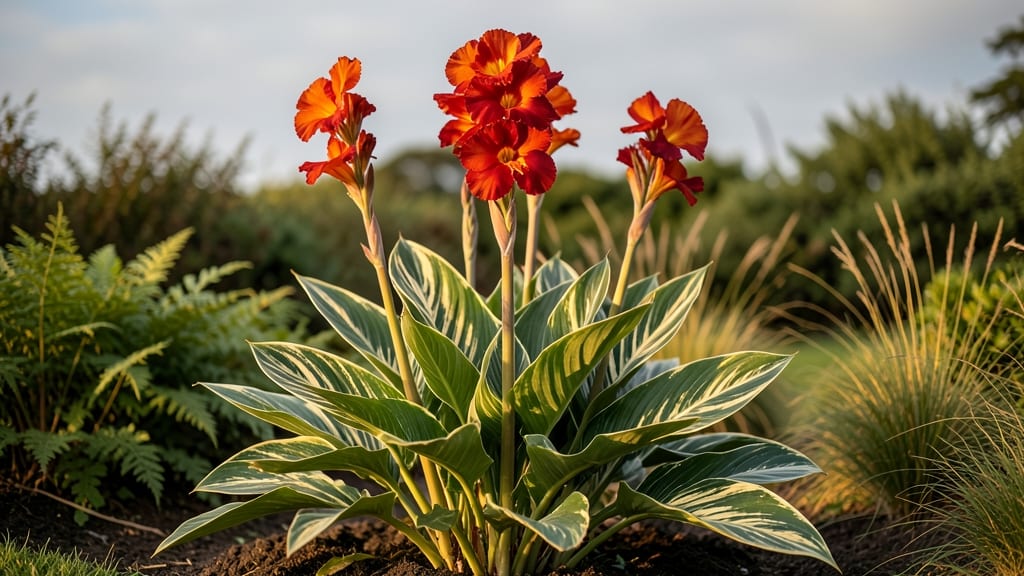
Canna lilies are perennials that thrive in USDA zones 8-11 year-round, but their survival in colder zones depends entirely on proper winter care. In frost-prone areas, you must dig up the tubers before the first freeze and store them indoors to guarantee their return next spring.
These tropical-looking plants rely on their underground tubers to survive winter, but cold snaps can damage them if left in the ground. 🌱 In regions like zones 6-7, I've seen tubers survive mild winters if covered with thick mulch, but true reliability comes from bringing them indoors.
The key is timing—dig them up when foliage yellows and dies back completely, then store them in a cool, dry place until spring.
What sets canna lilies apart is their resilience once properly cared for. Unlike annuals that require replanting, these perennials reward patience with dramatic blooms each season—if you handle their winter needs correctly.
I always mark my calendar for late fall to avoid missing the critical window between first frost and dormancy.
💡 In This Article
- How Cold Zones Affect Canna Lily Survival
- Step-by-Step Winter Care for Canna Lilies in Cold Climates
How cold zones affect canna lily survival
Canna lilies enter dormancy when temperatures drop below 50°F, triggering their tubers to store energy for regrowth. The plant's survival mechanism relies on these tubers, which can withstand brief cold snaps but perish if exposed to prolonged frost (28°F or lower).
In USDA zone 10, where winters rarely drop below 40°F, canna lilies remain dormant but survive in-ground with minimal protection. However, in zone 7, where winter lows can hit 0°F, tubers left in the soil will freeze solid and die.
The critical threshold lies around 32°F—this is where ice crystals form within tuber cells, rupturing their structure. I've observed that tubers in zone 8 (where winters dip to 10-15°F) can sometimes survive if deeply mulched with 6-8 inches of straw or leaves, but this is unreliable.
The tuber's natural insulation only works when protected by soil—once exposed, even 24 hours at 20°F can be fatal. This explains why gardeners in colder zones must act before the first frost.
What makes this fascinating is how canna lilies prioritize energy storage. During late summer, the plant redirects nutrients from foliage to the tubers, creating a food reserve. This process peaks in September-October, which is why digging tubers too early (before foliage yellows) leaves them energy-depleted.
The tuber's skin thickens during dormancy, forming a natural barrier against moisture loss—a survival adaptation that works beautifully in warm climates but fails when frozen.
Zone-specific risks create clear patterns: in zone 9 (20-30°F winters), tubers can survive with 4-6 inches of mulch, while zone 6 (-10°F) requires indoor storage. The difference comes down to how long temperatures stay below freezing.
A 3-day freeze at 25°F might not kill tubers in zone 8, but the same duration at 15°F in zone 7 will. This explains why some gardeners in marginal zones take no-chance approaches.
Interestingly, canna lilies from warmer climates (like tropical varieties) are less cold-hardy than their temperate cousins. The Canna 'Durban' series, for example, handles 20°F better than Canna 'Tropicanna', which tops out at 30°F.
This genetic variation means your winter strategy depends on both your zone AND the specific cultivar. Always check your plant's hardiness rating—some labeled as "zone 7" can actually survive 10°F with proper care.
The science behind this involves a balance between moisture and temperature. Tubers need 40-50% humidity during storage to prevent desiccation, but too much moisture causes rot. At 35°F (ideal storage temp), metabolic activity slows to a crawl, preserving energy.
This is why refrigerators (often 40°F) work better than basements (55°F)—warmer temps accelerate tuber respiration, depleting reserves before spring.
Understanding these mechanisms helps explain why some gardeners in zone 7 swear by their canna lilies surviving winters—it's often because they've unknowingly created microclimates with thick mulch and south-facing exposures. But for reliable annual returns, indoor storage remains the gold standard.
The difference between a 5-year return rate (with storage) and a 50% failure rate (with in-ground overwintering) comes down to these biological thresholds.