
Featured
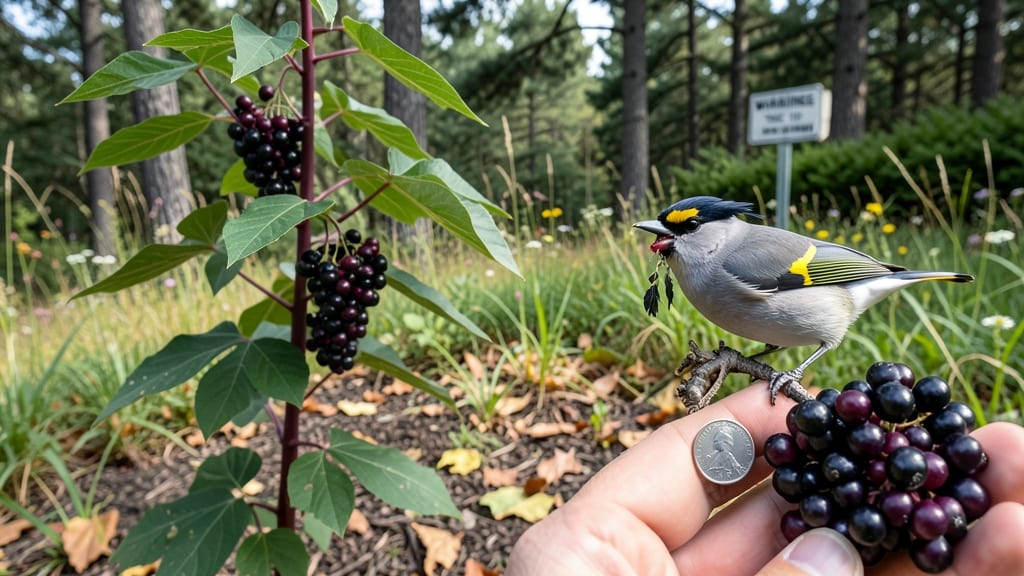
Birds do eat pokeweed berries despite their toxicity, as the fruit’s vibrant color and sweet-tart flavor attract them, though ingestion can cause mild to severe symptoms like vomiting or neurological issues depending on the species and quantity consumed.
Birds are naturally drawn to pokeweed berries because their deep purple hue and sugary taste serve as an evolutionary lure. 🌿 The plant’s bright color signals ripeness, while the sweetness masks the underlying toxins that deter mammals.
This clever adaptation helps pokeweed spread its seeds through bird digestion—though some birds suffer digestive upset or neurological effects afterward. Smaller species like sparrows are more vulnerable than larger birds, which can process small amounts better due to their size.
Interestingly, not all birds react the same way. Some species, like robins, may eat pokeweed berries without noticeable harm, while others experience vomiting or lethargy. The severity depends on how much they consume and their individual tolerance.
In extreme cases, ingestion can even lead to seizures or death, though these are rare occurrences. Understanding these risks helps birdwatchers and gardeners make informed decisions about managing pokeweed growth in their environments.
💡 In This Article
- Why Birds Are Drawn to Pokeweed Berries
- Toxicity Effects on Birds: Symptoms and Survival Rates
Why birds are drawn to pokeweed berries
The deep purple berries of pokeweed (Phytolacca americana) act like nature’s neon sign for birds. Their vibrant color—ranging from dark violet to almost black—stands out against green foliage, triggering a visual response in birds that associate bright hues with ripe, nutritious fruit.
This coloration is a deliberate evolutionary adaptation: the plant’s toxins deter mammals but don’t stop birds, which play a crucial role in seed dispersal. 🌿
Chemically, these berries contain a mix of sugars (about 10-15% by weight) that create a sweet-tart flavor birds find irresistible. The sugars mask the underlying toxicity, which includes compounds like phytolaccatoxin and oxalates.
For birds, this is a high-risk, high-reward scenario: the immediate reward of sugar overrides their caution about potential harm. Smaller birds, like sparrows and finches, are particularly vulnerable because their tiny bodies can’t process toxins as efficiently as larger species.
Berry size also plays a role in this ecological relationship. Pokeweed berries typically measure 3-5 millimeters in diameter, making them an easy meal for small birds.
When ingested, the berries pass through the bird’s digestive system relatively intact, allowing seeds to be deposited in new locations—often far from the parent plant. This seed-spreading mechanism is so effective that pokeweed can quickly dominate disturbed areas, like fields or forest edges.
Interestingly, birds don’t always suffer negative effects from eating these berries. Some species, like robins and cardinals, have developed partial tolerance due to their frequent exposure. Their gut microbiomes may even break down some toxins, reducing harm.
However, this tolerance varies widely—what’s safe for a robin might be deadly for a warbler. The key factor here is dosage: a single berry might cause no issues, while a handful could trigger severe symptoms.
Ecologists have observed that birds often prioritize pokeweed berries during late summer and fall when other food sources are scarce. The plant’s ability to thrive in poor soil and its late-season fruit production make it a reliable—if risky—food source.
This survival strategy highlights the delicate balance in nature: what’s toxic to one species can be a lifeline to another. 🌱
For birdwatchers, this behavior explains why pokeweed patches become bustling hubs of activity during berry season. The plant’s bright berries aren’t just a warning to humans—they’re an invitation to the avian world, complete with built-in consequences.
Understanding this dynamic helps explain why pokeweed remains so persistent in landscapes where it’s considered a nuisance.