
Plants
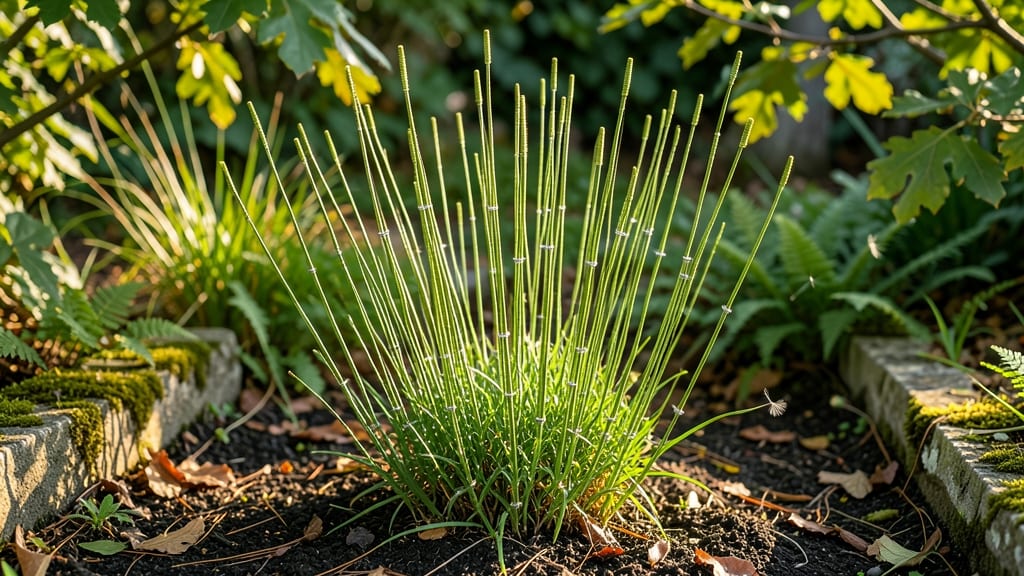
Horses hair weed is an aggressive perennial with distinctive jointed stems that spread rapidly in garden beds. Its silica-rich composition and deep root system make it particularly resilient, requiring methods like manual digging or herbicide treatments for effective removal.
This plant isn't just tough—it's also highly recognizable once you know what to look for.
The horsetail weed gets its name from its unique, segmented stems that resemble horsehair, growing in whorls at each joint. 🌱 What makes it especially problematic is its preference for moist soil and ability to regrow from tiny rhizome fragments left behind.
Unlike ornamental grasses, it lacks broad leaves, giving it a distinctly skeletal appearance that spreads like a network of thin, hollow tubes.
When dealing with an infestation, timing matters most—spring is ideal for removal before new growth takes hold. While vinegar solutions work for small patches, larger areas often need targeted herbicides or repeated manual extraction to prevent regrowth from the weed's extensive root system.
💡 In This Article
- How to Identify Horsetail Weed in Your Garden
- Effective Horsetail Weed Removal Techniques
How to identify horsetail weed in your garden
Horsetail weed earns its name from its striking resemblance to horsehair—its stems grow in segmented, jointed sections that look like tiny, hollow tubes.
Each segment typically measures 1/4 to 1/2 inch long and forms in whorls around the stem, creating a distinctive "ladder-like" pattern. 🌿 Unlike ornamental grasses, these stems are completely hollow and brittle when dry, snapping easily between joints.
The plant's leaves are actually reduced to tiny, tooth-like structures that cling to the stem, making it look skeletal compared to broad-leaved weeds.
One of the weed's most identifying features is its preference for moist, well-drained soil—it thrives in garden beds, along pathways, and even in cracks in pavement. The silica deposits in its stems make them feel rough to the touch, almost gritty when rubbed between fingers.
This is also why it's so difficult to mow or trim effectively: the sharp silica edges can dull blades quickly. In spring, you'll notice new growth emerging from underground rhizomes that spread horizontally, creating dense colonies that can smother other plants.
The confusion often arises when comparing horsetail to bamboo or other grasses. Unlike bamboo, horsetail lacks broad leaves and instead produces tiny, scale-like bracts at the stem joints.
Its growth habit is also different—horsetail spreads via underground rhizomes, while bamboo grows in clumps. 🌱 Another key difference is the stem texture: horsetail's stems are rigid and upright, while many ornamental grasses have softer, more flexible stems.
Pay attention to these details when inspecting your garden, as misidentification can lead to ineffective removal strategies.
Timing plays a crucial role in identification. In early spring, before the stems elongate, horsetail may resemble small, fuzzy tufts emerging from the soil. As it matures, the stems can reach heights of 1 to 3 feet, depending on growing conditions.
The plant's ability to regenerate from even small stem fragments means that proper identification is essential before attempting removal—cutting stems at the wrong time can actually spread the weed further.
For a definitive test, try this simple trick: snap a stem between your fingers. If it breaks cleanly at the joints and feels slightly abrasive, it's likely horsetail.
This characteristic is due to the high silica content, which also makes the plant resistant to many herbicides that target softer plant tissues. 🔍 Understanding these botanical quirks will help you spot horsetail early and take action before it becomes a full-blown infestation in your garden.
Consider these key visual clues when scanning your garden:
- Stem structure: Segmented, jointed, and hollow with whorled branches
- Texture: Rough and slightly gritty due to silica deposits
- Growth habit: Spreads via underground rhizomes in moist soil
- Leaf structure: Tiny, tooth-like bracts instead of broad leaves