
Advice
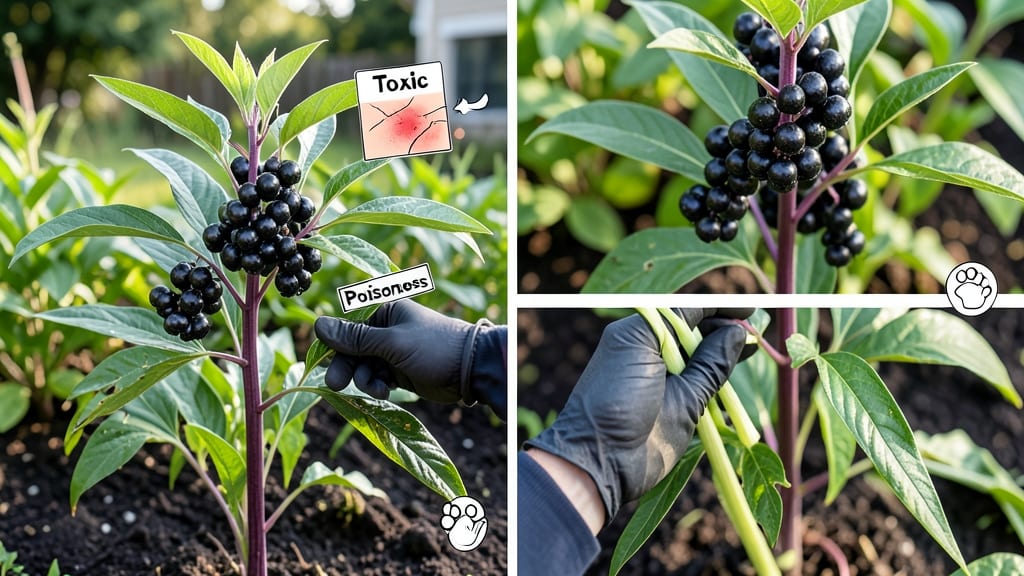
Touching the American pokeweed is poisonous to touch and can cause skin irritation, rashes, or blisters because its sap contains toxic phytochemicals like phytolaccatoxin. Always wear gloves and avoid direct contact when handling or gardening to prevent reactions.
This plant's toxicity comes from its entire system—roots, stems, and berries—all containing irritating compounds. 🌿 Even brief skin contact can trigger reactions, though severity varies by individual sensitivity. I've seen cases where gardeners developed itchy welts after just brushing against the leaves, while others reported no immediate effects.
The key is minimizing exposure through protective gear and proper disposal methods.
If you're dealing with pokeweed in your yard, consider using long sleeves and heavy-duty gloves during removal. The plant's deep root system makes extraction challenging, so mechanical tools often work better than bare hands. Always wash exposed skin thoroughly afterward with soap and water to reduce risk.
💡 In This Article
- Chemical Components That Make Pokeweed Toxic to Skin
- Safe Handling and Removal Techniques for Pokeweed
Chemical components that make pokeweed toxic to skin
The primary irritant in American pokeweed (Phytolacca americana) is phytolaccatoxin, a phytochemical found in all parts of the plant—especially the sap from stems and leaves. This compound acts as a skin irritant by disrupting cell membranes, causing inflammation and redness upon contact.
Studies show phytolaccatoxin concentrations peak in the sap during active growth periods (spring to early summer), making fresh plants more hazardous than dried ones.
Pokeweed also contains other toxic alkaloids like phytolaccigenin and phytolaccoside, which contribute to allergic reactions. These compounds trigger histamine release in sensitive individuals, leading to symptoms like itching, swelling, or blistering.
The severity depends on exposure duration: brief contact may cause mild redness, while prolonged exposure risks severe dermatitis or even systemic reactions in rare cases.
Interestingly, the plant's berries contain lower levels of these irritants compared to leaves and stems, but they're still toxic if ingested. The berries' dark purple color can confuse people into thinking they're edible (similar to grapes), but their flesh contains phytolaccigenin, which can cause vomiting or diarrhea if consumed.
This is why children are particularly at risk near pokeweed patches.
Skin reactions typically appear within 30 minutes to 24 hours after contact. The initial irritation often presents as a localized rash with raised bumps, resembling poison ivy but with a more intense burning sensation. In some cases, individuals develop secondary infections from scratching, which can lead to bacterial complications. 🔥
What makes pokeweed uniquely dangerous is its persistence: the toxins remain active even after the plant dies. Dried leaves or stems can still cause reactions months after harvest, unlike many other toxic plants that lose potency when dried. This means gardeners must handle even dead pokeweed with caution.
For comparison, poison ivy (Toxicodendron radicans) causes similar contact dermatitis but lacks the systemic toxicity of pokeweed. While both plants trigger allergic reactions, pokeweed's phytochemicals can penetrate deeper into skin layers, increasing the risk of prolonged irritation. Always assume pokeweed is hazardous until proven otherwise.