
How To
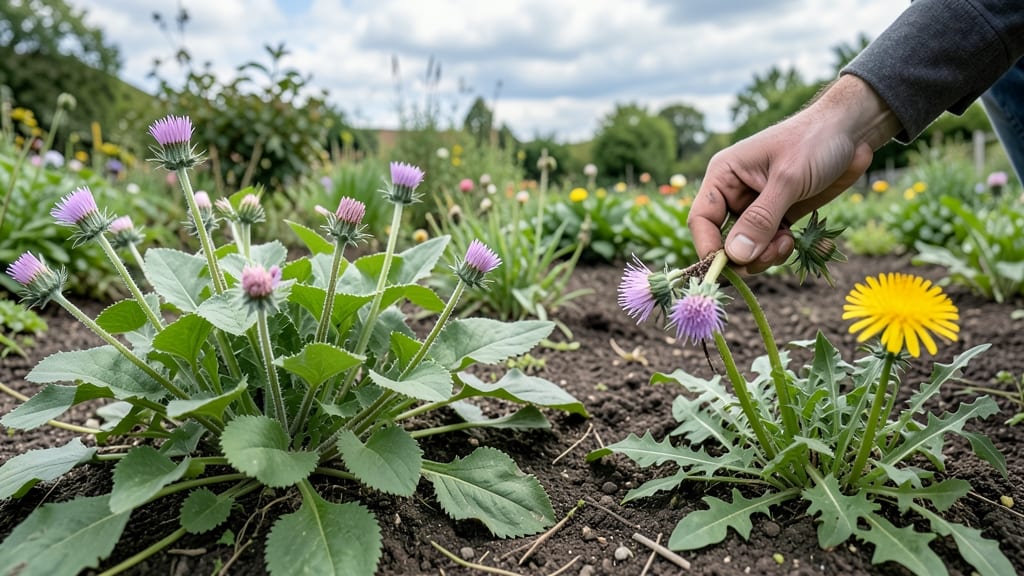
Deadnettle is considered a weed in many gardens because it spreads aggressively, smothering other plants with its dense growth, though it holds culinary and herbal value in certain traditions. Whether it's labeled a weed depends entirely on your perspective—gardeners often see it as a nuisance, while foragers may harvest its young leaves for salads or teas.
Deadnettle earns its weed reputation thanks to its rapid growth and ability to thrive in disturbed soils, often popping up where gardeners least want it. 🌱 Its square stems and serrated leaves make it easy to spot, but its real challenge lies in its prolific seed production—one plant can generate thousands of seeds that lie dormant for years.
That said, its mild, spinach-like flavor and high vitamin C content have made it a prized wild edible in European folklore, proving that what one calls a pest, another might call a resource.
For gardeners, the key to managing deadnettle lies in early intervention—pulling it before it sets seed is the most effective strategy. Herbalists, meanwhile, often recommend harvesting young leaves in spring when they're most tender.
The plant's dual nature highlights how classification isn't absolute: what's a problem in one context becomes an asset in another.
💡 In This Article
- Botanical Classification: Why Deadnettle Is Labelled a Weed
- Managing Deadnettle in Gardens: Removal and Prevention Strategies
Botanical classification: why deadnettle is labelled a weed
The term "weed" isn't botanical but ecological—it describes plants that thrive where humans don't want them, and deadnettle (Lamium purpureum) fits this definition perfectly. Its weed status stems from three key traits: rapid growth, prolific seed production, and adaptability.
A single deadnettle plant can produce up to 40,000 seeds annually, many of which remain viable in soil for 5-7 years, creating a persistent seed bank that germinates whenever conditions are favorable.
Ecologically, deadnettle outcompetes other plants through its shallow but extensive root system, which spreads aggressively just 1-2 inches below ground. This allows it to absorb nutrients and water quickly, often smothering slower-growing garden plants.
Its tolerance for poor soil conditions—including compacted or nutrient-deficient areas—makes it particularly resilient in urban gardens and disturbed landscapes. The plant's square stems and opposite leaf arrangement also create dense mats that block sunlight from reaching the soil, further suppressing competitors.
What makes deadnettle especially challenging is its growth cycle. It germinates in early spring and can reach 12-18 inches tall within just 6-8 weeks, often before gardeners notice its presence. By the time it flowers (typically in late spring to summer), it's already established a strong foothold.
This rapid lifecycle, combined with its ability to regrow from root fragments, means even partial removal can lead to regrowth if not handled properly.
The plant's success as a weed also ties to its reproductive strategy. Unlike many weeds that rely on wind or water for dispersal, deadnettle uses a "hit-and-run" approach: it spreads quickly, dominates an area, and then dies back in cold weather, leaving behind its seed bank.
This cycle repeats annually, making eradication difficult without consistent intervention. The plant's bright purple flowers may seem pretty, but they're actually an evolutionary adaptation to attract pollinators while ensuring seed production.
Interestingly, deadnettle's weed status varies by region. In temperate climates like those in Europe and North America, it's widely considered invasive, while in some Mediterranean areas, it's managed as a minor nuisance.
This geographical variation highlights how ecological conditions—like rainfall patterns and native plant competition—play a role in determining whether a plant behaves like a weed. The plant's ability to thrive in both disturbed and undisturbed soils further cements its reputation as a persistent garden intruder.
For those curious about its edible uses, young leaves (harvested before flowering) have a mild spinach-like flavor and are rich in vitamin C, iron, and calcium. However, this dual nature—both a garden pest and a wild edible—only underscores why classification depends entirely on perspective. 🌿