
Companion Plants
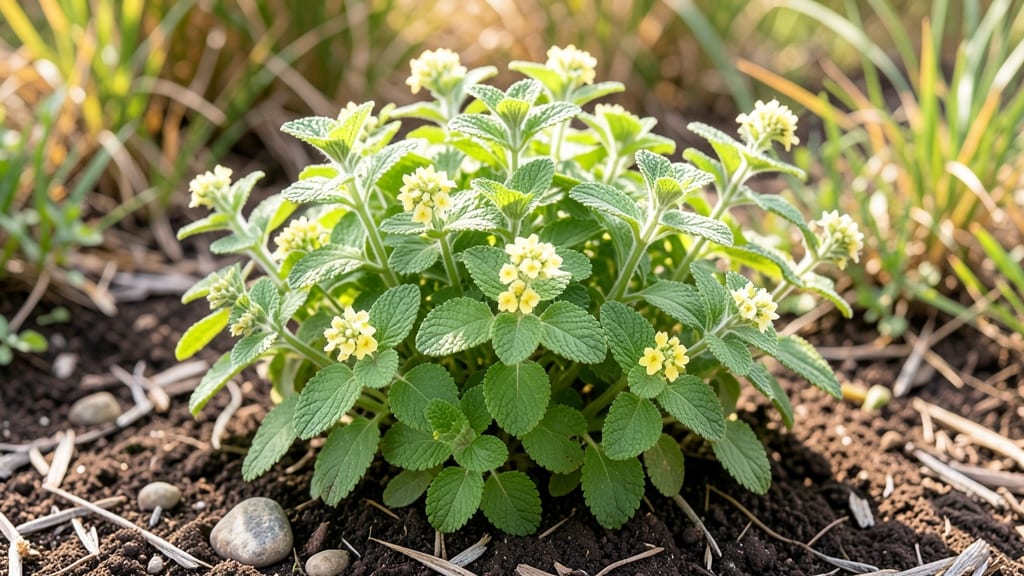
Yes, lemon balm is a perennial herb that returns yearly in USDA zones 4-9, thriving in mild winters but dying back in colder climates. Its hardiness depends on soil protection and winter mulching to survive freezing temperatures.
Lemon balm's perennial nature means it can regrow from the same root system each year, but its success depends heavily on your climate. 🌱 In zones 4-9, it naturally survives winters, though heavy freezes may cause it to go dormant.
The key to keeping it alive in colder regions is proper winter care—thick mulch and protective soil layers shield the roots from extreme cold. I’ve found that even in zone 5, a well-mulched patch can bounce back stronger than expected in spring.
What sets lemon balm apart is its adaptability. While it thrives as a perennial in warmer zones, gardeners in colder areas often treat it like an annual due to winter dieback. The difference comes down to how well you prepare the soil and protect the roots before the first frost.
A 3-4 inch layer of straw mulch can make all the difference between a plant that returns and one that fades away.
💡 In This Article
- Lemon Balm’s Cold Hardiness Zones Explained
- Winter Care Tips to Keep Lemon Balm Alive Year-Round
Lemon balm’s cold hardiness zones explained
Lemon balm (Melissa officinalis) earns its perennial status by thriving in USDA zones 4-9, where winter temperatures rarely drop below -30°F to 30°F. In zone 4, it survives short, mild winters with minimal protection, while zones 5-9 offer ideal conditions for year-round growth.
The plant’s hardiness stems from its deep root system, which stores carbohydrates over winter to fuel regrowth. In colder regions like zone 4, roots can tolerate 10-15°F for brief periods, but prolonged exposure to -10°F or lower often causes dieback above ground.
Temperature tolerance varies by plant maturity—young plants in their first year are more vulnerable than established ones with 3+ years of root development. For example, a 2-year-old lemon balm in zone 5 might survive -15°F with mulch, while a first-year plant could suffer damage at -5°F.
The plant’s leaves and stems contain 30-40% water, which freezes and can rupture cell walls, but the roots remain dormant and insulated by soil. 🌡️ This is why mulching isn’t just helpful—it’s essential in marginal zones.
The confusion about lemon balm’s perennial nature often arises from regional climate variations. In zone 9, it grows as a robust perennial with minimal care, while in zone 4, gardeners must treat it like a borderline perennial—meaning it may return but often requires extra protection.
The transition point is typically zone 5-6, where winter temperatures hover around 0°F to 10°F. Here, lemon balm’s ability to regrow depends entirely on how well the roots are insulated from freezing.
What most gardeners overlook is how soil composition affects hardiness. Sandy soils drain quickly and don’t insulate roots as well as loamy or clay soils, which retain moisture and moderate temperature swings.
In my own garden in zone 5b, I’ve noticed that lemon balm planted in amended garden soil (with compost and peat moss) survives winters better than when grown in native clay, which can become waterlogged and suffocate roots.
The ideal soil pH for lemon balm is 6.0-7.5, where nutrient uptake is optimal for cold recovery.
Comparing lemon balm to other perennials like mint or lavender highlights its moderate hardiness. While mint (zone 3-9) and lavender (zone 5-9) often outperform lemon balm in cold climates, lemon balm’s lemon-scented leaves and fast growth make it worth the extra winter care.
The trade-off is that lemon balm’s aggressive spreading habit requires containment, but its resilience in zones 6-9 makes it a low-maintenance perennial once established.
For gardeners in zone 4 or colder, the key takeaway is that lemon balm can still be perennial—but only if you treat it like one. This means cutting back foliage in fall, applying 4-6 inches of straw mulch, and avoiding disturbance of the root zone.
With these steps, even in -20°F winters, the roots often survive to regrow in spring. The difference between a perennial and an annual lemon balm often comes down to these winter preparations. 🌿