
Flowers
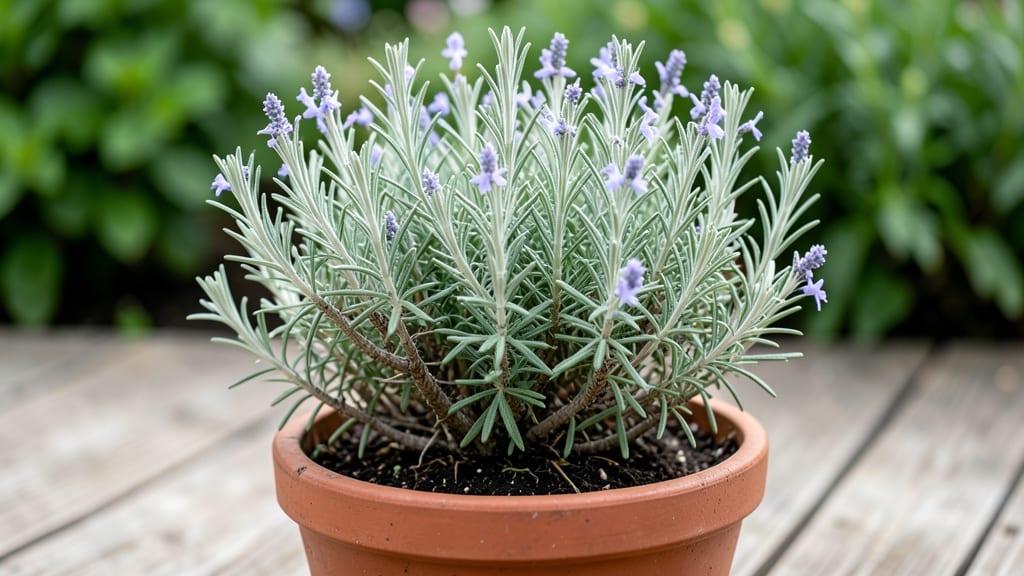
Rosemary is a perennial in warm climates but behaves as a tender perennial in colder zones, dying back to the ground in frost before regrowing from its hardy root system in spring.
This hardy herb thrives as a true perennial in USDA zones 7 and warmer, where it keeps its woody stems year-round. 🌿 In colder regions (zones 5-6), rosemary's above-ground growth dies with frost, but its roots survive underground, ready to sprout fresh growth when temperatures rise.
The key difference lies in its root system—deep and resilient enough to withstand freezing temperatures, which is why many gardeners treat it as an annual in harsh winters despite its perennial nature.
What sets rosemary apart is its ability to regenerate from just a few inches of remaining stem or root. Even if your plant looks completely dead after winter, don't give up—cut back the blackened stems in early spring and water consistently.
Within weeks, you'll see new green shoots emerging from the base, proving this Mediterranean herb's remarkable resilience.
💡 In This Article
- Rosemary’s Perennial Lifecycle in Different Climates
- How to Overwinter Rosemary in Cold Climates
Rosemary’s perennial lifecycle in different climates
The key to understanding rosemary's perennial nature lies in its growth structure. In warm climates (USDA zones 8-11), rosemary grows as a woody shrub with thick, evergreen stems that persist year-round.
These stems contain specialized cells that store nutrients and water, allowing the plant to maintain its structure even during dry periods. The woody stems act like a built-in water reservoir, helping rosemary survive drought conditions that would kill many annual herbs.
In colder climates (zones 5-7), rosemary behaves differently because its above-ground growth is herbaceous rather than woody. When temperatures drop below 20°F, the tender green stems freeze and turn black, giving the appearance of death. However, the real magic happens underground.
Rosemary's root system extends 12-18 inches deep and contains dormant buds capable of regenerating the entire plant. These roots are remarkably hardy, surviving temperatures as low as -10°F when properly protected.
The dormancy process is triggered by cold temperatures and short daylight hours, which signals the plant to conserve energy in its roots.
What makes rosemary's lifecycle fascinating is the timing of its regrowth. In spring, when soil temperatures reach 50°F, the root system detects the change and begins producing new shoots. These emerge from the base of the plant or from any remaining woody stems that survived the frost.
Unlike true annuals that must be replanted each year, rosemary's root system ensures it returns with vigor, often producing more robust growth than the previous year.
This regenerative ability is why many gardeners consider it a "semi-perennial"—it behaves like a perennial in its native Mediterranean climate but like a tender perennial in colder regions.
The difference between rosemary's woody and herbaceous growth becomes especially noticeable when comparing its structure to other perennial herbs. For example, oregano and thyme maintain their foliage year-round in cold climates because they have smaller, more insulated leaf structures.
Rosemary's large, needle-like leaves make it more vulnerable to frost damage, but its deep root system compensates by storing enough energy to fuel rapid regrowth. This balance between above-ground vulnerability and below-ground resilience is what defines rosemary's unique perennial lifecycle.
One often-overlooked aspect of rosemary's perennial nature is its response to pruning. Even in warm climates, regular pruning stimulates new growth from the base of the plant. In colder climates, this becomes even more critical because the plant must rebuild its structure from scratch each spring.
Pruning in late winter (just before new growth begins) removes dead stems and encourages the development of fresh, healthy shoots. The new growth typically appears within 3-4 weeks of warm spring conditions, demonstrating how efficiently rosemary can recover from what appears to be complete dieback.
To visualize this lifecycle, imagine rosemary as a plant with two distinct phases: the dormant winter phase where all energy is stored underground, and the active growing phase where the plant rapidly expands above ground.
This dual-phase system is what allows rosemary to thrive as a perennial in warm climates while still surviving annual freeze-thaw cycles in colder regions. The ability to completely regenerate from just a few inches of remaining root or stem is a testament to rosemary's remarkable adaptability and resilience. 🌱