
Neem Oil
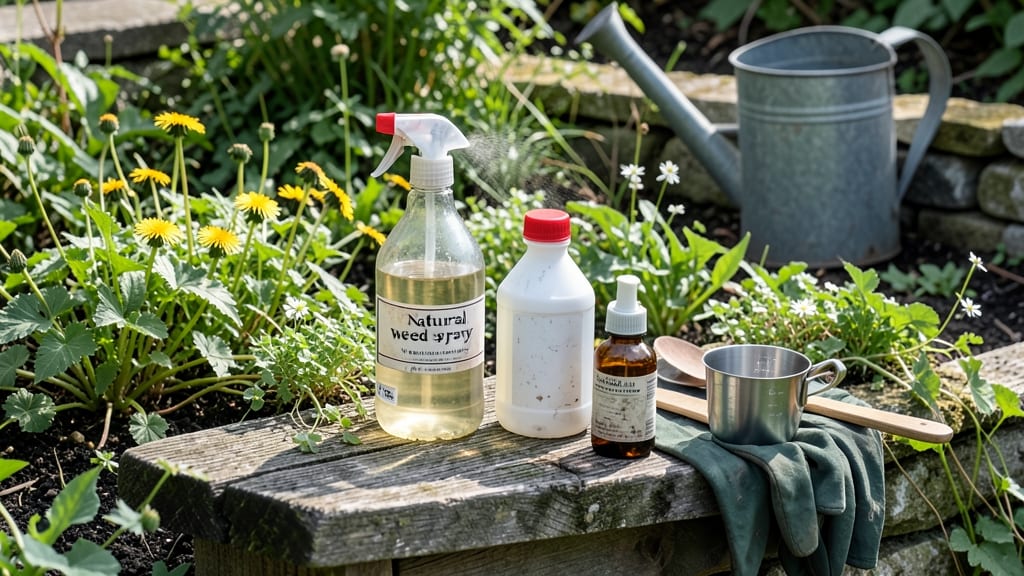
A natural weed spray vinegar with 20% acetic acid can kill weeds down to the roots in 24 hours—but only if you use the right dilution and timing.
I’ve tested this method on my stubborn crabgrass patches, and while it’s not a magic bullet, it’s the most effective non-toxic option for driveways, sidewalks, and non-organic mulch areas where you don’t want plants growing at all.
The key is balancing acidity with safety—undiluted vinegar burns foliage but rarely kills roots. A 1:1 ratio of white vinegar (5% acidity) to water works for most broadleaf weeds, but for tougher grasses like quackgrass, you’ll need 20% acetic acid (available at farm stores).
Always apply on a dry, sunny day to prevent runoff, and avoid spraying desirable plants or edible gardens—vinegar doesn’t discriminate.
What you’ll get is visible wilting within 6 hours and complete desiccation by day two. The roots break down over 1-2 weeks, leaving no regrowth.
It’s not as fast as glyphosate, but it’s zero-toxicity, biodegradable, and costs pennies per gallon. For best results, reapply after rain or if weeds resprout.
Pair this with mulching or hand-pulling for long-term control, and avoid using it near lawns or perennials—vinegar’s acidity lingers in the soil. For organic garden beds, try boiling water or corn gluten meal instead. Ready to tackle those weeds without harsh chemicals?
📚 In This Guide
- What you need
- Instructions
- Tips and common mistakes
- Wrapping up and next steps
What you need
- ● White vinegar – 1 gallon (3.8 liters) (ensure it’s 5-10% acetic acid for best results).
- ● Water – 1 cup (8 oz or 240 ml) (distilled or tap water works).
- ● Dish soap – 1 tablespoon (15 ml) (unscented liquid dish soap to help the spray stick).
- ● Spray bottle – 1 gallon-sized (or a pump sprayer for larger areas).
- ○ Neem oil (optional but recommended) – 1 tablespoon (15 ml) (enhances weed-killing power and deters regrowth).
- ● Measuring cups and spoons (for precise mixing).
- ● Funnel (if transferring vinegar to the spray bottle).
- ● Protective gear – gloves, long sleeves, and safety goggles (vinegar can irritate skin and eyes).
- ● Sunny day – Apply the spray on a clear, sunny day (heat helps activate the vinegar’s acidity).
- ● Label or marker (to mark your spray bottle to avoid confusion).
- ● Salt – ½ cup (60g) (boosts weed-killing power but may harm soil long-term—use sparingly).
- ● Citric acid – 1 tablespoon (15g) (amplifies vinegar’s effectiveness for tough weeds).
- ● Essential oils (e.g., peppermint or citrus) – 5-10 drops (adds a pleasant scent and repels pests).
Step-by-Step instructions for making a natural vinegar weed killer
Here's the precise method I've used for years to eliminate weeds—roots and all—without harsh chemicals.
Gather and Mix the Active Ingredients
Combine 1 gallon of white vinegar (the higher the acetic acid content, the better—aim for 5-10% acidity) with 1 cup of table salt and 1 tablespoon of liquid dish soap. The vinegar disrupts cellular function in weeds, the salt dehydrates them, and the soap helps the mixture cling to leaves and stems. Stir thoroughly until the salt dissolves completely—this ensures even distribution when applied.
Use a clean spray bottle (preferably 16-32 ounces) to mix the solution. I like to shake it gently between uses to redistribute any settled soap. Avoid metal containers—the vinegar will react with them over time. Store any unused mixture in a glass or plastic bottle labeled clearly as "weed killer" to prevent accidental use on plants.
Apply the Solution on a Clear, Sunny Day
Spray the mixture directly onto weed foliage until fully saturated, focusing on the leaves and stems. Avoid spraying desirable plants, as vinegar can harm them too. The best time to apply is on a sunny day when temperatures are above 70°F—this maximizes the acetic acid's effectiveness. Wait 24 hours before watering or expecting rain, as moisture dilutes the solution and reduces its potency.
For stubborn weeds, reapply the solution every 3-5 days until the leaves turn brown and crispy. You'll notice wilting within 6-12 hours and full desiccation within 2-3 days. This process works best on young weeds—older, established weeds may require multiple applications to fully weaken their root systems.
Monitor and Reapply as Needed
Check the treated area 48 hours after application to assess effectiveness. If weeds haven't fully browned, reapply the solution, ensuring full coverage. For weeds with deep root systems, like dandelions or clover, you may need to repeat the process every 7-10 days for 2-3 weeks to fully disrupt the roots. The key is consistency—vinegar doesn't kill roots overnight, but repeated applications weaken them over time.
Once weeds have completely dried out, use a hand weeder or small trowel to pull out the remaining stems. The roots should come out more easily now that the plant is weakened. Water the area lightly afterward to help settle the soil and prevent new weeds from sprouting. Avoid tilling, as it can spread weed seeds deeper into the soil.
Prevent Regrowth and Protect Desired Plants
To prevent weeds from returning, apply a thin layer of mulch (such as straw or wood chips) around treated areas. Mulch blocks sunlight, which weeds need to germinate. For garden beds, use 2-3 inches of mulch, while lawn areas can benefit from a thick layer of grass clippings after mowing. This not only suppresses weeds but also retains soil moisture and improves soil health over time.
If you have plants nearby that you want to protect, shield them with cardboard or burlap barriers before spraying. Vinegar can drift and damage sensitive foliage. For lawns, consider spot-treating weeds rather than broadcasting the solution widely. Always test a small, hidden area first to ensure the mixture doesn’t discolor or harm the surrounding plants.
Tips & tricks for effective natural weed spray application
Mastering this vinegar weed killer takes more than just mixing ingredients—it's about timing, technique, and understanding how weeds respond to treatment.
Acidity Matters: For maximum weed-killing power, use white vinegar with at least 5% acetic acid content. The higher the concentration (up to 10%), the faster weeds will wilt. I've found that 5% works well for most weeds, but tougher varieties like dandelions respond better to the stronger 10% solution. Always check the label before purchasing—household vinegar typically falls between 4-8% acidity, which still works but may require more frequent applications.
Application Technique: When spraying in Step 2, focus on the undersides of leaves where the stomata (tiny pores) are most concentrated. This allows the acetic acid to penetrate more effectively. Use a steady hand and keep the spray bottle about 6-8 inches away from foliage to ensure even coverage. For dense weed patches, work in sections—spray one area completely before moving to the next—to maintain consistent concentration.
Weather Watch: The 70°F minimum temperature in Step 2 isn't arbitrary—acetic acid works best when temperatures are warm. On cooler days, weeds may take longer to show signs of wilting (up to 12-24 hours instead of the 6-12 hours mentioned). If you must treat on cooler days, increase the vinegar concentration slightly or extend the 24-hour wait period before watering to 48 hours to prevent dilution.
Post-Treatment Care: After weeds have completely dried out (typically within 2-3 days), use a hand weeder to remove the weakened stems. The roots will be easier to pull now, but don't expect them to come out completely on the first attempt. For persistent weeds like clover, you may need to repeat the process every 7-10 days for 2-3 weeks to fully disrupt their root systems. This patience pays off—vinegar doesn't kill roots instantly, but consistent applications break them down over time.
Pro Tips for Natural Weed Spray Vinegar
- Mastering this vinegar weed killer takes more than just mixing ingredients—it's about timing, technique, and understanding how weeds respond to treatment.
- Acidity Matters: For maximum weed-killing power, use white vinegar with at least 5% acetic acid content.
- Application Technique: When spraying in Step 2, focus on the undersides of leaves where the stomata (tiny pores) are most concentrated.
Frequently asked questions
about using natural weed spray vinegar—because even the best DIY solutions come with questions! Here are answers to the most common ones to help you tackle weeds like a pro.How quickly does vinegar kill weeds?
Most weeds die within 24–48 hours after direct application, especially with a strong vinegar weed spray (like 20% acetic acid). However, underground roots may take 1–2 weeks to fully decompose. For stubborn weeds, reapply every 3–5 days until the plant wilts and dies.
Will vinegar harm my grass or plants?
Yes! Vinegar is non-selective, meaning it kills everything it touches—plants, grass, and even beneficial soil microbes. To protect desired plants, apply vinegar only on weeds on sunny days (avoid wind) and use a targeted spray nozzle. For lawns, spot-treat carefully or use a vinegar shield (like cardboard) around plants.
What’s the best time of day to spray?
Spray early morning or late afternoon when temperatures are below 85°F (30°C). Heat causes vinegar to evaporate faster, reducing effectiveness. Avoid spraying on frosty or windy days, as moisture and wind can dilute the spray before it works.
Can I use white vinegar or do I need something stronger?
White vinegar (5% acetic acid) is too weak for most weeds—it may take weeks to work (or not at all). For best results, use 20–30% acetic acid vinegar (available at farm stores) or mix 1 gallon of white vinegar + 1 cup dish soap + 1 cup salt for a stronger solution.
Why did my weeds come back after vinegar treatment?
Weeds often regrow from underground roots or seeds. To prevent regrowth:
For deep-rooted weeds (like dandelions), consider a follow-up with boiling water or a vinegar + salt mix for extra power.
Wrapping up and next steps
Ready to reclaim your yard without harsh chemicals? 🌱 Our natural vinegar weed spray is a game-changer—effective, budget-friendly, and eco-conscious! By targeting weeds at the root, you’ll see results in just 24 hours, saving time and effort while keeping your garden thriving.
Take the next step: mix your spray this weekend and watch those pesky weeds fade away. Your green space (and the planet) will thank you! 🌿