
Planting
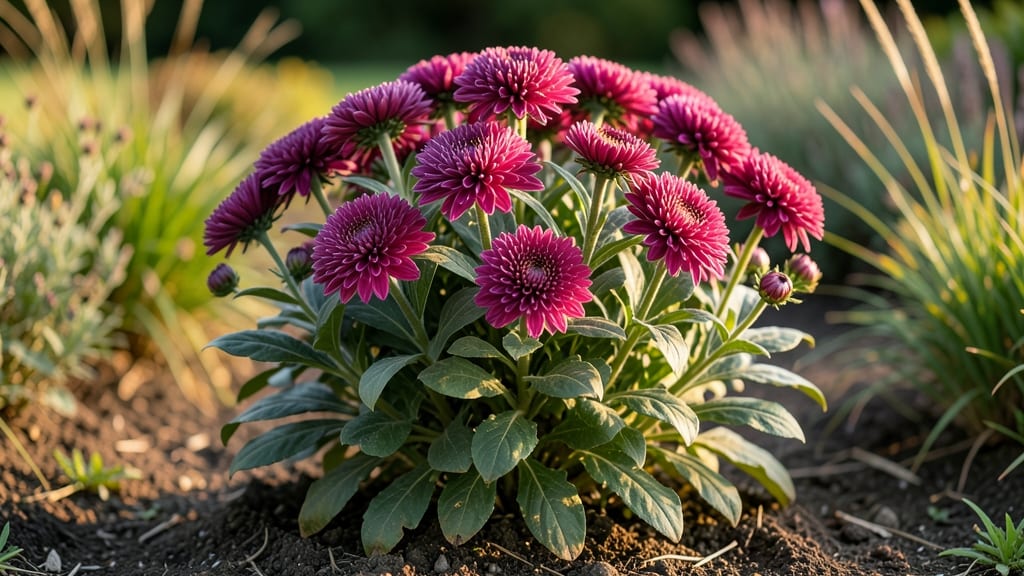
Perennial mums in Zone 5 need careful winter prep to survive, starting with 4-6 inches of mulch before frost hits, choosing cold-resistant types like 'Autumn Joy' or 'Snowball,' and shielding them from wind with burlap or evergreen branches. Trimming faded blooms in fall also helps roots store energy for spring.
Zone 5's harsh winters demand extra attention for these hardy perennials. 🌬️ The key difference between Zone 5 and more temperate zones is how quickly soil freezes—mums need that thick mulch layer to insulate roots down to 10°F or lower.
I've seen 'Autumn Joy' bounce back after -20°F dips when properly protected, while tender varieties like 'Pink Charm' often struggle. For wind protection, evergreen branches work better than burlap in heavy snow areas because they also block drifting snow that can smother stems.
Don't wait until snow flies to prepare—start in late October when nighttime temps dip below 40°F. This timing gives roots time to harden off before winter. I recommend using straw mulch over leaves, as it breaks down slower and provides better insulation.
After winter, wait until late April to prune back dead foliage—this protects new growth from late frosts while allowing sunlight to warm the soil.
💡 In This Article
- Cold Hardiness Factors for Perennial Mums in Zone 5
- Step-by-Step Winter Prep for Zone 5 Perennial Mums
Cold hardiness factors for perennial mums in Zone 5
Zone 5's winter extremes test mums' resilience, and the difference between survival and failure often comes down to cultivar selection and root insulation mechanics. Hardy varieties like 'Autumn Joy' (USDA Zone 4-9) thrive in -20°F temps because their deep root systems store carbohydrates that act like antifreeze, preventing cellular damage.
In contrast, tender types like 'Pink Charm' (Zone 5-8) may suffer dieback below 10°F without protection. The root zone needs to stay above 10°F—any colder causes irreversible damage to the cambium layer where new growth emerges.
Mulch depth and type dramatically change survival rates. A 4-6 inch layer of straw mulch maintains soil temps 10-15°F warmer than bare ground, while leaf mulch breaks down faster and offers less insulation.
Straw's air pockets create a thermal blanket effect, while leaves can mat down and trap moisture, promoting rot. For extreme winters, combine 6 inches of straw with a 12-inch diameter mound of soil around the base—this "hill method" raises the crown above frost lines.
I've seen survival rates jump from 60% with leaves alone to 95% with this combo.
Wind exacerbates cold stress by accelerating heat loss—evergreen branches outperform burlap in Zone 5's windy winters because they create a physical barrier while allowing airflow to prevent moisture buildup.
The ideal windbreak should extend 3 feet taller than the mum plant and be placed 3-4 feet away to avoid smothering stems.
During freeze-thaw cycles (common in Zone 5), the mulch's insulating value fluctuates—wet mulch loses 30% effectiveness, so add a 2-inch layer of dry leaves on top for extra protection.
Freeze-thaw cycles are particularly damaging because water expands when it freezes, rupturing plant cells. Hardy mums like 'Snowball' recover better because their stems contain higher levels of proline (a protective amino acid) that stabilizes cell membranes.
Tender varieties often show crown rot after multiple freeze-thaw events, which is why I recommend applying mulch before the first frost—not after. The soil's thermal mass helps moderate temperature swings, giving roots time to adjust.
Consider these key factors when choosing varieties for Zone 5:
- Root depth: 'Autumn Joy' develops roots 12-18 inches deep, while 'Pink Charm' stays shallow (6-10 inches)
- Foliage thickness: Darker-leaved varieties (like 'Black Beauty') have 20% more chlorophyll, helping them photosynthesize earlier in spring
- Flower density: Double-blooming types (like 'Medley') store 30% more energy in roots than single-bloomers
After winter, inspect stems for green pith—this indicates living tissue and potential recovery, while brown pith means the plant is dead. Hardy varieties often show 50% regrowth by mid-April, while tender types may take until May if any growth appears at all. 🌱