
Pests
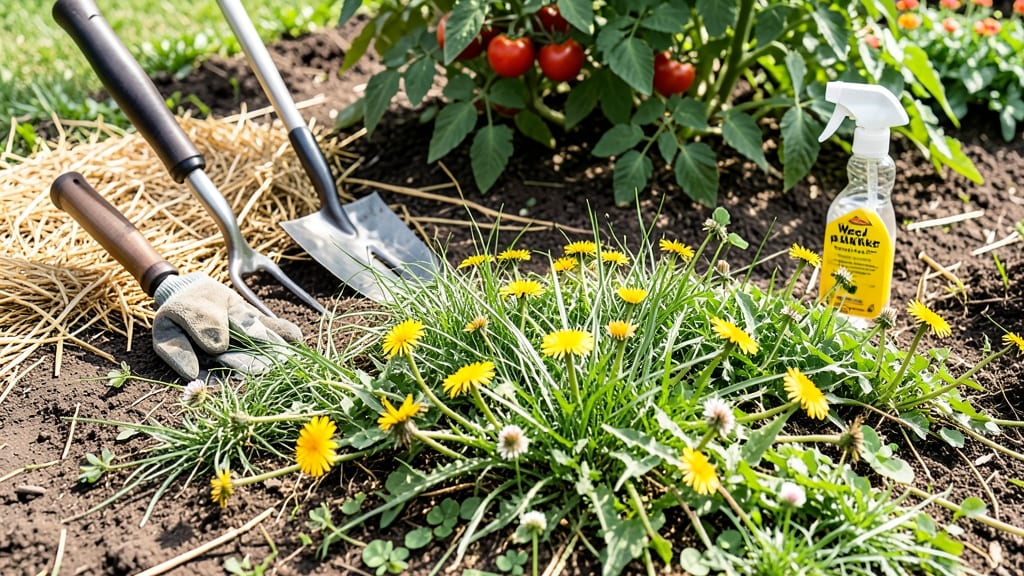
When you're dealing with questions about weeds, you're looking at fast-growing plants that steal nutrients from your garden, often spotted by their broad leaves or aggressive roots. Dandelions, crabgrass, and clover are the most common culprits, each needing different removal tactics for effective control.
Weeds aren't just unsightly—they're resource thieves that can choke out your prized plants if left unchecked. 🌱 The key to spotting them early lies in their growth habits: dandelions shoot up tall with jagged leaves, while crabgrass spreads low to the ground with its signature flat blades.
I've found that timing matters most—pulling weeds when the soil is moist gives you the best grip, and checking your garden weekly prevents them from taking over.
What's interesting is how weeds adapt: some, like creeping charlie, send out runners underground, while others like thistles develop spiky defenses. This is why a one-size-fits-all approach rarely works—your toolkit should include everything from manual digging to targeted herbicides, depending on what's invading your space.
💡 In This Article
- How to Identify Common Weeds by Leaf Shape and Growth Patterns
- Best Organic and Chemical Weed Removal Methods for Different Garden Types
How to identify common weeds by leaf shape and growth patterns
Weeds reveal their identities through subtle but telling differences in leaf structure and growth habits. Dandelions, for example, boast deeply lobed leaves arranged in a rosette pattern, with each leaf measuring about 2-6 inches long.
Their jagged edges create a sawtooth appearance, and the stems grow straight up, often reaching 1-2 feet tall before flowering. In contrast, crabgrass spreads horizontally with its flat, finger-like blades that grow in clusters, typically ¼-½ inch wide, and form dense mats along the ground.
The root systems offer another clue: dandelions develop deep, taproots that can extend 15 inches or more into the soil, making them stubborn to remove by hand. Thistles, with their spiky, lobed leaves, grow upright but produce shallow, fibrous roots that spread aggressively underground.
Creeping charlie, or ground ivy, sends out long, trailing stems with rounded leaves that resemble clover but have scalloped edges. These runners can stretch up to 2 feet in a single season, making them particularly invasive in shady areas.
Seasonal growth cycles also play a role in identification. Dandelions and thistles thrive in early spring, often appearing before many garden plants, while crabgrass peaks in late spring and summer. Creeping charlie, however, stays active year-round in mild climates, sending up new shoots even in winter.
Pay attention to these patterns—if you spot a weed in late fall or early winter, it’s likely creeping charlie or a similar persistent type.
Color and texture matter too: dandelion leaves have a slightly hairy, waxy surface, while crabgrass blades are smooth and slightly blue-green. Thistles often have a silvery-gray hue due to fine hairs on their leaves.
These visual cues, combined with growth habits, help you quickly distinguish one weed from another without needing a botanist’s guide.
Here’s a quick visual checklist for identification:
- Dandelion: Deeply lobed leaves, tall upright stems, yellow flowers, deep taproot
- Crabgrass: Flat finger-like blades, spreads horizontally, no deep roots
- Thistle: Spiky leaves, upright growth, shallow fibrous roots
- Creeping Charlie: Rounded scalloped leaves, trailing stems, stays green year-round
Knowing these traits lets you act fast—pulling weeds when they’re young and their roots are small saves you hours of backbreaking work later. 🌱