
Pests
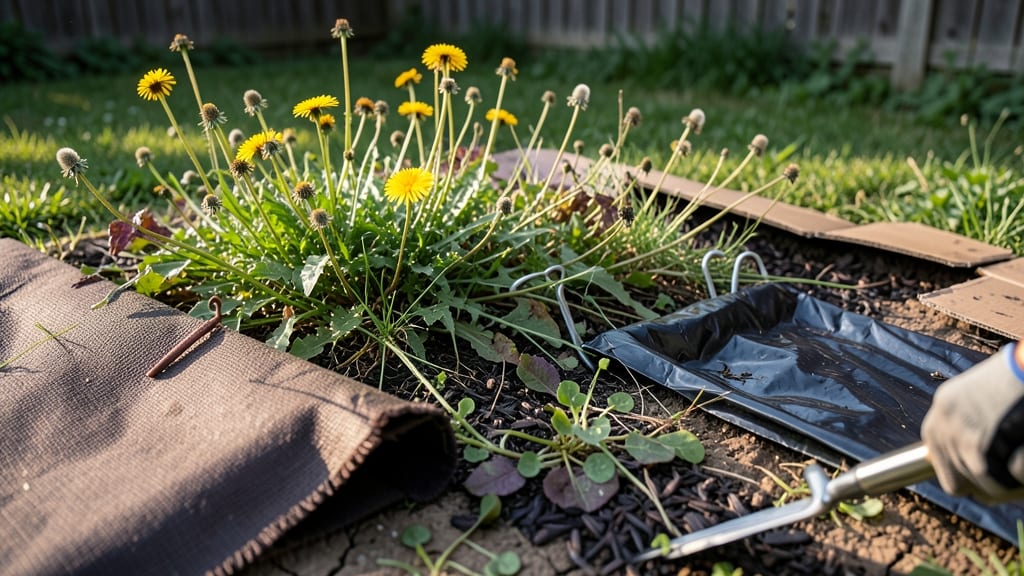
Sheet weeding blocks sunlight to weed roots, cutting off their energy source and preventing regrowth naturally. Use thick cardboard, mulch, or landscape fabric for best results in garden beds or lawns.
This method works by creating a physical barrier that stops photosynthesis, which weeds need to survive. 🌱 Within 4-8 weeks, most weeds weaken and die from lack of light, while the organic layers break down to enrich the soil.
I've seen this work especially well in perennial weed areas where digging alone isn't enough—it's like giving your garden a chemical-free reset button.
For best results, layer materials properly: place cardboard with the printed side down, overlap edges by 4-6 inches, and cover with 3-4 inches of mulch. This setup not only blocks light but also retains moisture, creating an inhospitable environment for new weed seeds while protecting your soil.
💡 In This Article
- How Weed Suppression Works with Sheet Mulching
- Best Materials and Setup for Effective Weed Barriers
How weed suppression works with sheet mulching
Sheet mulching creates a physical barrier that disrupts photosynthesis—the process weeds absolutely rely on to survive. When sunlight can't reach their leaves, weeds lose their primary energy source, causing their root systems to weaken within 2-4 weeks.
The lack of chlorophyll production means no glucose is created, leading to starvation at the cellular level. This is particularly effective against broadleaf weeds like dandelions and clover, which have shallow roots but high light requirements.
The biological process goes deeper than just light deprivation. As organic layers (like cardboard or mulch) break down, soil microbes begin decomposing them, creating a competitive environment where weeds struggle to access nutrients.
The moisture retention from thick layers also prevents weed seeds from germinating—most seeds need light to trigger sprouting. I've noticed that in 6-8 weeks, even deep-rooted perennials like bindweed show significant dieback when properly smothered.
What makes this method so powerful is how it works in tandem with soil health. The decomposing organic matter improves soil structure and microbial activity, creating an environment where your desired plants thrive while weeds suffocate.
Unlike chemical herbicides that can harm beneficial soil organisms, sheet mulching feeds the ecosystem while eliminating weeds. The key is maintaining consistent coverage—even small gaps can let sunlight through and allow weeds to regrow.
Seasonal timing plays a role too. Applying sheet mulch in early spring or late summer gives weeds the least chance to recover. During summer's peak growth, weeds are most vulnerable to light deprivation because they're already expending maximum energy.
I've found that perennial weeds (like nutgrass) take 8-12 weeks to fully die back, while annuals like chickweed often succumb within 4-6 weeks of proper coverage.
Here's what's actually happening under your mulch layers: The top layer blocks light, the middle layer retains moisture, and the bottom layer (like soil or compost) provides nutrients for beneficial microbes.
This three-layer system creates a "weed-proof" environment that's both effective and sustainable. The decomposition process also gradually converts the organic matter into humus, which improves soil fertility over time.
One common misconception is that sheet mulching only works for small garden beds. In reality, it's equally effective for large lawn areas when using heavy-duty materials like 10-ounce landscape fabric or 3-layer cardboard.
The key is ensuring complete coverage—even a 1-inch gap can let sunlight through and allow weeds to persist.