
Tools
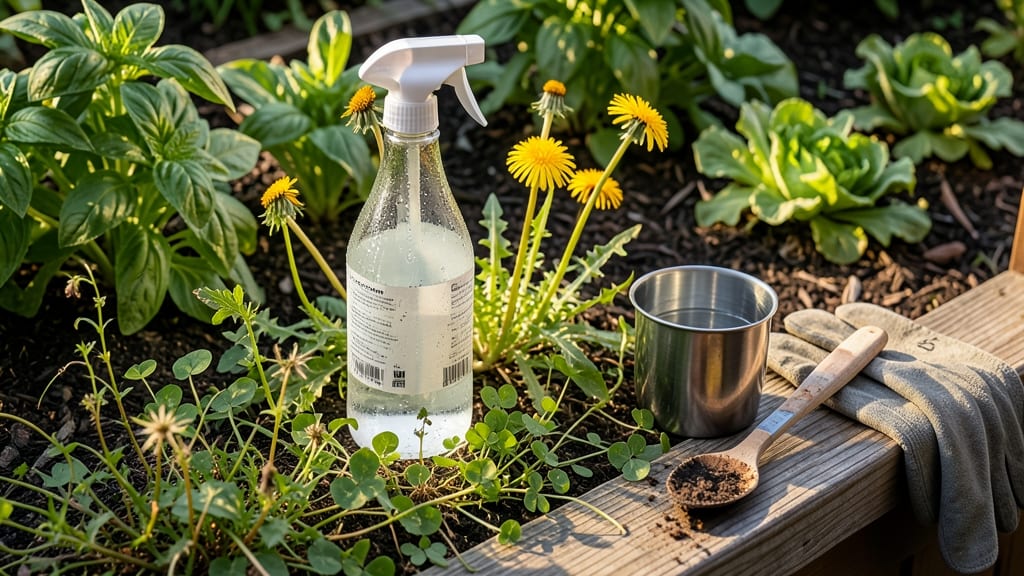
Using vinegar as a weed killer in the garden effectively destroys unwanted plants by breaking down their cell structure within 24 to 48 hours. Apply undiluted white vinegar (5% acetic acid) on sunny days, but never spray near plants you want to keep.
Vinegar's acetic acid acts like a natural herbicide by disrupting the cellular membranes of weeds, causing them to dry out and die. 🌱 The 5% solution found in most household vinegar works well for broadleaf weeds, while stronger 20% solutions (available at garden centers) are better for tougher weeds like dandelions.
Timing matters—apply when weeds are actively growing and the sun is shining to maximize effectiveness.
For best results, spray on a dry, sunny day when temperatures are above 70°F. Avoid windy conditions to prevent drift onto your desired plants.
I always use a spray bottle with a fine mist nozzle to control application, and I never apply vinegar to soil where you plan to plant later—it can linger and harm new seedlings.
💡 In This Article
- How Vinegar Kills Weeds: Science and Effectiveness
- Best Practices for Safe Vinegar Weed Control in Gardens
How vinegar kills weeds: science and effectiveness
Vinegar’s weed-killing power comes from its acetic acid content, which acts as a natural herbicide by disrupting plant cell membranes. When sprayed directly on weeds, the acid penetrates their leaves and stems, causing rapid dehydration and death within 24-48 hours.
This process is called desiccation, where the vinegar breaks down the waxy cuticle layer that protects plants, allowing moisture to escape while preventing nutrient absorption. Think of it like a chemical sunburn for weeds—their tissues dry out and turn crispy, similar to how salt kills slugs by dehydrating their bodies.
The effectiveness depends heavily on acetic acid concentration: standard 5% white vinegar works well for small weeds and annual broadleaf plants, while concentrated 20% horticultural vinegar (often labeled as "weed killer vinegar") is better for tougher perennials like dandelions or clover.
For example, a 20% solution can kill weeds with just one application, whereas 5% vinegar may require 2-3 treatments spaced 3-5 days apart. Humidity also plays a role—high moisture levels can dilute the vinegar’s impact, so sunny, dry conditions (above 70°F) are ideal for maximum absorption.
Sunlight is your ally here. The heat from direct sunlight enhances the vinegar’s effectiveness by accelerating evaporation, which concentrates the acetic acid on the weed’s surface. Without sunlight, the process slows down significantly, and you might see weeds regrowing from their roots.
I’ve noticed that weeds like chickweed or crabgrass—with shallow root systems—die faster than deep-rooted plants like thistles, which may require follow-up treatments.
The key is consistency: apply vinegar when weeds are actively growing (typically spring and fall) and avoid treating areas where you plan to plant soon, as residual acetic acid can harm new seedlings.
One common misconception is that vinegar works instantly like commercial herbicides. In reality, the drying process takes time, and you’ll often see weeds wilting within 6-12 hours but fully dead only after 2-3 days.
The acetic acid doesn’t kill roots immediately, so for weeds with deep taproots (like dandelions), you may need to repeat the application until the entire plant turns brown and crumbles.
For best results, I recommend targeting weeds when they’re young and small—older, woody stems are harder to penetrate, reducing the vinegar’s effectiveness.
Consider these factors when choosing your approach:
- Weed type: Broadleaf weeds (like plantain) respond well to 5% vinegar, while tougher weeds need 20%
- Weather: Apply on sunny days with temperatures above 70°F for optimal results
- Application method: Use a spray bottle with a fine mist nozzle to avoid overspray on desired plants
- Follow-up: Reapply every 3-5 days for stubborn weeds until fully dead
What most people don’t realize is that vinegar’s effectiveness varies by plant species. For instance, grasses (like crabgrass) often resist vinegar better than broadleaf weeds because their waxy leaf surfaces repel the solution.
If you’re dealing with a mixed weed population, a 20% vinegar solution mixed with a drop of dish soap can improve adhesion and penetration. Just remember: vinegar is non-selective, so always protect nearby plants with cardboard shields or by applying it only to the weed’s foliage.