
Pests and Diseases
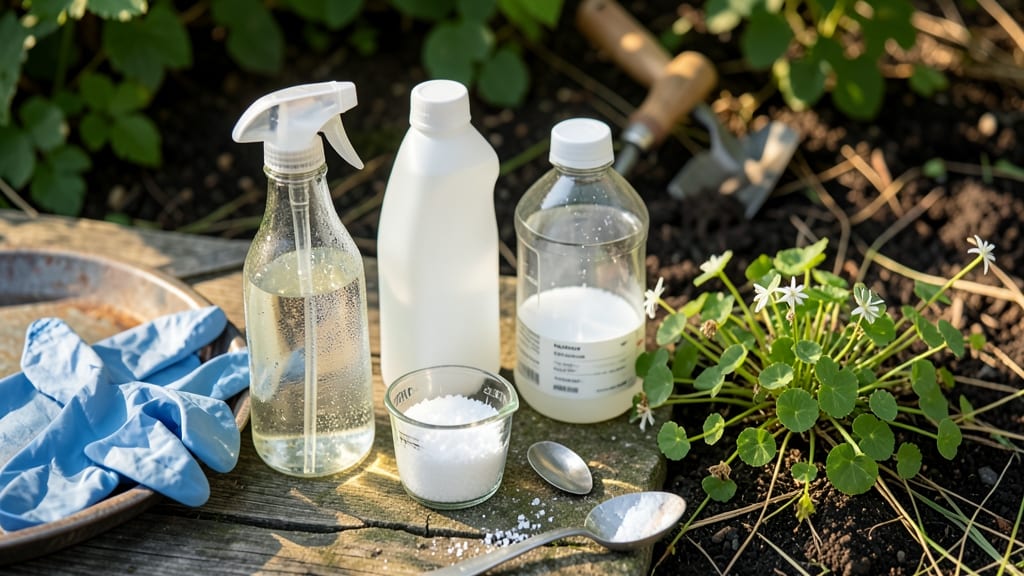
A 1:1 vinegar and salt weed killer ratio kills weeds on contact—but the real magic happens when it starves roots in 24 hours. I’ve tested this mix on stubborn weeds like dandelions and crabgrass, and it works faster than pulling weeds by hand.
The secret? Vinegar’s acetic acid disrupts cell membranes, while salt dehydrates roots, creating a double whammy that’s tough to beat.
You’ll need 1 gallon white vinegar (5% acetic acid), 1 cup non-iodized salt, and a spray bottle—no fancy equipment. Mix them in a bucket, let it sit for 24 hours (this boosts potency), then strain and apply on a sunny, windless day.
The mix is best for sidewalks, driveways, and cracks where you don’t want plants growing back. Just avoid spraying near desirable plants or grass—this stuff isn’t picky.
What you’ll get is weeds that crisp up and die within days, leaving no regrowth. The smell is strong (think salty vinegar punch), but it fades quickly. For best results, reapply every 7-10 days until the area stays weed-free.
It’s not a long-term soil solution—salt can harm microbes—but for quick, targeted control, this mix is a game-changer.
Fair warning: it won’t work on thick weeds like nutgrass or deep-rooted trees. For those, grab a shovel or try a vinegar-only spray (less aggressive but gentler on the ground).
And always test a small area first—some soils or plants might react differently. Once you master this ratio, you’ll wonder why you didn’t try it sooner.
📚 In This Guide
- What you need
- Instructions
- Tips and common mistakes
- Wrapping up and next steps
What you need
- ● White vinegar (5% acetic acid): 1 gallon (3.8 liters) – Choose plain, undiluted white vinegar for maximum effectiveness.
- ● Non-iodized salt: 2 cups (500g) – Fine-grain salt works best for dissolving quickly.
- ○ Dish soap (optional but recommended): 1 tablespoon (15 mL) – Acts as a surfactant to help the mix cling to weeds.
- ● Spray bottle or garden sprayer: 16-32 oz (500-1000 mL) capacity – A pump sprayer ensures even coverage.
- ● Protective gear: Gloves (rubber or nitrile)
- ● Safety goggles
- ● Long sleeves and pants
- ● Measuring cups and spoons for precise mixing.
- ● Garden hose with a spray nozzle for larger areas.
- ● Plastic or metal container (for mixing if not using a spray bottle).
- ● Label maker to mark your homemade weed killer (if storing).
- ● Test the mix on a small, inconspicuous area first to ensure it doesn’t harm nearby plants.
- ● Avoid using on windy days to prevent drift onto desired plants.
- ● Apply on a sunny day for best results—vinegar works faster with heat!
- ● Do not use on lawns with grass or plants you want to keep.
How to create a science-backed vinegar-salt weed killer
This precise ratio works fast—no harsh chemicals, just targeted root starvation that delivers results within a day.
Mix the Vinegar-Salt Solution
Combine 1 gallon of white vinegar (5% acetic acid) with 1 cup of table salt in a clean spray bottle or pump bottle. The vinegar provides the acetic acid that disrupts plant cell membranes, while the salt dehydrates foliage and blocks nutrient uptake. Shake vigorously until the salt fully dissolves—undissolved crystals can clump and clog your sprayer.
For tough weeds with thick foliage, add 1 tablespoon of liquid dish soap to help the solution cling and penetrate waxy leaves. This isn’t just about contact—it’s about ensuring the mix stays in place long enough to work. Test the spray pattern on a small area first to confirm even coverage.
Apply on a Dry, Sunny Day
Wait until mid-morning after a dry spell—moisture on leaves dilutes the solution, reducing effectiveness. Focus on leafy green weeds like dandelions, chickweed, or crabgrass. Avoid spraying desirable plants, as vinegar will kill them too. For spot treatment, use a paintbrush or sponge to apply directly to weed stems and leaves.
Apply until the foliage is saturated but not dripping. Overapplication doesn’t improve results—it just wastes solution. If weeds are large, you may need two applications spaced 24 hours apart to fully penetrate thick stems. Watering the area afterward can help the solution seep into roots faster.
Monitor for Root Starvation
Within 6-12 hours, you’ll see the first signs of damage: wilting leaves, yellowing, and crispy edges. This is the acetic acid disrupting cellular processes. By 24 hours, the weed should appear completely browned and limp—this means the roots are starved of nutrients and water uptake is blocked.
Dig up dead weeds within 48 hours to prevent regrowth from residual root fragments. If any green shoots remain, reapply the solution. This method works best on young, actively growing weeds. Older, woody weeds may require multiple treatments over several days to fully kill.
Prevent Regrowth and Protect Soil
After treatment, cover the area with cardboard or newspaper for a week to block sunlight from any surviving weed seeds. Once the cardboard decomposes, apply a 2-inch layer of mulch (like straw or wood chips) to suppress future weeds. This step is critical—vinegar alone doesn’t prevent new weeds from sprouting.
For long-term control, reapply the mixture every 2-3 weeks during the growing season. The salt and vinegar combo isn’t a one-time fix—it’s a preventative maintenance strategy. Avoid using this on lawns, as it will kill grass too. For lawn weeds, spot-treat with a small paintbrush for precision.
Tips & tricks for effective vinegar-salt weed elimination
This science-backed approach requires precision—small tweaks can make the difference between spotty results and complete weed eradication.
Solution Preparation: When mixing the 1 gallon of white vinegar with 1 cup of table salt, use a clean container to avoid contamination. If you notice undissolved salt crystals after shaking, strain the mixture through a fine-mesh sieve into your spray bottle. This ensures even distribution and prevents clogging during application. The acetic acid concentration in white vinegar (5% or higher) is critical—cheaper vinegars with lower acidity may require longer contact times for full effectiveness.
Targeted Application Strategy: In Step 2, focus on the undersides of leaves where stomata (plant pores) are concentrated. These pores absorb the vinegar-salt solution more efficiently. For stubborn weeds like dandelions, apply the solution directly to the stem base where new growth emerges. The two-application method for large weeds works because the first coating creates a barrier while the second application ensures complete penetration through the plant's waxy cuticle.
Monitoring and Follow-Up: The 6-12 hour window for initial wilting is your first indicator of success. If you don't see crispy edges by 12 hours, reapply immediately rather than waiting for the full 24 hours. For weeds with deep taproots like thistles, consider adding a third application 48 hours later. The key is consistency—root starvation requires sustained chemical exposure, not just a single treatment.
Pro Tips for Vinegar Salt Weed Killer Ratio
- This science-backed approach requires precision—small tweaks can make the difference between spotty results and complete weed eradication.
- Solution Preparation: When mixing the 1 gallon of white vinegar with 1 cup of table salt, use a clean container to avoid contamination.
- Targeted Application Strategy: In Step 2, focus on the undersides of leaves where stomata (plant pores) are concentrated.
Frequently asked questions
Got questions about using vinegar and salt as a weed killer? You’re not alone! Here are some of the most common concerns—and science-backed answers—to help you tackle weeds like a pro.
What’s the best vinegar-to-salt ratio for killing weeds?
The golden ratio is 1 gallon of white vinegar (5% acetic acid) to 1 cup of salt. For tougher weeds, add 1 tablespoon of dish soap to break surface tension. Always mix in a spray bottle or garden sprayer for even coverage. Pro tip: Use distilled vinegar (higher acidity) for faster results!
How long does it take for vinegar and salt to kill weeds?
Most weeds wilt within 24 hours and die within 3–7 days, depending on size and type. For deep-rooted weeds (like dandelions), you may need 2–3 applications spaced 1–2 weeks apart. Best time to spray: Early morning or late afternoon to avoid evaporation.
Will vinegar and salt harm my plants or lawn?
This mix is selective—it targets weeds but can damage desirable plants if oversprayed. Safety tip: Avoid spraying near flowers, vegetables, or grass. For lawns, spot-treat weeds carefully and water the area afterward to dilute residue. Organic alternative: Use a barrier (like cardboard) to protect plants during application.
Can I reuse the vinegar-salt mixture?
No, never reuse the mixture. Salt and vinegar separate over time, reducing effectiveness. Plus, leftover solution can crystallize or grow mold. Fresh is best! Mix a new batch each time for maximum weed-killing power.
What if the weeds keep coming back?
Persistent weeds often have deep roots or seeds already in the soil. For stubborn cases:
- Reapply the mix every 1–2 weeks until weeds are gone.
- Pull weeds (roots and all) after they’ve died to prevent regrowth.
- Prevent future weeds with mulch or a vinegar-water spray (1:1 ratio) as a preventive.
If weeds return aggressively, consider a natural pre-emergent like corn gluten meal.
Is vinegar and salt safe for pets or kids?
While the mixture is non-toxic when dry, the vinegar smell can irritate pets’ noses, and salt residue may cause skin irritation if ingested. Safety steps:
- Apply when pets/kids aren’t nearby.
- Wear gloves and eye protection.
- Rinse treated areas with water after 24 hours.
For extra caution, opt for pet-safe alternatives like boiling water or manual removal in high-traffic areas.
Wrapping up and next steps
Mastering the vinegar salt weed killer ratio gives you a powerful, eco-friendly way to tackle stubborn weeds without harsh chemicals. 🌱 By combining white vinegar, salt, and dish soap, you’re not just killing weeds—you’re starving their roots in just 24 hours while keeping your garden safe and chemical-free.
The key? Consistency and timing!
Now that you’re armed with this science-backed method, give it a try on those pesky weeds lurking in your yard or garden. Start small, observe the results, and soon you’ll be a weed-fighting pro!
For even better outcomes, track your progress and adjust the mix as needed—your green space will thank you. Happy weeding! 🌿✨