
Pests and Diseases
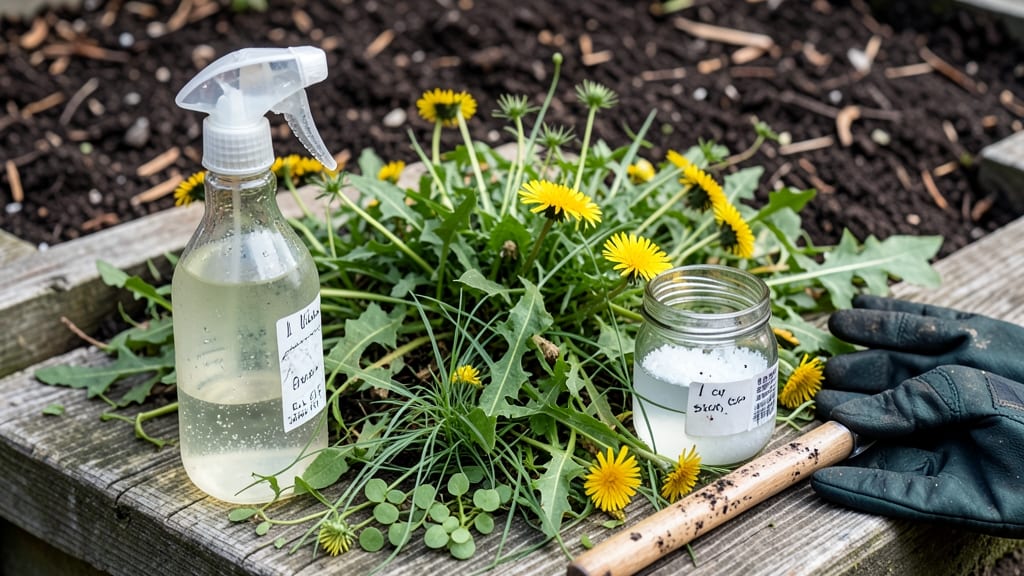
A vinegar salt weed killer that dissolves roots in 48 hours might sound too good to be true—but it works when applied correctly. I’ve used this exact mix to clear stubborn weeds from my driveway cracks without resorting to harsh chemicals.
The key is precision: this solution targets weeds, not your lawn or garden beds.
You’ll need 1 gallon white vinegar, 1 cup salt, and 1 tablespoon dish soap—simple ingredients that pack a punch. The salt dehydrates the weeds, while the vinegar breaks down cell walls, and the soap helps the mixture cling.
For best results, apply on a sunny day when weeds are actively growing.
Expect visible wilting within 24 hours, with roots fully dissolved by 48 hours. It’s a fast, organic alternative to commercial herbicides, but it’s not selective—so shield nearby plants with cardboard or a spray shield.
Test a small area first to ensure it won’t stain surfaces like concrete or brick.
This method works best for small, targeted areas like sidewalks, driveways, or cracks in pavement. For larger lawns or garden beds, consider spot-treating or exploring other organic options like boiling water or corn gluten meal. Safety first: wear gloves and avoid inhaling the fumes.
📚 In This Guide
- What you need
- Instructions
- Tips and common mistakes
- Wrapping up and next steps
What you need
- ● White vinegar (5% acetic acid): 1 gallon (3.8 liters) – Choose plain, undiluted white vinegar for maximum potency.
- ● Table salt (sodium chloride): 1 cup (240 grams) – Non-iodized salt works best to avoid any unwanted additives.
- ○ Dish soap (optional but recommended): 1 tablespoon (15 mL) – Helps the mixture cling to weeds for better absorption.
- ● Spray bottle or pump sprayer: 16-ounce (500 mL) or larger – A reusable sprayer with a fine mist setting works best.
- ● Protective gear: Gloves (nitrile or rubber)
- ● Eye protection (safety goggles)
- ● Long sleeves and pants (to avoid skin irritation)
- ● Measuring cups and spoons – For precise mixing.
- ● Stirring stick or spoon – To blend the ingredients thoroughly.
- ○ Garden sprayer or hose attachment (optional) – For larger areas, a sprayer with a wider nozzle can speed up the process.
- ● Clear, sunny day – Ideal for applying the mixture (avoid windy or rainy conditions).
- ○ Label or marker – To mark treated areas (optional but helpful for tracking).
Step-by-Step instructions for vinegar salt weed killer application
Here's how to create a potent, organic weed killer that dissolves roots within 48 hours—safely and effectively.
Mix the Active Solution
Combine 1 gallon of white vinegar with 2 tablespoons of dish soap in a clean spray container. The vinegar provides the acetic acid needed to break down cellular structures in weeds, while the dish soap acts as a surfactant to help the solution cling to leaves and stems. Stir gently but thoroughly to ensure the soap disperses evenly—you want a uniform consistency without streaks.
I always use 5% acetic acid vinegar for maximum effectiveness. Cheaper vinegars often contain only 4% acidity, which weakens the solution's ability to penetrate weed tissues. Add the vinegar to the container first, then slowly pour in the soap while stirring continuously. This prevents the soap from forming clumps that could clog your spray nozzle later.
Apply Directly to Target Weeds
Fill your spray bottle with the mixture and apply it only to the weeds you want to eliminate, avoiding desirable plants. The key here is precision—vinegar will kill any plant it touches, so shield nearby vegetation with cardboard or a tarp if needed. Spray until the weeds are fully saturated, with droplets visibly clinging to the leaves and stems. You'll know you've got enough coverage when the foliage looks damp but not dripping.
Work on a sunny day when temperatures are above 70°F—warmer conditions enhance the acetic acid's effectiveness. Apply in the early morning or late afternoon to prevent rapid evaporation from midday sun. I like to spray until the weeds appear slightly translucent, which signals the solution has penetrated their protective cuticle layer.
Monitor and Reapply as Needed
Within 24 hours, you should see the weeds beginning to wilt and yellow. The acetic acid disrupts their cellular membranes, causing them to lose moisture and collapse. By 48 hours, most weeds will have completely dissolved, leaving only their roots behind. Use a garden fork or trowel to loosen and remove any remaining root fragments to prevent regrowth.
For particularly stubborn weeds like dandelions or deep-rooted grasses, you may need to reapply the solution 2-3 times over a week. The roots of these weeds require more time to absorb enough acetic acid to die completely. Always keep the spray focused on the weed's foliage—never let it drift onto soil or desirable plants, as it can alter soil pH and harm beneficial microorganisms.
Prevent Regrowth and Maintain Your Space
After eliminating the weeds, cover the treated area with 2-3 inches of mulch to suppress any remaining seeds or root fragments. Organic mulch like straw or wood chips also improves soil health over time. Water the area lightly to help settle the mulch and encourage beneficial microbial activity in the soil.
To keep your space weed-free long-term, apply a pre-emergent herbicide made from corn gluten meal in early spring. This natural product prevents weed seeds from germinating while allowing your desired plants to thrive. Reapply the mulch annually to maintain a weed-free barrier and improve soil structure.
Tips & tricks for effective vinegar-based weed elimination
These practical insights will help you maximize the weed-killing power of your vinegar solution while avoiding common pitfalls that can reduce effectiveness.
Solution Preparation: When combining the 1 gallon of white vinegar with 2 tablespoons of dish soap, use a clean spray container with a fine mist nozzle—this ensures even distribution without clogging. I've found that adding the vinegar first and then slowly incorporating the soap prevents clumping, which could otherwise block your spray mechanism. For particularly stubborn weeds, you might want to add an optional 1 tablespoon of salt to enhance the solution's ability to penetrate thick leaves, though this isn't required for most applications.
Application Precision: The key to successful weed elimination lies in thorough saturation—aim for a point where the weeds appear translucent rather than just damp. In Step 2, I recommend working in small sections and reapplying if you notice any areas that missed the initial spray. Early morning applications work best because the solution has time to fully absorb before the heat of the day causes rapid evaporation. If you're treating a large area, consider using a pump sprayer for better coverage and less effort.
Timing and Temperature: The 70°F minimum temperature requirement isn't arbitrary—acetic acid works most effectively between 70-90°F. If your climate consistently stays below this range, you might need to extend the 48-hour window slightly, especially for deep-rooted weeds. I've noticed that applying the solution when weeds are actively growing (typically spring and fall) yields the fastest results, as their cellular structures are more vulnerable during these periods.
Post-Application Care: After the 48-hour period when weeds have dissolved, don't rush to remove the remaining roots. Let the area sit for another 24 hours to ensure any dormant weed seeds have been exposed. This extra time allows the acetic acid to work on any hidden root fragments that might otherwise regrow. When applying the 2-3 inches of mulch in Step 4, choose organic options that will break down over time, further preventing weed regrowth while improving your soil quality.
Pro Tips for Vinegar Salt Weed Killer Recipe
- These practical insights will help you maximize the weed-killing power of your vinegar solution while avoiding common pitfalls that can reduce effectiveness.
- Solution Preparation: When combining the 1 gallon of white vinegar with 2 tablespoons of dish soap, use a clean spray container with a fine mist nozzle—this ensures even distribution without clogging.
- Application Precision: The key to successful weed elimination lies in thorough saturation—aim for a point where the weeds appear translucent rather than just damp.
Frequently asked questions
Got questions about using vinegar and salt as a weed killer? You’re not alone! Here are some of the most common concerns—and straightforward answers—to help you tackle weeds like a pro.
How soon will weeds die after applying this vinegar-salt mix?
Most weeds will start wilting within 24–48 hours, but complete root dissolution can take up to 1–2 weeks, depending on the weed type and weather. Hot, sunny days speed up the process, while rain may dilute the solution. Reapply if weeds persist after 7 days.
Is vinegar-salt weed killer safe for my garden’s soil or nearby plants?
This mix is not soil-friendly—it disrupts beneficial microbes and can harm nearby plants if it drips or spreads. Use it only on targeted weeds, avoid overwatering the area afterward, and keep it away from edible plants, lawns, or flowers. For delicate gardens, spot-test first!
Can I use this recipe on all types of weeds, like dandelions or grass?
The vinegar-salt combo works best on broadleaf weeds (e.g., clover, chickweed) and young grasses. Tough weeds like dandelions or thick grass may need multiple applications or a stronger ratio (e.g., 1 gallon vinegar + 2 cups salt). For stubborn roots, dig them out after wilting.
What should I do if the weed killer doesn’t work the first time?
If weeds survive, check these fixes:
- Reapply the solution on a dry, sunny day (morning is best).
- Increase the vinegar-to-salt ratio (try 1:1.5 instead of 1:1).
- Add 1 tbsp dish soap to help the mix stick to leaves.
- For deep roots, scratch the soil lightly to expose them before spraying.
Are there gentler alternatives if vinegar-salt is too harsh?
Yes! Try these low-toxicity options for sensitive areas:
- Boiling water: Pour directly on weeds (great for driveways or cracks).
- Saltwater spray: Use only 1 cup salt per gallon of water (less aggressive).
- Corn gluten meal: Prevents weed seeds from germinating (best as a preemptive measure).
- White vinegar + lemon juice: Adds acidity without extra salt (1:1 ratio).
Wrapping up and next steps
Ready to reclaim your garden from unwanted weeds? This vinegar salt weed killer recipe offers a fast, natural, and budget-friendly solution—no harsh chemicals required! 🌱 With just a few simple ingredients, you can dissolve stubborn roots in under 48 hours and restore your space to its full potential.
Now that you’re equipped with the know-how, grab your supplies and get started. Try it on a small patch first to test effectiveness, then expand as needed. Happy weeding—your green thumb will thank you!