
Pests
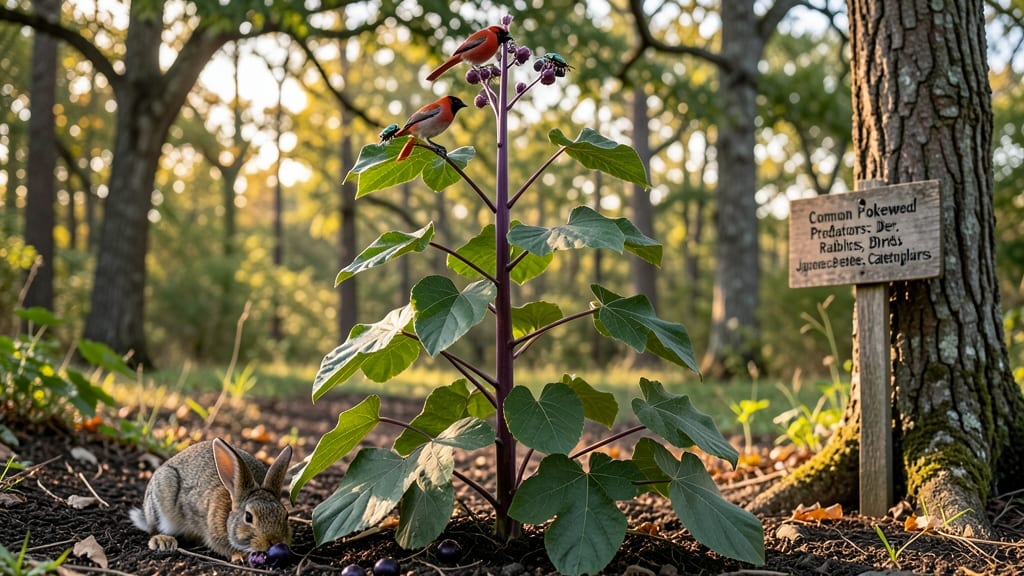
Animals that eat pokeweed include deer, rabbits, and specialized insects like pokeweed caterpillars, along with birds such as northern mockingbirds and wild turkeys that feed on its berries, helping control its spread naturally.
Pokeweed's role in ecosystems depends heavily on these natural consumers, which act as a biological check on its aggressive growth. 🌿 Deer and rabbits primarily target the tender shoots and leaves, while insects like the pokeweed caterpillar (a specialized feeder) focus on the foliage during their larval stages.
Birds, particularly northern mockingbirds and wild turkeys, play a crucial role in dispersing seeds but also consume the berries, reducing the plant's reproductive success. This natural balance prevents pokeweed from overwhelming native plant communities.
The timing of these interactions matters—spring and summer see peak feeding activity when pokeweed is most palatable. Creating wildlife-friendly habitats, like leaving some pokeweed patches undisturbed or adding water sources, can encourage these animals to stay and help manage the plant.
This approach works best in areas where chemical controls aren't practical or desirable.
💡 In This Article
- Natural Predators of Pokeweed: How Animals Control Its Growth
- Encouraging Wildlife to Manage Pokeweed in Your Garden
Natural predators of pokeweed: how animals control its growth
Pokeweed's ecological balance relies heavily on specialized herbivores that target its most vulnerable parts. Deer and rabbits primarily feed on the young shoots and leaves during spring and early summer when the plant's nitrogen content is highest.
These animals prefer the tender growth, which contains 15-20% protein—a critical nutrient for their diets. The pokeweed caterpillar, a bright yellow-green larva of the moth Compsa fabia, is particularly effective at controlling foliage growth, often defoliating entire plants by late summer.
The plant's berries become a seasonal delicacy for birds like northern mockingbirds and wild turkeys, which consume them in late summer to early fall when the fruits ripen to a deep purple.
These birds play a dual role: they reduce seed dispersal while also spreading viable seeds through their droppings, though many seeds fail to germinate due to digestive processes. Interestingly, studies show that only about 10-20% of ingested pokeweed seeds survive to sprout, acting as a natural population control mechanism.
Seasonal availability dictates feeding patterns—deer and rabbits shift to other plants as pokeweed becomes tougher in late summer, while insects like the pokeweed caterpillar time their life cycles to coincide with peak foliage growth. This synchronized feeding prevents pokeweed from monopolizing sunlight and nutrients, allowing native plants to thrive.
The plant's high oxalate content (up to 1.2% dry weight) makes it toxic to most herbivores, but these specialized species have evolved tolerance mechanisms.
In agricultural settings, pokeweed's natural predators create a self-regulating ecosystem. For example, a single pokeweed caterpillar can consume up to 10 square inches of leaf surface per week during its larval stage, significantly slowing the plant's expansion.
This biological control is particularly valuable in organic farming, where chemical herbicides are prohibited. The plant's ability to regenerate from root cuttings makes mechanical removal less effective, underscoring the importance of these natural consumers.
One fascinating adaptation is how pokeweed's berries change color from green to purple as they ripen—a visual cue for birds to identify ripe fruit. This color shift is triggered by anthocyanin production, which also makes the berries less palatable to mammals like deer.
The plant's survival strategy relies on this dual approach: attracting birds to disperse seeds while deterring overconsumption by larger herbivores.
Understanding these dynamics helps explain why pokeweed thrives in disturbed areas with limited natural predators. In undisturbed ecosystems, the combined pressure from deer browsing, insect defoliation, and bird seed consumption keeps pokeweed populations in check. This natural balance demonstrates how interconnected food webs maintain ecological stability without human intervention.