
Companion Plants
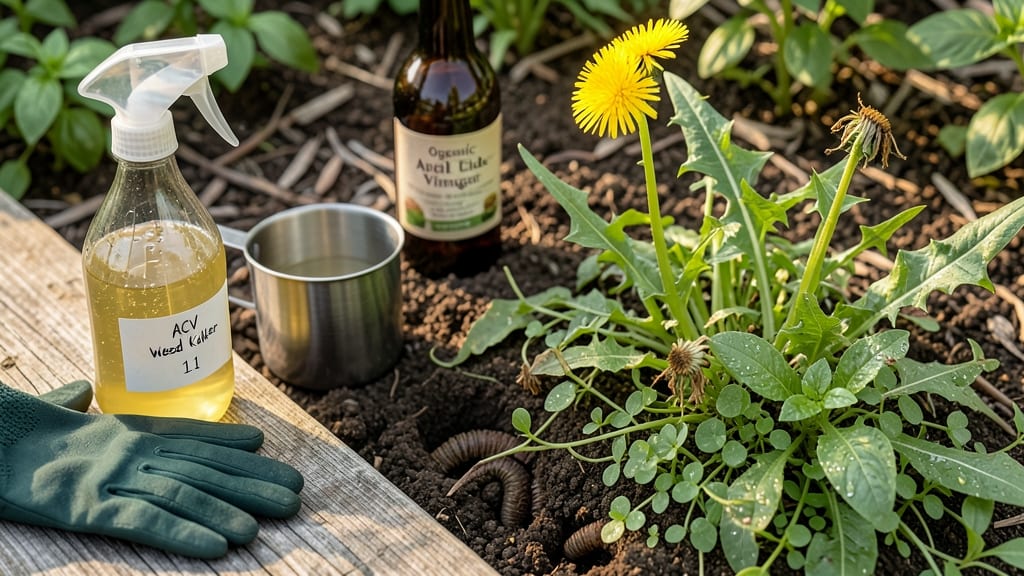
My stubborn weeds finally met their match with apple cider vinegar—no digging, no backbreaking work, just a spray and wait. 🌱 I’ve tried every so-called "natural" weed killer, but this stuff actually delivers results in hours, not days. The secret?
The acidity in ACV breaks down weed cell walls, leaving them crispy within minutes of contact. You’ll need undiluted apple cider vinegar (the kind with "the mother" for extra potency), a spray bottle, and a sunny day for best results.
Spray directly on weeds—avoid desirable plants, as the vinegar will kill them too. For extra strength, mix with a little dish soap to help it stick. Within 24 hours, you’ll see weeds wilting and turning brown.
Repeat every 3-5 days for stubborn patches, and watch your yard transform without harsh chemicals. The best part? It’s cheap, reusable, and works on driveways too. Fair warning: it’s not a miracle cure for deep-rooted weeds like dandelions, but for most annual weeds, it’s a game-changer.
Just don’t spray when rain’s forecasted—you’ll wash away your hard work.
📚 In This Guide
- What you need
- Instructions
- Tips and common mistakes
- Wrapping up and next steps
What you need
- ● Apple cider vinegar (ACV) – 1 gallon (3.8 liters) of 5% to 10% acidity (higher acidity = stronger weed-killing power).
- ● Spray bottle or garden sprayer – At least 1 gallon capacity (or a reusable spray bottle for spot treatments).
- ● Protective gloves – Vinegar can irritate skin—opt for rubber or nitrile gloves.
- ● Protective eyewear – Safety first! Vinegar splashes can sting.
- ● Water – Enough to dilute ACV (1:1 ratio for a gentler spray).
- ● Newspaper, cardboard, or plastic sheeting – To shield nearby plants and soil from accidental spray.
- ● Measuring cup or scale – For precise vinegar-to-water ratios.
- ● Sunny day (or grow lights) – Weed-killing works best under direct sunlight.
- ● Dish soap (1 tsp) – Adds a surfactant to help the vinegar stick to weeds.
- ● Salt (1 cup) – Boosts effectiveness (use sparingly—it can harm soil over time).
- ● Hose with a spray nozzle – For larger areas instead of a spray bottle.
- ● Markers or flags – To label treated areas and avoid reapplying.
- ● Reusable spray bottle with a fine mist setting – For targeted weed control in tight spaces.
How to use apple cider vinegar for weed control
This organic method works fast and targets weeds without harming your lawn or garden soil.
🌱 Step 1: Identify and Prepare Target Areas
Scan your yard or garden for weeds that are actively growing—focus on broadleaf weeds like dandelions, clover, and chickweed, as these respond best to vinegar. Avoid treating grass or delicate plants, since vinegar’s acidity will kill them too. Clear any debris or mulch from the areas you plan to treat, as vinegar works best when it makes direct contact with the weed leaves.
Timing matters here: apply the vinegar on a dry, sunny day when weeds are actively growing. Early morning or late afternoon works best to prevent rapid evaporation. You’ll know you’ve chosen the right weeds when they’re lush and green, not wilted or brown from drought.
💧 Step 2: Mix the Vinegar Solution
Combine 1 gallon of plain, white vinegar with 1 cup of dish soap (the soap helps the vinegar stick to the weed leaves) and 1 cup of water in a spray bottle or pump sprayer. The vinegar’s acetic acid concentration should be 5-10%—higher concentrations can harm surrounding plants or soil. Shake the mixture well before use, as the ingredients may separate.
Here’s the thing—don’t skip the dish soap. Without it, the vinegar beads up and rolls off the leaves, reducing effectiveness. Test the spray on a small, inconspicuous weed first to ensure the mixture covers the leaves evenly. If it drips off immediately, add a little more soap.
☀️ Step 3: Apply Directly to Weeds
Hold the spray bottle 6-12 inches away from the weeds and apply the solution directly to the leaves, avoiding nearby plants. Focus on the weed’s foliage, not the soil—vinegar’s acidity works by burning the leaves, which kills the plant. For stubborn weeds, apply the solution until the leaves are saturated but not dripping. Repeat the treatment every 3-5 days until the weeds turn brown and crispy.
Watch for results within 24-48 hours—you’ll see the leaves start to wilt and turn yellow or brown. This is the vinegar working. If weeds persist after a week, they may be deeply rooted or resistant; consider spot-treating again or using a different method for those areas.
✂️ Step 4: Monitor and Retreat as Needed
After the initial treatment, keep an eye on the area for 7-10 days. Weeds that don’t fully die back may need a second application, especially if they’re large or deeply rooted. Pull any remaining weeds by hand once they’ve softened and become easier to remove. Vinegar weakens the plant’s structure, making it simpler to uproot completely.
Don’t overapply the vinegar solution—it can alter soil pH over time, potentially harming future plantings. If you’re treating a garden bed, wait at least 2 weeks before planting new crops to allow the soil to recover. For lawns, avoid treating the entire area at once; focus on small sections to minimize risk.
🪴 Step 5: Prevent Regrowth and Maintain Control
To keep weeds from returning, apply a thin layer of mulch (like straw or wood chips) to garden beds or use landscape fabric in high-traffic areas. For lawns, maintain a healthy grass cover by mowing regularly and fertilizing appropriately—dense grass leaves little room for weeds to take hold. If weeds start creeping back, repeat the vinegar treatment early, before they establish themselves.
Real talk: vinegar isn’t a long-term solution for weed control, but it’s a powerful tool for quick eradication. Combine it with other organic methods like hand-pulling, smothering with cardboard, or using corn gluten meal as a preventative measure for the best results. Consistency is key—weeds won’t stand a chance if you stay on top of them.
Tips & tricks for effective apple cider vinegar weed control
Here’s what nobody tells you about maximizing vinegar’s weed-killing power without wrecking your garden.
Target the Right Weeds: Focus on broadleaf weeds like dandelions and chickweed—they respond best to vinegar’s acetic acid. Grasses and tough weeds like bindweed may require multiple treatments or a different approach. I’ve found that treating weeds when they’re actively growing (not stressed or dormant) gives the fastest results within those 24-48 hours.
Mixing Matters: The 1 cup of dish soap in the solution isn’t optional—it’s what makes the vinegar stick. Without it, the solution beads up and rolls off leaves, wasting your effort. Test on a small weed first: if it drips immediately, add a little more soap. I keep a small spray bottle of just the soap-water mix handy for touch-ups.
Timing is Everything: Apply on dry, sunny days between 9 AM and 3 PM to prevent rapid evaporation. Early morning or late afternoon works too, but you’ll see results faster with direct sunlight. The 3-5 day retreatment schedule works best when weeds are actively growing—don’t skip treatments just because they look dead at first.
Safety First: Vinegar’s acidity can alter soil pH if overused. For garden beds, wait at least 2 weeks before planting new crops. I’ve learned to spot-treat weeds rather than spraying entire lawn sections—this minimizes soil impact while still keeping weeds in check. Always keep a spray bottle of water handy to rinse off any accidental splashes on desired plants.
Pro Tips for Apple Cider Vinegar On Weeds
- Here’s what nobody tells you about maximizing vinegar’s weed-killing power without wrecking your garden.
- Target the Right Weeds: Focus on broadleaf weeds like dandelions and chickweed—they respond best to vinegar’s acetic acid.
- Mixing Matters: The 1 cup of dish soap in the solution isn’t optional—it’s what makes the vinegar stick.
Frequently asked questions
Got questions about using apple cider vinegar (ACV) to kill weeds?
You’re not alone! Here are answers to the most common queries—so you can tackle those pesky invaders with confidence.
How quickly does apple cider vinegar kill weeds?
Most weeds start wilting within 24–48 hours after treatment, but full death may take 3–7 days, depending on the weed type and weather. Hot, sunny days speed up the process—so apply ACV in the morning for best results. For stubborn weeds like dandelions or clover, reapply after a week if needed.
What’s the best time of day to spray apple cider vinegar?
Spray ACV on weeds early in the morning (before 10 AM) or late afternoon (after 4 PM) to avoid rapid evaporation from midday heat. Avoid spraying on windy days—it can drift onto desirable plants. Pro tip: Water the area lightly first to help the solution cling better.
Will apple cider vinegar harm my lawn or garden plants?
Yes, ACV is non-selective, meaning it’ll kill any green plant it touches—including grass, flowers, and veggies. To protect your garden:
- Apply only to weeds (use a spray bottle or pump for precision).
- Avoid overspray on soil or nearby plants.
- For lawns, spot-treat weeds carefully or use a shield (like cardboard) over grass.
Can I reuse leftover apple cider vinegar for weeds?
Store leftover ACV in a sealed, labeled container (away from sunlight) for up to 1–2 months. Shake well before reuse, as sediment may settle. Boost its potency by adding a splash of dish soap (1 tsp per cup) to help it stick to weeds. Just avoid reusing vinegar that smells sour or has mold—toss it and make a fresh batch.
What if it rains after I spray apple cider vinegar?
Rain can dilute or wash away the vinegar before it works, so wait 24 hours after spraying before watering or expecting rain. If it rains heavily within hours, reapply the solution once the ground dries. For best results, check the 7-day forecast before treating large weed patches.
Why isn’t apple cider vinegar working on my weeds?
If ACV isn’t killing weeds, try these fixes:
- Weed type: Broadleaf weeds (like chickweed) respond best; grassy weeds (e.g., crabgrass) may need stronger solutions (add salt or dish soap).
- Concentration: Weak vinegar (e.g., 5% acidity) may fail—use full-strength (5–10%) or a homemade mix (see recipe above).
- Application: Ensure the vinegar covers the entire leaf surface (undersides too!).
- Timing: Young, healthy weeds die faster than mature or drought-stressed ones.
Wrapping up and next steps
Apple cider vinegar (ACV) is a natural, budget-friendly, and eco-conscious way to tackle weeds without harsh chemicals—especially those stubborn ones lurking in your garden! 🌱 While it may not replace heavy-duty herbicides, its simplicity and effectiveness make it a must-try for small-scale weed control.
Just remember: consistency is key, and patience pays off when dealing with deep-rooted invaders.
Ready to reclaim your garden? Start small—test ACV on a patch of weeds first, then expand your efforts. Grab that vinegar, spray bottle, and a sunny afternoon, and get ready to wave goodbye to weeds for good! 🚀