
Planting
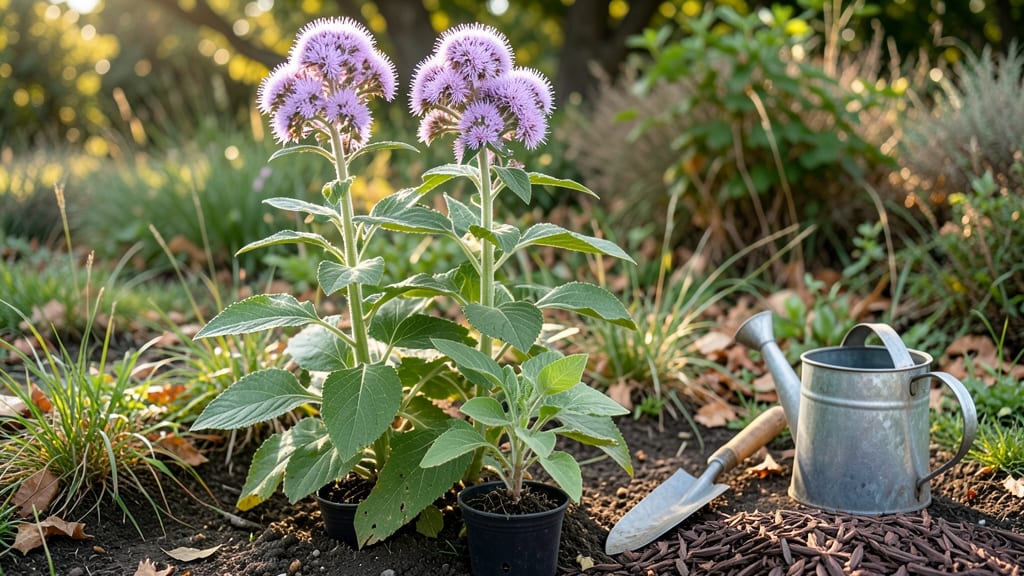
If you want a pollinator magnet that thrives in full sun, Joe Pye weed is your plant—just place it where the morning light lingers. 🌞 I planted mine along my pond’s edge last spring, and by July, it became a buzzing hub for bees, butterflies, and hummingbirds.
The key isn’t just sunlight; it’s the balance of moisture and well-drained soil that keeps those tall stems sturdy and blooms abundant.
The best spots mimic its native wet meadows: 6+ hours of sun, damp but not soggy soil, and room to spread (3–5 feet wide). Avoid heavy clay or bone-dry ground—Joe Pye weed wilts in drought and rots in standing water.
For city gardens, raised beds with extra compost work wonders, while rural plots can naturalize along streams or garden borders.
By midsummer, you’ll see pink-purple plumes towering 4–6 feet, swaying in the breeze like a prairie wind chime. The foliage stays lush even in heat waves, and the roots support nearby perennials by stabilizing soil moisture. Pair it with coneflowers or black-eyed Susans for a low-maintenance, high-impact meadow vibe.
Pro tip: In colder zones (4–9), plant in spring after frost; in warmer climates, fall planting prevents summer stress. Mulch lightly to retain moisture, and watch your garden transform into a pollinator paradise—no fancy fertilizers needed.
📚 In This Guide
- What you need
- Instructions
- Tips and common mistakes
- Wrapping up and next steps
What you need
- ● Joe Pye Weed plants: Seeds (if starting from scratch) – 1–2 lbs per 100 sq ft (or follow packet instructions).
- ● OR nursery-grown transplants – 1 plant per 1–2 sq ft (mature size varies by variety).
- ● OR divided clumps – 1–2 clumps per 1–2 sq ft (spring or early fall is ideal).
- ● Garden soil: Well-draining, moist but not waterlogged (amend with compost if needed).
- ● Sunlight: Full sun (6+ hours/day) for best blooms and growth.
- ● Water: Consistent moisture (especially for young plants).
- ● Basic tools: Garden trowel or shovel (for digging).
- ● Pruners (for trimming dead stems in late winter).
- ● Garden gloves (to protect your hands—those stems can be prickly!).
- ○ Soil amendments (optional but helpful): Compost (2–3 inches mixed into planting hole).
- ● Organic mulch (straw or shredded leaves to retain moisture).
- ○ Support structures (optional): Stakes or rings (if planting near walkways to prevent flopping).
- ○ Fertilizer (optional): Balanced organic fertilizer (5-5-5 or similar) at planting time.
Step-by-Step guide for planting Joe Pye weed in pollinator gardens
Here's how to create a thriving meadow where Joe Pye weed will flourish and attract droves of butterflies.
🌿 Step 1: Choose the Perfect Sunlit Location
Joe Pye weed thrives in full sun to partial shade, but for peak blooms and pollinator activity, aim for 6+ hours of direct sunlight daily. I always scout the sunniest spot in my yard first—look for areas where other sun-loving perennials like black-eyed Susans or coneflowers already grow well.
This plant tolerates wet soil better than most, so low spots near ponds or after rain are ideal. If your yard is dry, consider installing a simple drip irrigation system to keep the soil consistently moist during its first growing season. The key is avoiding soggy, waterlogged conditions—just keep the soil damp, not drenched.
☀️ Step 2: Prepare the Soil for Moisture-Loving Roots
Joe Pye weed grows best in average to moist, well-draining soil. If your soil is heavy clay, amend it by mixing in 2-3 inches of compost and a handful of sand to improve drainage. I like to work the compost into the top 6-8 inches of soil to give the deep roots room to establish.
Test your soil's moisture by grabbing a handful—it should hold together when squeezed but not feel sticky. If it's bone-dry, water the area thoroughly 24 hours before planting so the roots can settle into damp soil right away. This plant's thick stems store water, but they still need consistent moisture to thrive.
🌱 Step 3: Plant at the Right Depth and Spacing
Dig holes twice as wide as the root ball but only as deep as the container's root level. Joe Pye weed has deep taproots, so avoid disturbing them—gently tease the edges of the root ball if it's tightly packed. Place the plant in the hole and backfill with native soil, pressing lightly to remove air pockets.
Space plants 3-4 feet apart to give them room to grow—these beauties can reach 4-6 feet tall and spread 2-3 feet wide. If planting in clusters, arrange them in odd-numbered groupings (3, 5, or 7) for a natural meadow look. Water deeply after planting to help the roots settle into the soil.
💧 Step 4: Water and Mulch for First-Year Establishment
Keep the soil consistently moist (but not soggy) for the first 6-8 weeks after planting. You'll know it's right when the top inch of soil feels damp to the touch. I like to water in the morning so the foliage dries quickly, reducing the risk of fungal diseases.
Apply a 2-inch layer of organic mulch (like shredded bark or straw) around the base to retain moisture and suppress weeds. Keep the mulch 2 inches away from the stems to prevent rot. In the first year, you'll see slower growth as the plant establishes its deep root system—patience pays off with bigger blooms in years two and three.
✂ Step 5: Maintain for Long-Term Blooms and Pollinator Appeal
Cut back the stems to 6-12 inches tall in late winter or early spring before new growth appears. This encourages bushier, more compact growth and prevents flopping. I always wait until after the first hard frost to cut back—this gives the plant time to store energy in its roots for next year's blooms.
Deadhead spent blooms in early fall to keep the garden tidy, but leave some seed heads for winter interest and food for birds. Divide clumps every 3-4 years in early spring to prevent overcrowding. The more you maintain these plants, the more they'll reward you with 3-4 feet of pink-purple blooms that butterflies and bees can't resist.
Tips & tricks for perfect Joe Pye weed planting
These simple tricks will help you create a thriving pollinator haven where Joe Pye weed will flourish for years.
Sunlight Secret: While Joe Pye weed tolerates partial shade, the 6+ hours of direct sunlight mentioned in Step 1 is non-negotiable for those dramatic pink-purple blooms. I've seen plants in shadier spots struggle to reach their full height—look for areas where other sun-lovers like coneflowers already thrive. Morning sun with afternoon shade works too, but avoid spots where afternoon sun would bake the roots.
Soil Prep Strategy: For that 6-8 inch compost incorporation in Step 2, I like to use a mix of compost and a bit of perlite for extra drainage. If your soil is particularly heavy clay, consider adding a bit of coarse sand too. The goal is to create that perfect "squeeze test" consistency—soil that holds together but doesn't feel sticky. This moisture balance is what helps those deep taproots establish properly.
Planting Depth Insight: When digging holes twice as wide as the root ball in Step 3, resist the urge to plant too deeply. The top of the root ball should sit just below soil level—any deeper and you risk suffocating the plant. I always make sure the soil line on the root ball matches the surrounding soil level. This subtle detail makes all the difference in first-year survival rates.
Watering Wisdom: That 6-8 week moist-but-not-soggy window in Step 4 is critical. I've found that watering in the morning gives the foliage time to dry completely, which prevents fungal issues. If you're using a drip irrigation system, set it to deliver about 1 inch of water per week—this matches what you'd get from natural rainfall. Too much water can actually be worse than too little for these moisture-loving plants.
Pro Tips for Where To Plant Joe Pye Weed
- These simple tricks will help you create a thriving pollinator haven where Joe Pye weed will flourish for years.
- Sunlight Secret: While Joe Pye weed tolerates partial shade, the 6+ hours of direct sunlight mentioned in Step 1 is non-negotiable for those dramatic pink-purple blooms.
- Soil Prep Strategy: For that 6-8 inch compost incorporation in Step 2, I like to use a mix of compost and a bit of perlite for extra drainage.
Frequently asked questions
Can Joe Pye weed grow in partial shade?
While Joe Pye weed prefers full sun (6+ hours daily), it can tolerate partial shade—especially in hotter climates. In shadier spots, expect slower growth and fewer blooms. If planting in partial shade, choose a location with at least 4–6 hours of morning sun for best results.
What’s the best time to plant Joe Pye weed?
Plant in early spring (as soon as soil is workable) or early fall (4–6 weeks before frost). Avoid planting in late summer—hot, dry conditions stress young plants. Bare-root plants can also be planted in spring or fall with consistent moisture.
Is Joe Pye weed invasive? Should I avoid it?
Joe Pye weed is not highly invasive but can spread via rhizomes in ideal conditions. To control it, plant in contained beds or use a root barrier. If your area has strict native plant policies, opt for Eutrochium purpureum (the non-invasive cultivar) or alternatives like coneflowers or black-eyed Susans.
How much water does Joe Pye weed need?
Newly planted Joe Pye weed needs regular watering (1–2 inches per week) until established. Mature plants are drought-tolerant but thrive with moderate moisture. In dry spells, water deeply once a week to encourage robust blooms and prevent wilting.
Will Joe Pye weed attract pests or diseases?
Generally pest-resistant, but aphids or Japanese beetles may occasionally visit. Remove affected leaves or spray with neem oil if needed. Powdery mildew can occur in humid conditions—improve airflow and avoid overhead watering to prevent it.
What are good companion plants for Joe Pye weed?
Pair it with native perennials like coneflowers, bee balm, or goldenrod for a pollinator magnet. Avoid planting near aggressive spreaders like mint or bamboo. Tall grasses (e.g., switchgrass) also complement its height beautifully!
Wrapping up and next steps
Planting Joe Pye weed is a rewarding way to boost your garden’s beauty and support local pollinators! Whether you’re transforming a sunny meadow, adding a native border, or reviving a wildflower patch, this hardy perennial thrives in the right conditions.
Now that you know the best where to plant it, grab those seeds or transplants and get growing—your bees, butterflies, and future garden will thank you! 🌿✨
Next step: Mark your spot, prep the soil, and watch your pollinator paradise take shape. Happy planting!