
Flowers
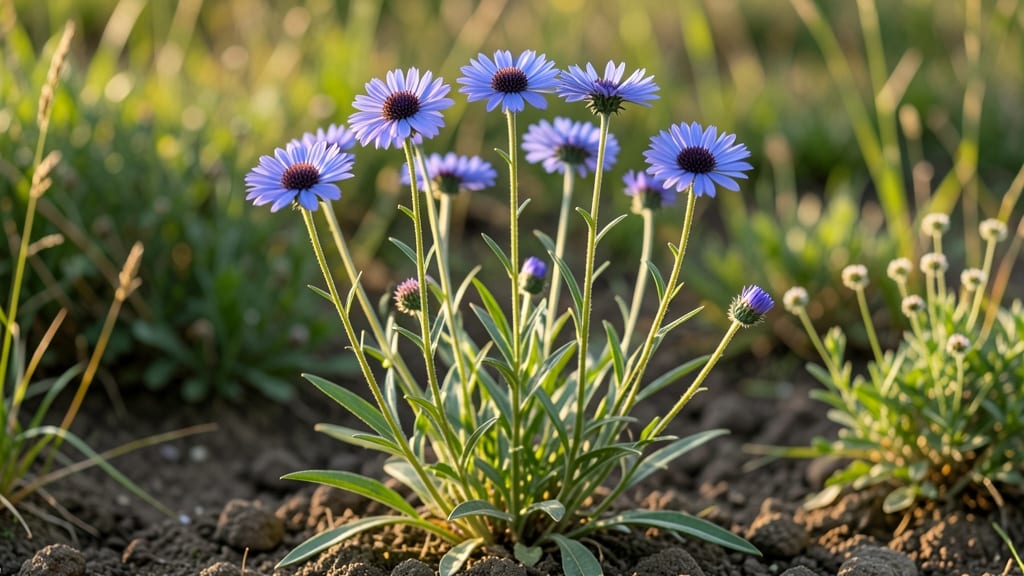
Bachelor buttons are perennials in USDA zones 3-9, thriving year after year with consistent care, though some types spread prolifically through self-seeding. Their resilience depends on winter hardiness and soil quality.
These vibrant flowers earn their perennial status thanks to deep root systems that store energy underground during dormancy. 🌱 In colder climates, their roots survive freezing temperatures, while warmer zones may need winter protection.
The key to their yearly return lies in proper soil drainage and seasonal maintenance—like cutting back spent blooms to redirect energy to root growth.
What sets bachelor buttons apart is their adaptability: they thrive in partial shade or full sun, making them versatile garden workhorses. Many gardeners swear by their ability to bounce back after harsh winters, especially when paired with organic mulch.
The trade-off? Some varieties become invasive through self-seeding, so regular thinning keeps them manageable.
💡 In This Article
- Bachelor Buttons Lifespan: Perennial Growth Zones Explained
- Tips for Encouraging Bachelor Buttons to Return Each Season
Bachelor buttons lifespan: perennial growth zones explained
Bachelor buttons (Centranthus ruber) earn their perennial reputation through a clever survival strategy: deep, fibrous root systems that store carbohydrates and nutrients underground. These roots can extend up to 12-18 inches deep, allowing them to tap into moisture and nutrients even during drought conditions.
The key mechanism is their ability to enter dormancy when temperatures drop below 20°F, with root tissues hardening like a natural insulation layer. This explains why they thrive in USDA zones 3-9—where winter temperatures rarely drop below -30°F—but may struggle in colder microclimates without protection.
Their hardiness isn't just about roots, though. Bachelor buttons also produce basal rosettes—low-growing clusters of leaves that stay close to the ground. These rosettes act as a second line of defense against frost, often surviving temperatures as low as 10°F when protected by snow or mulch.
What's fascinating is how their growth cycle resets each spring: as soil temperatures reach 50°F, the roots begin metabolizing stored starches, triggering new shoot growth within 2-3 weeks. This rapid rebound is why they often appear before many other spring flowers.
Temperature isn't the only factor—soil composition plays a crucial role. Bachelor buttons prefer well-draining soil with a pH between 6.0-7.5, which prevents root rot during winter thaw. In heavy clay soils (common in zones 5-7), their roots can suffocate if water pools around them.
The science here involves oxygen availability: roots need aerated soil to respire properly, even during dormancy. That's why gardeners in wetter climates often amend soil with sand or compost to improve drainage.
What most gardeners don't realize is how their growth habit changes with latitude. Northern varieties (zones 3-5) develop thicker root crowns for insulation, while southern plants (zones 7-9) focus more on rapid above-ground growth to take advantage of shorter winters.
This geographic adaptation means a bachelor button grown in Zone 4 might need winter mulching, while one in Zone 8 could go dormant naturally without intervention. The transition zone (6-7) is where most gardening challenges occur—too much winter protection can smother emerging shoots in spring.
Here's where their self-seeding habit comes into play: while the parent plant may die back to the ground each winter, the seeds it produces can germinate in the following season. These seeds contain 2-3% more stored energy than many annual flowers, giving seedlings a head start in poor soil conditions.
This explains why bachelor buttons often appear in unexpected garden corners—they're not just perennials, but also opportunistic colonizers when conditions are right.
For visual learners, imagine this: in early spring, the garden looks barren, but beneath the soil, bachelor button roots are already pulsing with activity. By the time daffodils push through, these flowers are often already sending up 1-2 inch shoots—proof of their efficient energy storage system.
The trade-off? Their aggressive self-seeding can become a liability in small gardens, where they may outcompete other plants for space and nutrients.