
Flowers
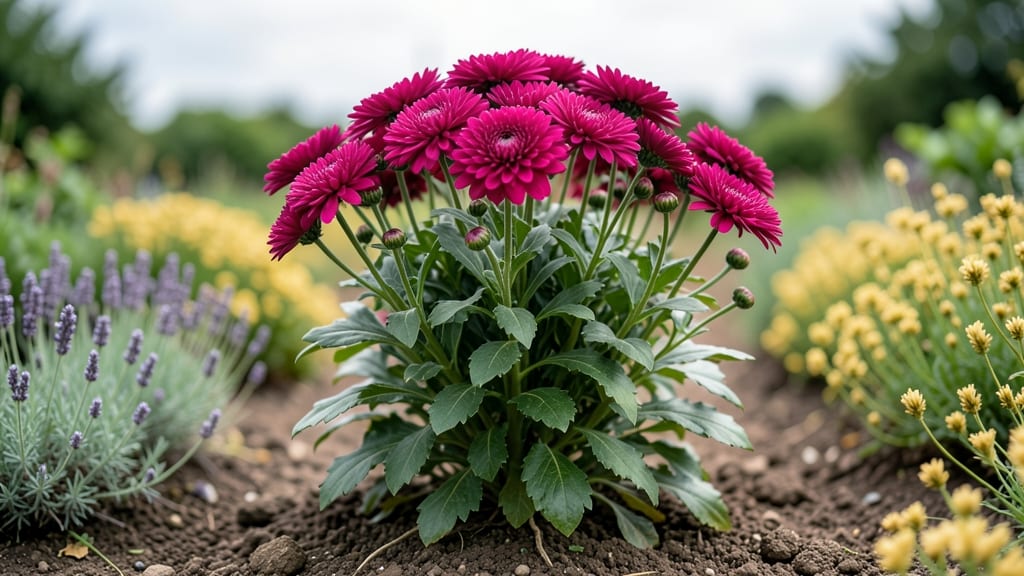
Belgian mums are not true perennials but are often grown as annuals or tender perennials in mild climates, thriving for one season before dying back in frost. Their hardiness varies by variety, with some surviving in USDA zones 7-9 with winter care.
Belgian mums, also called garden mums, are bred for vibrant blooms and compact growth rather than cold hardiness.
Unlike their perennial chrysanthemum cousins, these varieties lack the deep root systems needed to survive freezing temperatures. 🌱 Many gardeners treat them as seasonal plants, replanting fresh starts each spring for continuous color.
The few cold-tolerant varieties can persist in warmer microclimates with proper winter protection, but most will succumb to frost without intervention.
What sets Belgian mums apart is their genetic focus on flower production over survival. Their shallow roots make them vulnerable to winter dieback, while their tender stems can't withstand prolonged cold.
This explains why you'll see them sold as annuals in most nurseries - they're simply not built to be long-term perennials in most gardens. The good news? With careful selection and winter care, you can extend their lifespan beyond a single season in suitable climates.
💡 In This Article
- Why Belgian Mums Die Back in Cold Climates
- Extending Belgian Mum Lifespan in Gardens
Why Belgian mums die back in cold climates
Belgian mums belong to the Chrysanthemum genus but were selectively bred for vibrant, long-lasting blooms rather than cold resistance. Their shallow root systems—typically only 6-12 inches deep—lack the depth needed to anchor against freezing temperatures.
Unlike hardy perennial chrysanthemums, which develop extensive underground networks, Belgian mums prioritize above-ground growth for showy flowers, leaving them vulnerable to frost penetration.
The real culprit is their tender stem structure, which contains high moisture content (about 80-85% water in stems).
When temperatures drop below 28°F, this water freezes and expands, rupturing cell walls like ice cracking a glass. 🌡️ The plant's genetic makeup also lacks the protective compounds found in hardy perennials, such as thick waxy coatings or deep dormancy triggers.
Even a light frost can cause irreversible damage to their delicate foliage and buds.
What makes this worse is their lack of true dormancy. Most perennials enter a protective state during winter, but Belgian mums remain metabolically active until killed by frost. This is why they often look healthy right up until the first freeze—then suddenly collapse.
The contrast with hardy chrysanthemums is striking: those varieties can survive -20°F with proper winter care, while Belgian mums typically perish at 25-30°F without protection.
Another key factor is their origin and breeding history. Developed in Belgium's mild maritime climate, these plants evolved without exposure to harsh winters. When grown in colder regions, their entire structure—roots, stems, and leaves—simply can't withstand prolonged cold.
This explains why they're often sold as annuals: their natural lifespan in most gardens ends with the first frost, making them unreliable as perennials.
Interestingly, the flowering mechanism itself contributes to their vulnerability. Belgian mums produce continuous blooms through a process called bolting, which requires constant energy. This metabolic demand weakens their ability to store reserves for winter survival.
In contrast, hardy chrysanthemums focus on root development before flowering, creating a natural buffer against cold.
For gardeners in transitional zones (like USDA zone 7), this means Belgian mums can sometimes persist through mild winters—but only if protected. The moment unseasonable cold arrives, their entire structure becomes susceptible to freeze damage.
This is why many growers treat them as seasonal plants, replanting fresh starts each spring rather than risking winter losses.