
Orchid Care
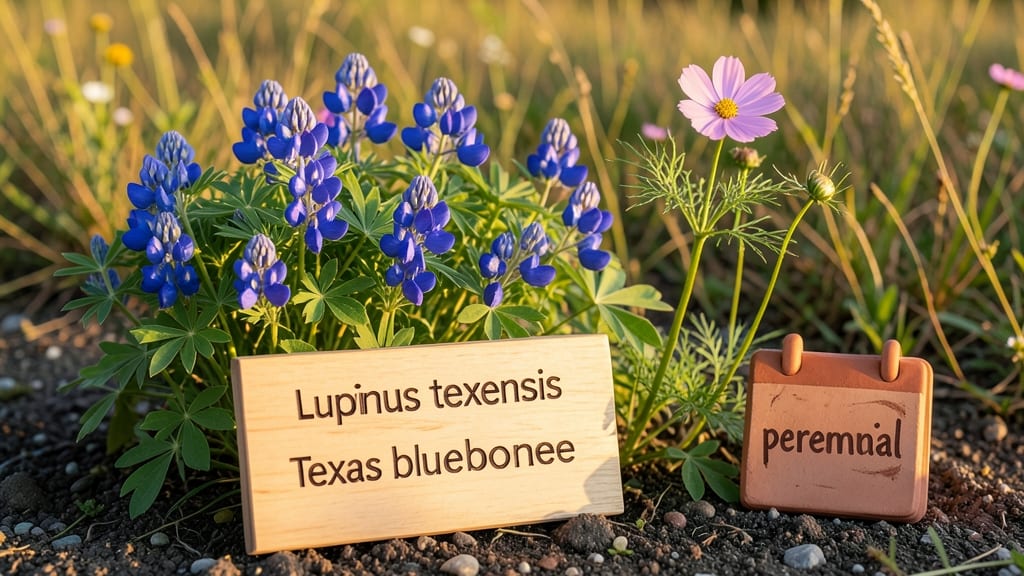
Bluebonnets behave as perennials in Texas but act like annuals in colder climates, dying back after flowering when frost hits, then regenerating from seeds the following spring.
This behavior stems from their native Texas hardiness zones (6-9), where they naturally survive winter dormancy. 🌸 Outside these zones, even light frosts can kill the plant's foliage, though the roots may persist underground in some cases.
What's fascinating is how they adapt—once established, they'll often reseed prolifically, creating new plants that may survive subsequent years if conditions improve. Many gardeners in cooler regions treat them as annuals for simplicity, but with proper frost protection and soil prep, you can encourage multi-year growth.
For example, in Zone 5 or colder, I've seen bluebonnets return for two or three seasons when planted in well-draining soil with a thick mulch layer.
The key is understanding their dormancy patterns—these plants are not true annuals but rather short-lived perennials that push their limits when moved outside their native range.
💡 In This Article
- Why Bluebonnets Die Back in Cold Climates
- How to Grow Bluebonnets as Perennials in Non-Native Regions
Why bluebonnets die back in cold climates
Bluebonnets (Lupinus texensis) thrive as perennials in their native Texas environment because they've evolved to handle the region's mild winters and well-draining soils.
Their hardiness spans zones 6-9, where temperatures rarely drop below 10°F for extended periods. 🌿 The plant's deep taproot system (reaching 12-18 inches) stores nutrients and moisture, allowing it to survive winter dormancy—similar to how peonies or daylilies behave in colder climates.
The critical difference lies in their frost tolerance. Bluebonnets can handle light freezes (28-32°F) but succumb to prolonged exposure below 20°F. Their above-ground foliage and stems freeze and die back, but the roots often remain viable if protected.
This is where confusion arises—many gardeners assume they're annuals because the plant's top growth disappears entirely, mimicking true annual behavior where the whole plant dies after flowering.
What sets bluebonnets apart is their seed production strategy. Even if the parent plant dies back, they release thousands of seeds (up to 50,000 per plant) that germinate the following spring.
This prolific reseeding explains why bluebonnets often return year after year in Texas—through new seedlings rather than the same plant regrowing. 🌱 In colder climates, this cycle can be disrupted if winter temperatures kill both the parent plant and emerging seedlings.
The botanical term for this behavior is "short-lived perennial" or "winter annual." Unlike true perennials (e.g., lavender) that regrow from the same root system, bluebonnets rely on seed germination for continuity.
Their native Texas ecosystem provides the perfect balance of moisture and temperature to support this lifecycle, while colder regions often push them beyond their physiological limits.
Consider this comparison: In Austin, Texas (Zone 8), bluebonnets may flower for 3-5 years from the same root system before declining. In Minneapolis (Zone 4), they typically behave as annuals, completing their lifecycle in one season unless protected.
The key factor is whether the roots survive winter—if they do, the plant can resprout, but this requires specific conditions.
One fascinating adaptation is their ability to enter secondary dormancy. When exposed to cold snaps followed by warm spells, bluebonnet seeds can remain viable in the soil for years (up to 5 years in some cases), waiting for ideal germination conditions.
This seed bank strategy ensures their survival even when adult plants are killed by frost.