
Orchid Care
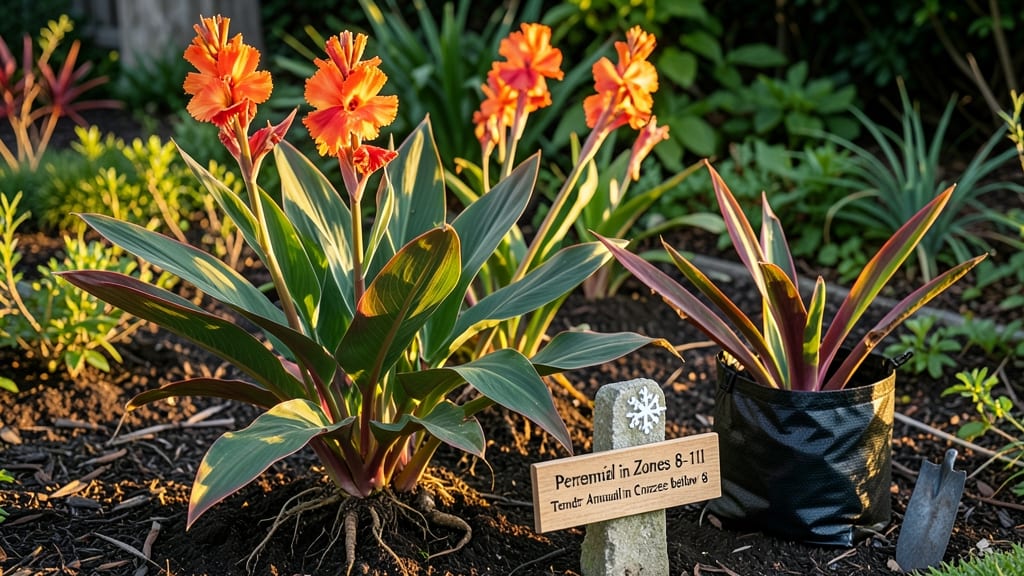
Whether canna lilies are annuals or perennials depends entirely on your climate zone—these tropical plants thrive as perennials in USDA Zones 8-11 but must be treated as annuals in colder regions, where frost destroys their underground rhizomes. In frost-free areas, they regrow each spring from dormant tubers.
This distinction comes down to temperature tolerance. Canna lilies originate from tropical regions, so their rhizomes (thick underground stems) can't survive freezing temperatures. 🌡️ In colder zones, gardeners must dig up and store the rhizomes indoors during winter to preserve them for next season.
The good news? Even if you treat them as annuals, their vigorous growth makes them worth the effort—just replant the stored tubers in spring.
What many gardeners don't realize is that canna lilies actually have a built-in survival mechanism: their rhizomes enter dormancy when temperatures drop, allowing them to "sleep" through winter until conditions warm up.
This natural process explains why they bounce back so quickly in frost-free climates, often producing dramatic foliage and striking blooms within weeks of spring planting.
💡 In This Article
- How Climate Zones Affect Canna Lily Lifespan
- Winter Care Tips for Canna Lilies in Cold Climates
How climate zones affect canna lily lifespan
The key factor determining whether canna lilies act as perennials or annuals is their rhizome's temperature tolerance threshold. These tropical plants evolved in regions where winter temperatures rarely drop below 40°F, making them highly sensitive to frost.
When exposed to freezing conditions, the rhizomes' cell membranes rupture, causing irreversible damage. This is why gardeners in USDA Zones 8-11 can leave them undisturbed—they naturally regrow each spring from their dormant underground stems.
In colder zones (below Zone 7), the story changes dramatically. The rhizomes enter dormancy when nighttime temperatures consistently fall below 50°F, but this protective state only works if the ground doesn't freeze solid. 🌡️ The critical temperature is 28°F—any colder, and the rhizomes' stored nutrients break down.
What's fascinating is how this dormancy works: the plant redirects energy from leaf production to preserving its root system, which is why you'll sometimes see canna lilies in cold climates producing minimal foliage before dying back completely.
This climate dependency creates a fascinating paradox in gardening. While canna lilies are technically perennials in warm zones, their annual treatment in colder regions is purely a survival strategy. The rhizomes contain all the genetic information needed to regrow, but without proper overwintering care, that potential is lost.
This is why many gardeners in Zone 6 or colder still grow them—because even though they die back each winter, the stored rhizomes can produce dramatic summer displays with proper care.
What most people don't realize is how quickly canna lilies respond to temperature changes. In frost-free zones, they can sprout within 2-3 weeks of soil temperatures reaching 60°F, while in colder zones, even properly stored rhizomes may take 4-6 weeks to show new growth in spring.
This delayed response happens because the rhizomes need to first warm up and rehydrate before initiating growth. The contrast between these two scenarios explains why canna lilies seem to "disappear" in cold climates but return with such vigor in warm ones.
Consider these key temperature benchmarks for canna lily survival:
- Perennial growth zone: Consistent temperatures above 40°F year-round (Zones 8-11)
- Dormancy trigger: Nighttime temps below 50°F for 2+ weeks
- Critical damage threshold: 28°F or colder (cell membrane rupture)
- Spring regrowth temp: Soil at 60°F for reliable sprouting
The science behind this involves the plant's cold acclimation process. Canna lilies don't produce antifreeze proteins like some cold-hardy plants, so their survival depends entirely on avoiding freezing conditions.
This is why even a light frost can be fatal—it creates ice crystals within the rhizome tissues that physically damage the cells. 💫 In warm climates, this natural dormancy cycle allows them to maintain their perennial status with minimal gardener intervention, while colder climates require active storage to preserve this biological potential.