
Plants
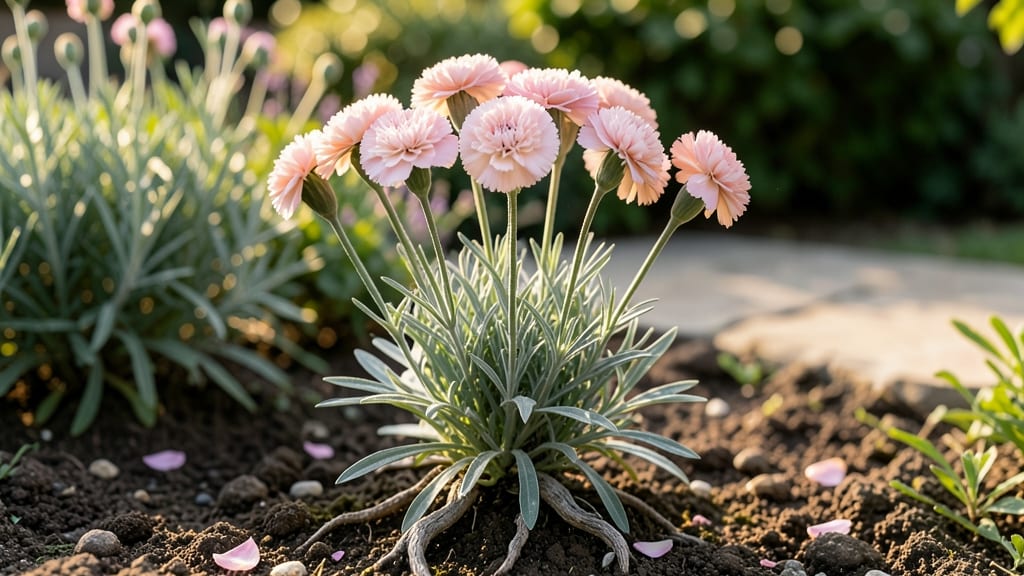
Carnations aren't true perennials in most climates, though they act like short-lived perennials in frost-free areas. These plants die back to the ground each winter but can regrow from their roots in warmer zones, while cold winters usually kill them back to soil level annually.
Carnations (Dianthus caryophyllus) fall into a gray area of plant classification—they're not hardy perennials like lavender or peonies, but they can persist for multiple seasons under the right conditions. 🌱 The key lies in their basal rosette growth habit, where new shoots emerge from the root crown each spring.
In USDA zones 7-10, they'll naturally return year after year, while colder climates (zones 5-6) require protective measures to survive winter. Their ability to regrow makes them act like perennials, but without the same cold hardiness as true perennials.
Their winter behavior explains why many gardeners treat them as annuals—they'll often die back completely in freezing temperatures, only to surprise you with new growth when spring arrives. This makes them perfect for gardeners who want long-lasting color but don't want to commit to true perennials.
The trade-off? Their lifespan is shorter than hardy perennials, typically lasting 2-3 years before declining.
💡 In This Article
- Understanding Carnations’ Perennial-Like Growth Cycle
- How to Overwinter Carnations for Repeated Blooms
Understanding carnations’ perennial-like growth cycle
The confusion around carnations stems from their Dianthus caryophyllus classification—a genus that includes both annual and perennial species. True perennials like peonies or hostas have robust root systems that survive -20°F to -30°F winters, but carnations typically tolerate only 15-25°F before their foliage freezes back.
Their basal rosette growth (where new shoots emerge from the root crown) gives the illusion of perennial behavior, but the roots themselves lack the cold hardiness of true perennials.
In USDA zones 7-10, carnations naturally die back to the ground in winter but regrow from their cambium layer—a thin growth layer just beneath the surface—when temperatures rise above 50°F. This regrowth explains why they appear perennial in frost-free climates.
However, in colder zones (5-6), the roots often suffer cold damage at 20°F or below, resulting in complete dieback. The key difference? True perennials regrow from deep taproots, while carnations rely on shallow, fibrous roots that store minimal energy reserves for winter survival.
What makes this cycle fascinating is the photoperiod response—carnations detect shortening daylight hours in fall and begin storing energy in their roots. This process, called vernalization, prepares them for winter dormancy. However, unlike hardy perennials, carnations lack the antifreeze proteins that protect cell membranes from freezing damage.
When temperatures drop below 25°F, their cell walls rupture, and the plant appears dead—until spring warmth triggers new growth from the root crown.
Consider this comparison: A true perennial like lavender will lose its leaves but keep its woody stems intact through winter, while a carnation loses both foliage and stems to frost.
The regrowth comes from a basal rosette of leaves at soil level, which is why gardeners often mistake them for perennials. This growth habit is more similar to geophytes (like tulips) than traditional perennials, though carnations lack the underground bulbs that protect true geophytes.
The lifespan trade-off becomes clear when you compare their 3-5 year maximum lifespan to true perennials that thrive for decades. Carnations allocate energy to rapid flowering rather than root expansion, which is why they decline faster.
In ideal conditions (zones 8-10), they'll rebloom annually from the same root system, but each cycle weakens the plant slightly—explaining why gardeners often treat them as short-lived perennials rather than true perennials.
Here's what's actually happening in your garden: When you see carnations return year after year, you're witnessing vegetative reproduction from the root crown, not true perennial hardiness.
The plant's survival strategy prioritizes quick regrowth over winter resilience, which is why they thrive in Mediterranean climates but struggle in continental climates with harsh winters. 🌿