
Plants
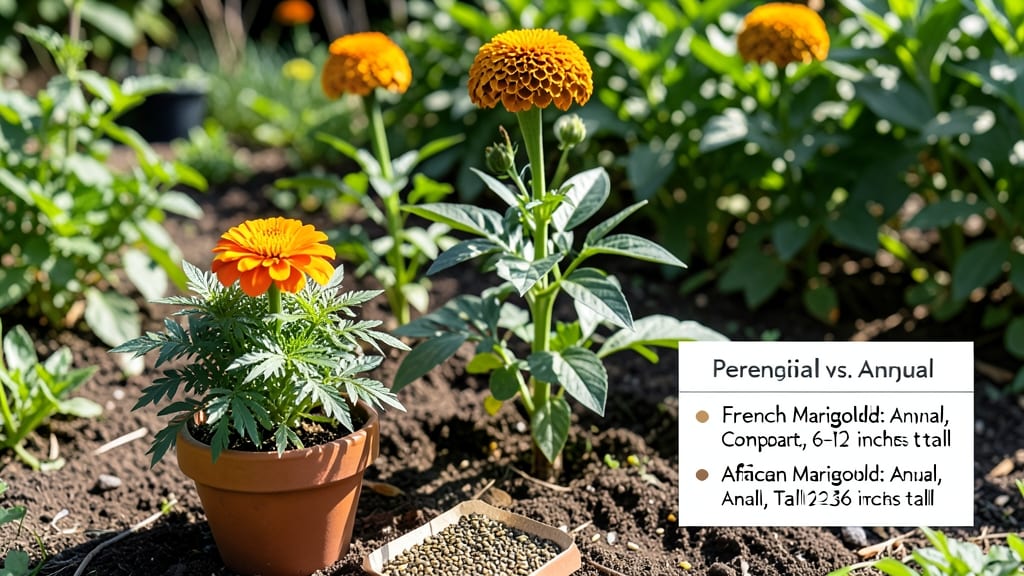
Marigolds aren't true perennials in most climates, though they self-seed prolifically and may regrow if protected from frost. In cold zones, they die back annually but return stronger each year from new seedlings or saved seeds.
Marigolds behave like annuals in most regions because their roots are frost-sensitive, meaning they won't survive winter outdoors unless protected. 🌱 This dieback isn't permanent—many gardeners treat them as near-perennials by saving seeds or planting cold-tolerant varieties like 'Bonanza' marigolds, which handle cooler temperatures better.
The key difference from true perennials (like lavender) is that marigolds rely on seed germination rather than root survival to return each spring.
For gardeners in zones 5-8, overwintering in containers with mulch or starting fresh from seeds each year is common. The trade-off? Self-seeding marigolds often produce stronger, hardier plants than store-bought seedlings, as they're already adapted to your local climate. This makes them a low-maintenance choice despite their "annual" classification.
💡 In This Article
- Why Marigolds Die Back in Winter and How Climate Affects Them
- Year-Round Marigold Strategies: Extending Blooms and Saving Seeds
Why marigolds die back in winter and how climate affects them
Marigolds die back in winter primarily because their roots are frost-sensitive, a key difference from true perennials like lavender or coneflowers. When temperatures drop below 28°F, the tender root systems of most marigold varieties (like the popular French marigolds) begin to suffer irreversible damage.
This is because their roots lack the protective woody tissue found in true perennials, which allows plants like lavender to survive -15°F winters without issue. 🌱 The dieback isn't just cosmetic—it's a biological response to cellular damage caused by ice crystal formation in their root tissues.
Climate plays a crucial role in marigold survival, with USDA hardiness zones serving as a reliable guide. In zones 9-10, marigolds often behave like true perennials, continuing to grow year-round with minimal dieback. However, in zones 5-8
The transition temperature is around 32°F, where root damage becomes severe enough to kill the plant unless protected. This explains why marigolds thrive as annuals in colder regions but may persist for multiple years in milder climates. What most gardeners don't realize is that marigolds have a survival mechanism beyond true perennials: prolific self-seeding. When the plant dies back, it often drops thousands of seeds that lie dormant until spring's warmth triggers germination. This creates the illusion of perennial behavior, as new plants emerge each year from these seeds rather than from surviving roots. The seeds themselves are remarkably resilient, often remaining viable for 2-3 years in the soil, which is why marigolds can dominate garden beds year after year. For comparison, true perennials like coneflowers or hostas survive winter through their root systems, which contain stored nutrients and protective tissues. Marigolds, lacking these adaptations, rely entirely on seed production for continuity. This is why gardeners in cold climates often treat marigolds as annuals—because botanically, they are—while still benefiting from their self-sustaining seed behavior. The trade-off is that seed-grown marigolds may not be as uniform in color or size as nursery starts, but they're often hardier due to local adaptation. An interesting exception is the 'Bonanza' marigold series, which has shown better cold tolerance than traditional varieties. These can sometimes survive light frosts (25°F) when heavily mulched, though they still won't match the hardiness of true perennials. The key difference lies in their slightly thicker stems and deeper root systems, which provide marginal protection against freeze damage. This makes them a better choice for gardeners attempting to treat marigolds as near-perennials in marginal climates. Understanding this botanical reality helps explain why marigolds are classified as tender annuals—they simply lack the winter survival mechanisms of true perennials. However, their ability to self-seed so prolifically makes them behave more like persistent weeds than true annuals, creating a fascinating middle ground in garden ecology. 💫