
Flowers
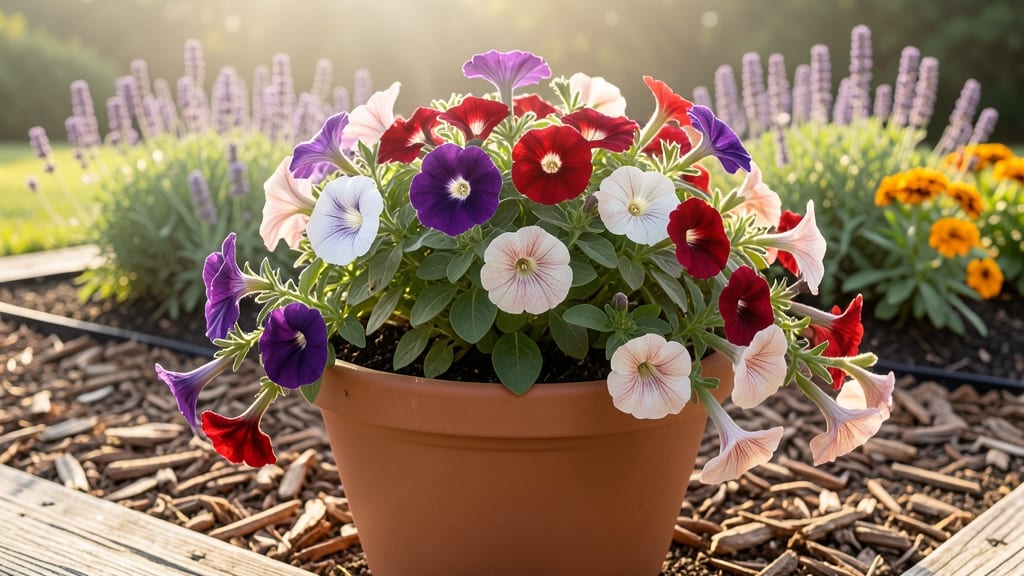
Petunias are not true perennials in most climates, as they die back annually in fall frost and must be replanted each spring. However, they can behave as tender perennials in frost-free zones (USDA zones 10-11) with proper care and protection during cooler months.
Petunias behave like annuals because they're highly sensitive to frost—their delicate foliage freezes at temperatures below 32°F. 🌱 Unlike true perennials (such as lavender or hostas), petunias don't store enough energy in their roots to survive winter dormancy in most regions.
The good news? In warmer climates (like Southern California or Florida), you can coax them to return year after year with simple overwintering techniques, turning them into long-lived garden stars.
For gardeners in colder zones, the key is understanding their natural growth cycle: petunias thrive as summer bloomers because they evolved to capitalize on warm-season sunlight. Their tuberous roots in some varieties can persist underground, but only if protected from freezing.
That's why many gardeners treat them as annuals—it's easier than battling frost damage each year.
💡 In This Article
- Why Petunias Die Back: The Science Behind Their Annual Growth Cycle
- How to Extend Petunia Lifespan: Overwintering Tips for Year-Round Blooms
Why petunias die back: the science behind their annual growth cycle
Petunias behave like annuals because their biological systems aren't equipped to handle extended cold periods. Their leaves and stems contain high moisture content (around 75-80% water), which freezes at 32°F or below, causing cellular damage.
Unlike true perennials such as lavender or hostas, petunias lack robust underground storage organs like rhizomes or true tubers that can survive winter dormancy. 🌱 Instead, most petunias rely on fibrous roots that store minimal energy for regrowth.
The key difference lies in their evolutionary adaptation. Petunias originated in South America's temperate regions, where they evolved to thrive during warm summers but aren't designed for cold winters. When temperatures drop, their metabolic processes slow dramatically, and the plant essentially "shuts down" rather than entering true dormancy.
This is why even a light frost (28-32°F) will blacken their foliage within hours.
Some petunia varieties, particularly those with tuberous roots like Petunia × atkinsiana, can produce small underground storage structures that might survive mild winters. However, these tubers typically contain only enough energy to regrow a new plant in spring - not enough to sustain the plant through multiple freeze-thaw cycles.
This is why gardeners in colder climates often see petunias return from self-seeding rather than from surviving roots.
True perennials like lavender or peonies have developed specialized strategies: thick bark, deep root systems, or specialized buds that remain protected underground. Petunias lack these adaptations. Their aboveground growth is their primary energy storage mechanism, which gets destroyed by frost.
This biological limitation explains why petunias are classified as annuals in most gardening contexts, despite their potential to persist underground in ideal conditions. 💫
What most gardeners don't realize is that petunias actually have a built-in survival mechanism in their seeds. When the plant dies back, it often produces thousands of tiny seeds that remain dormant in the soil until spring.
These seeds can remain viable for 2-5 years in the right conditions, which is why you sometimes see volunteer petunias popping up the following season without any replanting.
This seed-based survival strategy contrasts sharply with true perennials that rely on underground storage organs. The trade-off is that petunia seeds often don't produce plants with identical characteristics to the parent, leading to the mixed flower colors and sizes you sometimes see in "volunteer" plants.
This genetic variation is one reason why gardeners prefer to start fresh each year with named cultivars rather than relying on self-seeding.