
Plants
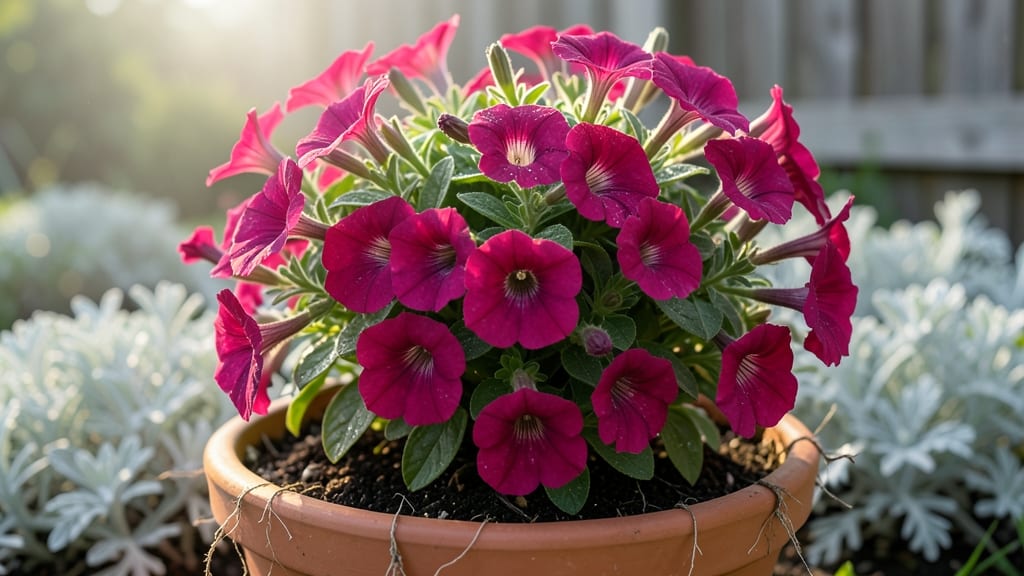
Supertunias aren't true perennials in cold climates—they die back to the ground during frost and typically need replanting each spring unless grown in USDA zones 8-11, where they may survive winters with protection.
Supertunias fall into the "tender perennial" category, meaning they thrive as annuals in colder regions but can persist year-round in milder zones. 🌱 The key difference lies in their frost sensitivity: while their roots may survive in zones 8-11, the above-ground growth will freeze and die back in temperatures below 20°F.
This explains why gardeners in cooler climates often treat them as seasonal plants, replanting fresh tubers each spring for continuous blooms.
What's fascinating is how their growth habit changes with climate. In warmer zones, they establish strong root systems that regenerate foliage annually, while in colder areas, they rely entirely on new plantings. This adaptability makes them popular for container gardening, where you can easily move them indoors during winter months.
💡 In This Article
- How Supertunias Survive Winter in Different Climates
- Year-Round Supertunia Care in Cold Regions
How supertunias survive winter in different climates
Supertunias belong to the tender perennial category, meaning their cold hardiness is limited to USDA zones 8-11 where they can survive winter temperatures down to 10-15°F. The key difference between true perennials and supertunias lies in their root vs. topkill mechanics.
While their roots may survive light frosts in zone 8, the above-ground growth dies back completely when temperatures drop below 20°F, a process called topkill.
This explains why gardeners in colder zones often treat them as annuals—new growth emerges from the same root system each spring, but the plant itself doesn't persist through winter.
The plant's survival strategy involves storing energy in its thickened roots and tubers, which can remain dormant underground through winter. In zones 8-11, these roots often regenerate foliage naturally when temperatures rise above 50°F in spring.
However, in colder regions, the roots may not survive repeated freeze-thaw cycles without protection, which is why replanting becomes necessary. 🌱 What's interesting is that supertunias share this survival mechanism with other tender perennials like caladiums and elephant ears, which also rely on underground storage organs to persist through winter.
In colder climates, the lack of true perennial behavior creates a unique gardening challenge. Without protection, the roots can suffer cold damage or even die back completely, especially in zones below 7 where winter temperatures often drop below -10°F.
This is why gardeners in these areas typically plant supertunias as seasonal annuals, treating them like summer bedding plants that need to be replaced each year.
The trade-off is their prolific blooming habit—supertunias produce continuous flowers from spring to frost, making them a popular choice despite their limited cold tolerance.
Here's what actually happens botanically: When temperatures fall below 32°F, the plant's cell membranes rupture due to ice crystal formation, killing the above-ground growth. However, the roots contain antifreeze proteins that help protect their cells from freezing damage, allowing them to remain viable for regrowth.
In zones 8-11, this natural protection is often sufficient, but in colder areas, gardeners must provide additional insulation to mimic these natural survival mechanisms.
Consider these key factors that determine survival:
- Root depth: Deeper roots (6+ inches) have better insulation from ground temperatures
- Soil type: Sandy soils drain faster and can protect roots from extreme cold better than clay
- Mulch thickness: 4-6 inches of organic mulch can raise soil temperatures by 5-10°F
- Microclimate: South-facing beds or protected areas stay warmer than exposed locations
The most critical threshold is 20°F—below this, even protected plants may experience significant damage. This explains why supertunias thrive as perennials in coastal California (zone 9) but often need annual replanting in inland areas of zone 7.
The plant's ability to regenerate from roots makes it more resilient than true annuals, but its cold sensitivity keeps it from qualifying as a true perennial in most climates. 💫