
Plants
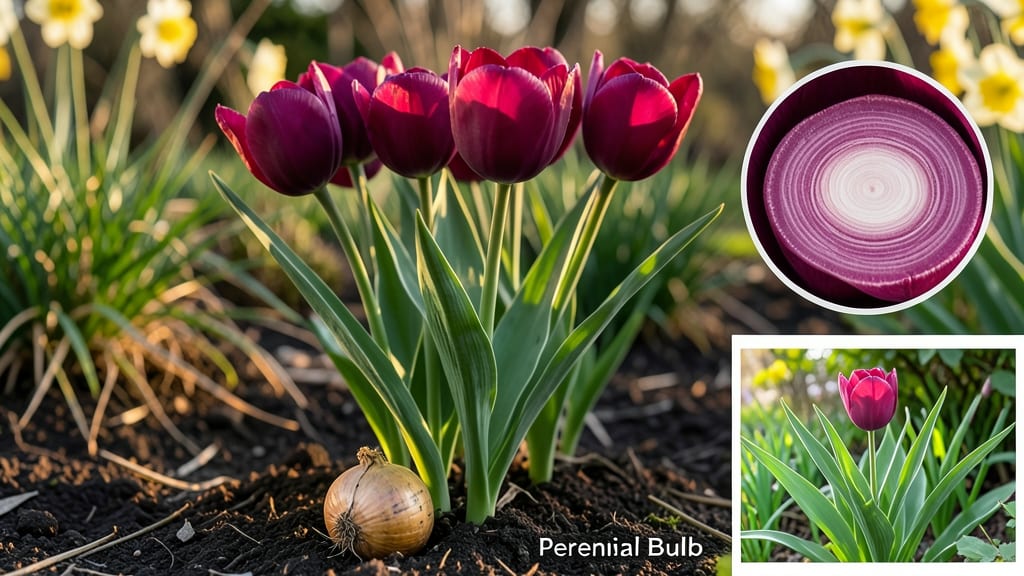
Tulips are perennials in ideal climates but often treated as annuals because their bulbs typically decline after flowering unless grown in USDA zones 3-8 with proper care and mulching. Most gardeners replant bulbs yearly to maintain vibrant blooms.
Tulips naturally return each year in their native habitats, but garden conditions often disrupt this cycle. 💐 The bulbs' lifespan hinges on factors like soil health, water drainage, and viral infections—common issues in home gardens.
In colder climates (zones 3-8), they can thrive for years with proper mulching and bulb division every 3-4 years. Even in warmer zones, many gardeners opt to replant yearly for consistent displays, as the original bulbs may weaken over time.
What sets true perennial tulips apart is their ability to regenerate foliage after blooming, which recharges the bulb for next season. Without this foliage, the bulb starves and eventually dies. This explains why many gardeners see tulips as annuals—they often miss the critical post-bloom care that keeps them perennial.
💡 In This Article
- Why Most Tulips Act Like Annuals in Gardens
- How to Extend Tulip Bulbs’ Lifespan as Perennials
Why most tulips act like annuals in gardens
Tulip bulbs naturally store nutrients underground to fuel their annual growth cycle, but this system is fragile. When tulips flower, they redirect energy from the bulb to produce blooms and foliage, leaving the bulb depleted.
Without proper post-bloom care, the bulb lacks the energy to regenerate for next season—this is why many gardeners see them as annuals. 💐 The key issue is viral infections, particularly tulip breaking virus, which weakens bulbs and shortens their lifespan to just 1-2 years in home gardens.
Climate plays a critical role too. Tulips thrive in USDA zones 3-8, where cold winters help them enter dormancy and recharge. In warmer zones (9+), bulbs may not get the necessary rest period, leading to premature decline.
Even in ideal climates, improper soil conditions—like poor drainage or compacted earth—strangle the roots, preventing the bulb from absorbing enough nutrients to persist. The average tulip bulb contains only 10-15% usable starch after flowering, leaving little reserve for regrowth.
Another factor is the 6-8 week foliage requirement after blooming. Many gardeners cut back tulip leaves too soon, starving the bulb of the photosynthesis it needs to rebuild. This is a common mistake—leaving foliage until it yellows naturally ensures the bulb stores enough energy to return the following year.
Without this care, the bulb simply shrinks and dies, mimicking an annual's behavior. 🌱
Soil health also impacts longevity. Tulips prefer well-draining, slightly acidic soil (pH 6.0-7.0) with a mix of organic matter. Heavy clay or sandy soils can suffocate roots or leach nutrients, respectively.
Even in perfect soil, over-fertilizing with high-nitrogen feeds encourages lush foliage but weakens the bulb's storage capacity. The result? Bulbs that look healthy above ground but fail to regenerate below it.
For comparison, wild tulips in their native Central Asian steppes often live for decades because they grow in nutrient-rich, well-drained volcanic soil and experience extreme seasonal temperature swings. In contrast, garden tulips face 3-5x more stress from pests, diseases, and inconsistent care, accelerating their decline.
This environmental mismatch explains why most garden tulips act like annuals despite their perennial classification.
Understanding these biological and environmental factors helps gardeners make informed choices. While tulips can be perennials, their short-lived nature in gardens stems from a combination of viral pressures, climate mismatches, and human care habits.
The good news? With targeted interventions—like proper mulching, delayed foliage removal, and bulb division—you can coax them to return year after year. 🌟