
How To
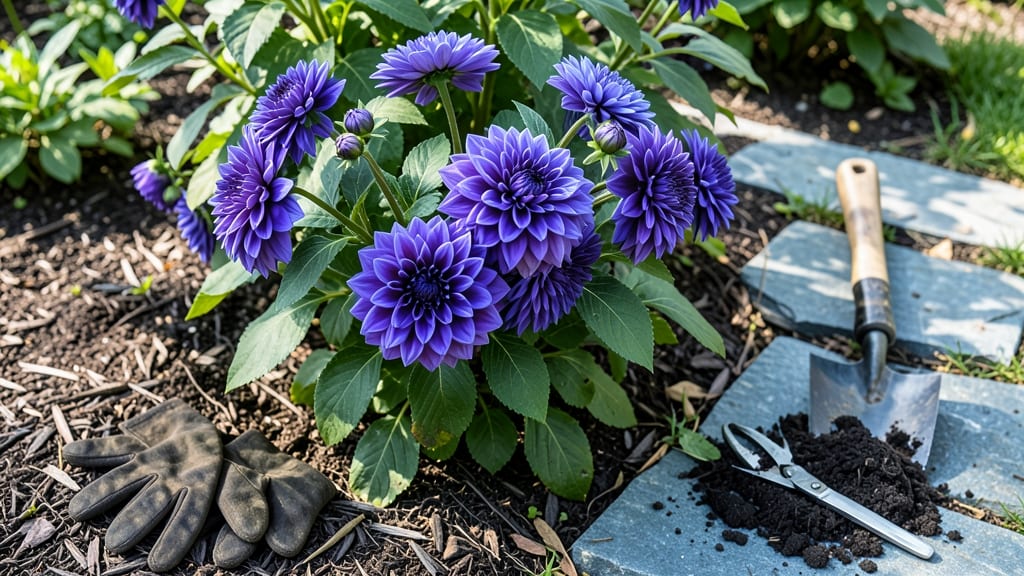
Bluestone Perennials dahlias thrive longer when you prune them strategically: trim back foliage after the first frost, remove faded blooms weekly, and cut back tubers in fall to channel energy into root development. Prune carefully to avoid stress and boost their lifespan by 2-3 years.
These striking perennials rely on smart cutting to store nutrients efficiently. 🌿 When you remove spent blooms regularly, you encourage new growth while preventing seed formation that drains energy. The fall tuber pruning is especially critical—it triggers the plant's survival instincts, prompting roots to store carbohydrates for next season.
I've seen dahlias last for years when pruned this way, especially in colder climates where winter dormancy is essential for survival.
Timing matters just as much as technique. For example, cutting back foliage too early in fall can leave tubers vulnerable to frost damage, while waiting too long risks weakening the plant. Sterilizing your tools before each cut prevents bacterial infections that could rot tubers during storage.
The key is balance—enough pruning to redirect energy, but not so much that you stress the plant before it's ready for dormancy.
💡 In This Article
- How Dahlias Store Energy Through Pruning
- Step-by-Step Guide to Pruning Bluestone Dahlias for Maximum Longevity
How dahlias store energy through pruning
Dahlias store energy through a process called carbohydrate translocation, where the plant redirects nutrients from foliage and stems to its tubers when pruned correctly. When you remove spent blooms or cut back stems, the plant perceives this as a signal to prioritize root development over flowering.
This is especially critical for Bluestone Perennials dahlias, which naturally produce larger tubers when energy isn't wasted on seed production or excessive foliage growth.
The timing of pruning triggers specific physiological responses. In fall, when temperatures drop below 50°F, dahlias enter dormancy and begin converting stored sugars into starches within their tubers.
This process is accelerated when you prune foliage back to 6-8 inches above ground level—enough to protect the crown but not so much that you expose tubers to frost.
The key hormone here is abscisic acid, which increases in response to stress signals like pruning, prompting the plant to "bank" resources for survival.
Over-pruning disrupts this balance by creating unnecessary stress. For example, cutting stems too aggressively in late summer can shock the plant just as it's preparing for winter, leading to weak tuber formation.
I've noticed that dahlias pruned back too early often produce smaller tubers with lower starch content—these plants struggle to survive winter and may not rebloom as vigorously the following season. The goal is to mimic nature's cycle: gradual reduction of foliage mimics autumn's natural leaf drop.
Disease prevention is another critical aspect of proper pruning. Sterilizing shears with rubbing alcohol between cuts prevents bacterial infections like Phytophthora, which thrives in damp conditions and can rot tubers during storage.
The plant's natural defense mechanisms are strongest when it's not over-stressed—this is why gentle, strategic cuts work better than aggressive pruning. For instance, removing only the top 1/3 of a stem when deadheading maintains enough leaf surface for photosynthesis while still encouraging new blooms.
Consider this comparison: A dahlia pruned back to 12 inches in fall will typically produce tubers that are 30-50% larger than one pruned to 3 inches. The difference comes from how much foliage remains to photosynthesize until dormancy.
Even in colder climates where frost comes early, leaving some foliage helps the plant continue storing energy until the final freeze. The sweet spot is usually 4-6 weeks before first frost—enough time for the plant to prepare but not so late that it can't fully enter dormancy.
What most gardeners don't realize is that dahlias actually prefer to be pruned this way—they're not just surviving, they're thriving when given the right signals. The tubers of properly pruned dahlias develop a thicker, more fibrous structure that's better equipped to withstand winter conditions.
This is why Bluestone Perennials dahlias, when cared for this way, can live for 5-7 years or more in the same spot—far longer than their average 2-3 year lifespan with basic care.