
Orchid Care
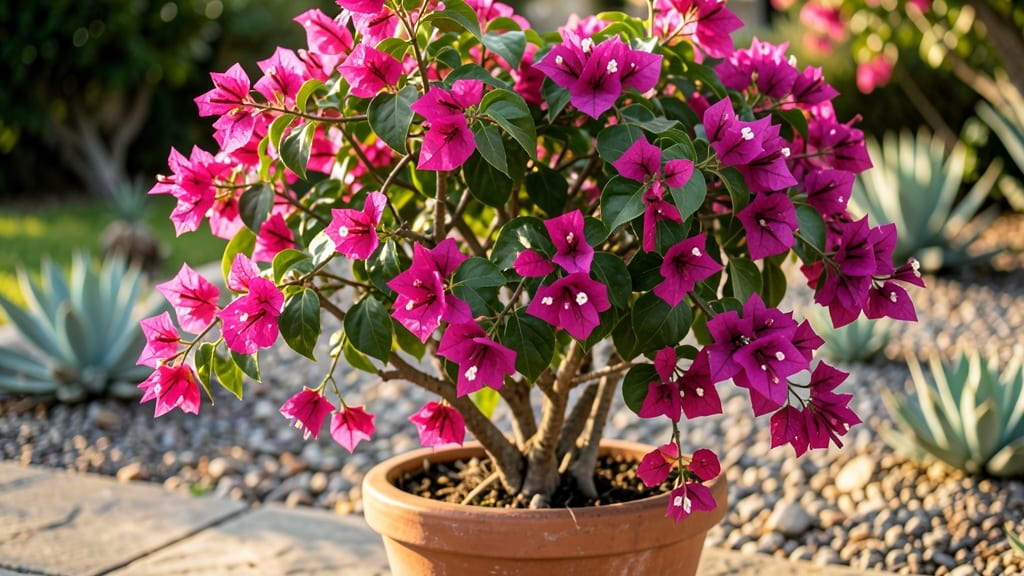
Whether bougainvillea grows as a perennial or annual depends entirely on your climate zone: it thrives year-round in USDA Zones 10-11 but freezes back to the ground in colder regions unless you take protective measures. Hardy varieties like Bougainvillea spectabilis can handle brief cold snaps, while tropical types need winter shelter or relocation to survive.
Understanding bougainvillea's behavior comes down to temperature thresholds. In frost-free zones, these plants naturally persist through all seasons, blooming repeatedly. 🌿 However, when temperatures dip below 25°F, most varieties suffer irreversible damage to their woody stems, forcing them to regrow from the base each spring.
The key difference lies in cultivar selection: native South American species like Bougainvillea glabra handle cooler weather better than their tropical cousins. For gardeners in marginal zones (like Zone 9), strategic overwintering—whether through mulching or container protection—can extend their bougainvillea's lifespan beyond a single season.
What sets bougainvillea apart is its remarkable resilience when given proper care. Unlike true annuals that complete their lifecycle in one growing season, bougainvillea's dormant phase in cold climates is more like a strategic pause rather than true death.
This makes it possible to cultivate them successfully even in cooler regions with the right preparation. The plant's ability to regenerate from its root system each spring is what gives growers hope for year-after-year color, provided they protect it during the critical winter months.
💡 In This Article
- How Temperature Zones Determine Bougainvillea’s Lifespan
- Winter Care Strategies for Bougainvillea in Cold Climates
How temperature zones determine bougainvillea’s lifespan
Bougainvillea's survival hinges on a delicate balance between temperature and cellular integrity. The plant's woody stems contain vascular tissues that begin to suffer irreversible damage when exposed to sustained temperatures below 25°F.
This threshold triggers a cascade of physiological responses: cell membranes rupture, water transport systems collapse, and the plant's ability to photosynthesize shuts down completely. In USDA Zones 10-11, where winter temperatures rarely dip below 30°F, bougainvillea maintains its perennial status by continuing active growth year-round.
The key difference between hardy and tropical varieties lies in their genetic adaptations. Bougainvillea spectabilis, native to South America's cooler highlands, has evolved to tolerate brief cold snaps down to 20°F through a combination of thicker bark and deeper root systems that insulate the critical growth points.
In contrast, tropical varieties like Bougainvillea glabra originate from regions where nighttime temperatures never drop below 50°F, making them far more sensitive to frost. The plant's vibrant bracts (often mistaken for flowers) actually contain higher concentrations of water than the stems, making them particularly vulnerable to freeze damage.
What most gardeners don't realize is how microclimates can create exceptions to these rules. Even in Zone 8, a bougainvillea planted against a south-facing brick wall might experience temperatures 5-10°F warmer than the surrounding area due to heat absorption during the day.
This phenomenon, called the "urban heat island effect," can push marginal plants into perennial status when they might otherwise behave as annuals.
The plant's decision to enter dormancy isn't just about temperature—it's also triggered by day length, with shorter winter days sending biochemical signals that prepare the plant for potential cold stress.
Here's where things get interesting: bougainvillea's root systems can remain viable even after the above-ground portions die back. The roots contain meristematic tissue that can regenerate new growth when conditions improve in spring.
This is why many gardeners in Zones 7-9 report successful regrowth each year—what appears to be an annual plant is actually a perennial that's temporarily dormant. The critical factor becomes how much of the root system survives the winter intact, which depends on soil insulation and moisture levels.
Consider this comparison: In Zone 11, bougainvillea grows continuously with minimal stress, producing flowers throughout the year. In Zone 9, the same plant might experience 3-4 months of dormancy but still regenerate fully.
However, in Zone 8, the plant may only survive if protected, while in Zone 7, it typically behaves as a true annual unless given special overwintering care. The transition points between these behaviors occur at 5°F increments, demonstrating how precise temperature thresholds determine bougainvillea's lifecycle classification.
What sets bougainvillea apart from other tropical plants is its remarkable ability to regenerate from even small root fragments. Unlike many perennials that require substantial root mass to survive winter, bougainvillea can sprout new growth from just 1-inch root sections containing viable meristem.
This resilience explains why gardeners can often propagate bougainvillea from accidental winter survivors—even when the above-ground portions appear completely dead. The plant's survival strategy combines both perennial and annual characteristics, making its classification particularly nuanced.