
Pests and Diseases
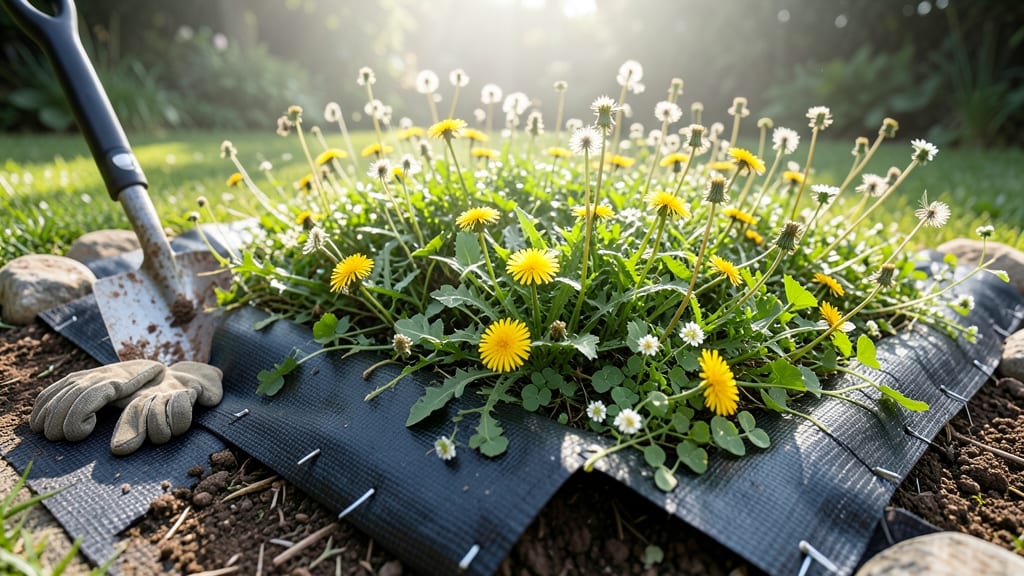
You can put landscape fabric over weeds to slow their growth by cutting off sunlight, but it won’t kill existing roots or prevent them from returning. The fabric also blocks weed seeds from sprouting while helping soil retain moisture and reducing competition for nutrients in garden beds.
Landscape fabric works primarily by creating a physical barrier that starves weeds of light, which is essential for photosynthesis. 🌱 This method is particularly effective for preventing new weeds from establishing themselves, but established plants with deep roots may still push through over time.
I’ve found that combining fabric with a thick layer of mulch creates a more robust weed suppression system while also improving soil health by regulating temperature and moisture levels.
For best results, secure the fabric tightly to avoid gaps where weeds can sprout, and consider adding a pre-emergent herbicide along the edges for extra protection. This approach is especially useful in high-traffic garden areas where manual weeding would be impractical.
💡 In This Article
- How Landscape Fabric Affects Weed Growth and Soil Health
- Best Practices for Using Landscape Fabric Against Weeds
How landscape fabric affects weed growth and soil health
Landscape fabric works by creating a physical barrier that blocks 90-95% of sunlight from reaching weed seeds and established plants.
Weeds rely on photosynthesis to grow, so depriving them of light essentially starves them at the source. 🌱 The fabric’s woven polypropylene structure—typically 0.8-1.2 millimeters thick—allows water and air to pass through while preventing weed stems from piercing through.
This is why you’ll often see weeds bending or breaking at the fabric’s surface rather than growing through it.
The fabric’s impact on soil health is twofold: it regulates temperature and moisture. During summer, it can reduce soil surface temperatures by 10-15°F compared to bare soil, protecting plant roots from heat stress. In winter, it provides a slight insulating effect, preventing rapid temperature fluctuations.
Additionally, the fabric helps retain 20-30% more moisture in the soil by reducing evaporation, which is especially beneficial in drought-prone areas. However, this moisture retention can also create a damp environment that may encourage fungal growth if the fabric isn’t properly ventilated.
One common misconception is that landscape fabric will completely eliminate weeds. In reality, it primarily suppresses growth rather than killing existing roots.
Many perennial weeds, like dandelions or creeping Charlie, have deep root systems that can persist beneath the fabric and regrow when conditions allow. 🌿 The fabric’s effectiveness depends on its thickness and how securely it’s installed—gaps or tears can become entry points for new weeds.
Over time, organic matter decomposition slows beneath the fabric because it blocks light needed for microbial activity, which can gradually reduce soil fertility if not managed properly.
Another important factor is how the fabric interacts with beneficial soil microbes. While it doesn’t harm most soil organisms, it can create a barrier that limits the movement of earthworms and other beneficial creatures.
These organisms help aerate the soil and break down organic matter, so their reduced activity beneath the fabric can lead to more compacted soil over time.
To mitigate this, many gardeners recommend using fabric with a 3-4 inch layer of mulch on top, which allows some organic material to decompose while still suppressing weeds.
For long-term use, landscape fabric typically lasts 5-10 years before breaking down from UV exposure and physical stress. As it degrades, its weed-suppressing abilities diminish, and the fabric may even start to contribute to soil compaction.
This is why many experts recommend replacing it every few years or using biodegradable alternatives like cardboard or thick layers of newspaper if you’re planning a temporary solution. The key is balancing weed control with soil health to maintain a thriving garden ecosystem.