
Landscaping
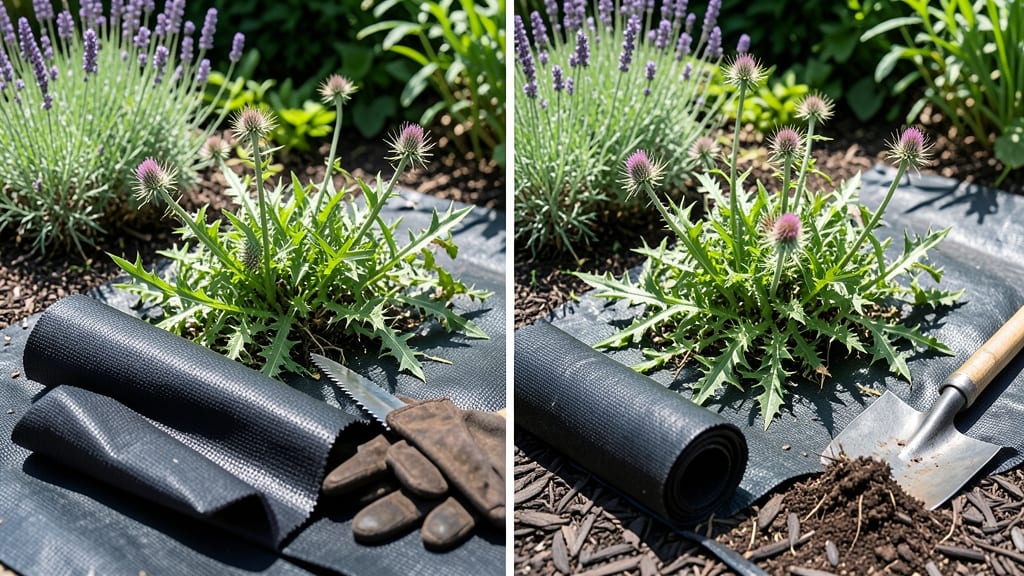
You absolutely need to remove weeds before laying landscape fabric, as buried weeds will sprout through the fabric over time, defeating its purpose and forcing you to dig up and replace the entire installation.
Weeds don't just compete with your plants—they actively sabotage landscape fabric by sending roots through even the smallest tears or gaps. 🌱 The fabric's job is to block weeds, but if you bury living weeds, their roots will eventually punch through, creating new pathways for seeds to grow.
I've seen cases where homeowners spent hundreds on fabric only to have weeds reappear within months because they skipped this critical step. The solution? Kill weeds before installation using either manual removal or targeted herbicides, then monitor the area for any new sprouts before covering it completely.
Pro tip: For stubborn weeds, apply a pre-emergent herbicide two weeks before laying fabric to prevent new seeds from germinating. This two-step approach—eliminate existing weeds first, then block future growth—is what makes landscape fabric actually work as intended.
Skipping either step turns your fabric into an expensive weed barrier that fails within a year.
💡 In This Article
- How Weeds Undermine Landscape Fabric Performance
- Step-by-Step Weed Removal Before Installing Fabric
How weeds undermine landscape fabric performance
Weeds don't just grow on landscape fabric—they actively work to destroy it from the inside out. The roots of even small weeds like crabgrass or clover can exert up to 50 pounds of pressure per square inch as they search for nutrients.
This force creates microscopic tears in the fabric's woven structure, especially in areas where the fabric stretches over rocks or uneven terrain. Over time, these tears expand into gaps large enough for new weed seeds to sprout through, turning your fabric into a sieve rather than a barrier. 🌱
The real damage happens at the soil-fabric interface. When you bury weeds, their roots continue growing downward while sending up new shoots that push through the fabric's weave.
Some aggressive weeds, like bindweed or nutgrass, produce roots that can penetrate up to 6 feet deep and grow horizontally for 30+ feet, creating an underground network that completely bypasses the fabric's intended function.
Even "dead" weeds left in the soil will decompose and release seeds that germinate right through the fabric, ensuring your weed problems persist.
There's also the soil displacement factor. Weeds with extensive root systems disrupt soil compaction, creating air pockets that allow moisture to evaporate faster. This dries out the soil beneath the fabric, weakening plant roots while creating ideal conditions for weed seeds to germinate.
The fabric itself becomes a moisture trap—condensation forms on its underside, creating a damp microclimate perfect for fungal growth and new weed sprouts. This is why landscapes with buried weeds often develop a mushy, anaerobic soil layer beneath the fabric, where nothing grows except stubborn weeds.
What most people don't realize is how weed seeds exploit fabric weaknesses. Landscape fabric has average pore sizes of 0.05 to 0.1 inches, which blocks most seeds—but not all.
Dandelion seeds (0.02 inches) and chickweed seeds (0.03 inches) can slip through these gaps, while larger seeds like crabgrass (0.08 inches) wait for fabric tears to emerge.
The fabric's intended 90% blockage rate drops to nearly 0% effectiveness when weeds are already present in the soil, because the roots create permanent pathways for new growth.
Consider this comparison: A properly installed weed barrier with pre-cleared soil maintains its effectiveness for 5-7 years, while fabric laid over living weeds fails within 12-18 months. The cost difference?
Replacing fabric and redoing the landscape can run $500-$2,000 per 100 square feet, depending on the area's size and terrain complexity. The initial weed removal might take 2-4 hours of effort, but it saves you from this expensive rework down the line.
Here's the biological kicker: Weeds like creeping charlie and wild violet produce chemicals called allelochemicals that inhibit other plants' growth. When buried, these chemicals seep into the surrounding soil, creating a hostile environment for your desired plants while still allowing weeds to thrive.
This chemical warfare turns your landscape fabric into a one-way system—weeds get nutrients, your plants get suppressed, and you get a landscape that looks like it's fighting itself. 🌿