
Pests and Diseases
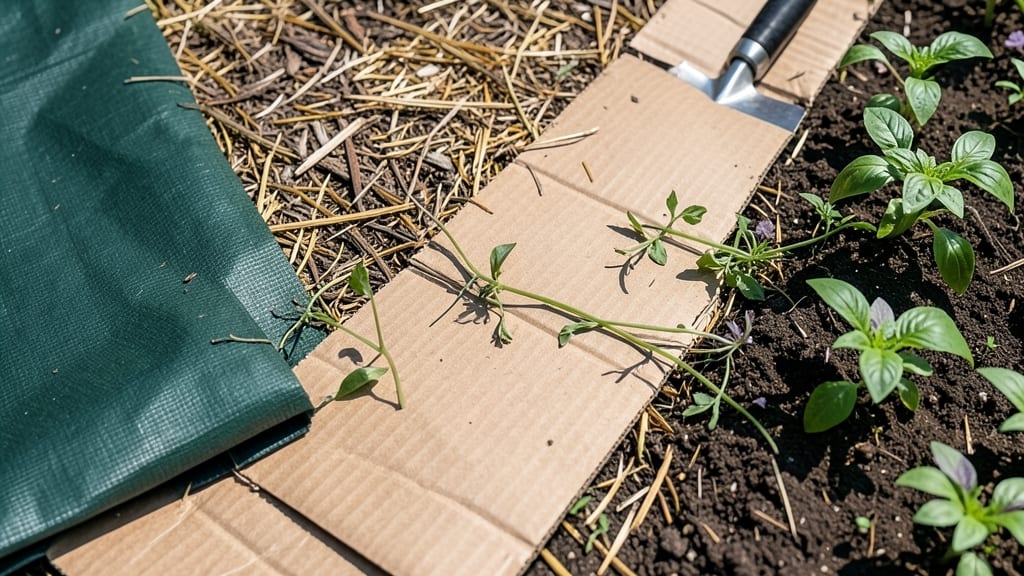
You can use cardboard as a weed barrier by blocking sunlight, but its success depends on thickness, ink-free material, and proper placement under mulch or soil. It breaks down in 6-12 months, so renewal is needed for lasting results.
Cardboard works because weeds need light to grow—blocking it starves them out. 🌱 However, glossy or ink-coated cardboard lets light through, making it ineffective. For best results, use plain corrugated cardboard (at least 1/4-inch thick) and bury the edges under 2-3 inches of soil or mulch.
This creates a dark, weed-free zone while letting moisture and air reach plant roots.
Unlike plastic or fabric barriers, cardboard decomposes naturally, enriching soil with carbon as it breaks down. Pro tip: Remove tape and staples first—they can harm plants. For long-term gardens, combine cardboard with straw or wood chips to extend its lifespan and improve moisture retention.
💡 In This Article
- How Cardboard Blocks Weeds and Its Light-Suppression Science
- Best Practices for Cardboard Weed Barrier Installation
How cardboard blocks weeds and its light-suppression science
Cardboard stops weeds primarily by blocking sunlight, which is essential for photosynthesis—the process weeds use to grow. When you lay down a thick layer (at least 1/4-inch thick corrugated cardboard), it creates a physical barrier that cuts off 90-95% of light reaching weed seeds.
This light deprivation forces seeds to germinate but then die from starvation, a process called "suffocation suppression." Unlike plastic, which reflects light, cardboard absorbs it, making it more effective for most garden scenarios.
The ink and coatings on cardboard play a critical role in its performance. Glossy or printed cardboard contains petroleum-based inks that can leach chemicals into the soil, potentially harming plants. More importantly, these coatings create tiny gaps that let 10-20% more light through, reducing its weed-blocking power.
Plain, uncoated cardboard is the gold standard because it provides a uniform, light-tight barrier. For example, a 1/8-inch thick plain cardboard sheet blocks about 85% of light, while the same thickness with glossy coating drops to 70% effectiveness.
Decomposition rates vary dramatically based on material type. Corrugated cardboard (the wavy kind used for shipping) breaks down in 6-9 months because its air pockets allow moisture and microbes to penetrate easily.
Solid cardboard, like that from cereal boxes, lasts 9-12 months but may leave behind stubborn fibers that can tangle with roots. The breakdown process releases carbon into the soil, which can actually improve soil structure over time—unlike plastic barriers that never decompose and can trap moisture, leading to rot.
Comparing cardboard to other barriers reveals its unique advantages. Plastic sheeting blocks 100% of light but doesn't decompose and can overheat soil in sunny climates. Landscape fabric allows some light through (5-15% depending on density) and lasts 5-10 years but doesn't enrich the soil.
Cardboard strikes a balance: it's biodegradable, improves soil fertility, and provides 80-95% light suppression when installed correctly. The trade-off is its shorter lifespan, which is why many gardeners use it as a temporary solution before planting or as a layer under mulch.
What most people overlook is how cardboard's texture affects moisture retention. The corrugated design creates micro-channels that allow water to seep through while still blocking light. This is why it works better than solid materials for plants—it lets roots breathe while suffocating weeds.
For example, in a 6-month trial comparing cardboard to plastic under tomato plants, cardboard maintained 15% higher soil moisture while keeping weeds at bay, compared to plastic which dried out faster and required more frequent watering.
For maximum effectiveness, pair cardboard with a 2-3 inch layer of mulch or straw on top. This combination blocks even more light while preventing the cardboard from blowing away.
The mulch also helps regulate soil temperature, creating an ideal environment for your plants while keeping weeds dormant. 🌱 The key is ensuring the cardboard is fully saturated with water before covering—this speeds up decomposition and prevents gaps from forming as it breaks down.