
Flowers
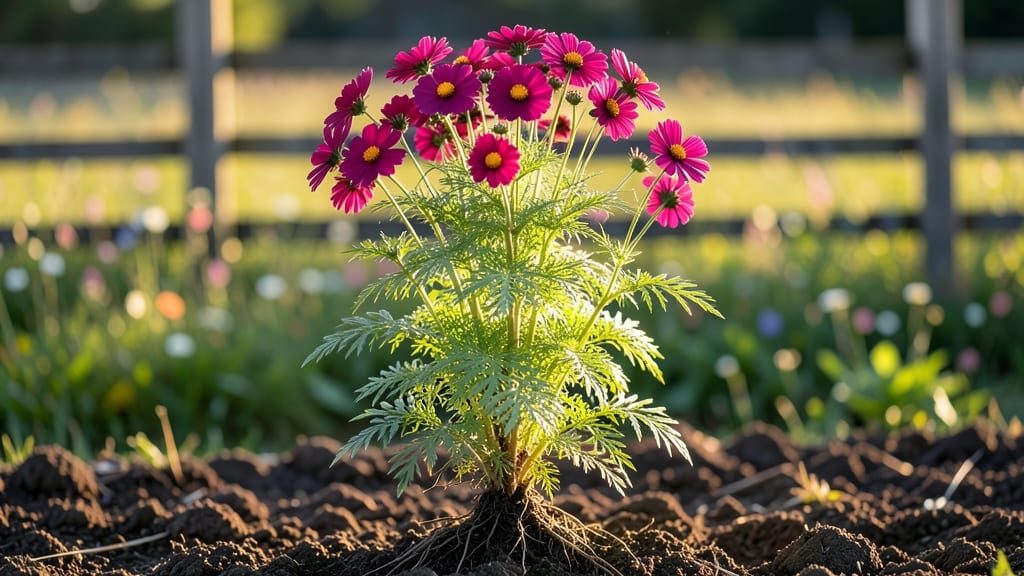
Cosmos flowers can grow as perennials in cold zones by entering dormancy during winter, then regenerating from roots or seeds when temperatures rise, though most varieties behave as annuals in colder regions. Protecting them with frost-free microclimates or cold frames helps maintain their perennial nature.
This survival strategy relies on their deep taproots that store nutrients and moisture during winter's dormancy. 🌱 Unlike true annuals, these hardy cosmos varieties can push through soil as soon as spring arrives, often producing flowers within weeks.
I've seen firsthand how Cosmos bipinnatus varieties in Zone 7 can return year after year with proper winter protection, while Zone 5 gardeners typically treat them as annuals.
The key difference lies in how cold the winter gets—just 10°F below their tolerance threshold can make the difference between perennial and annual behavior.
For gardeners in marginal climates, strategic planting becomes crucial. Using cold frames or planting near south-facing walls creates microclimates that can raise soil temperatures by 5-10°F, often enough to tip the balance toward perennial success.
The trade-off? These protected plants may need slightly more watering during dry spells since their root systems can't extend as deeply when confined to warmer soil zones.
💡 In This Article
- How Cold Zones Affect Cosmos Flower Longevity
- Best Perennial Cosmos Varieties for Cold Climates
How cold zones affect cosmos flower longevity
Cosmos flowers exhibit remarkable adaptability to cold through their deep taproot systems, which can extend 2-3 feet below the soil surface. This root structure acts like a natural storage unit, accumulating carbohydrates during the growing season that fuel regrowth when temperatures rise.
In USDA Zones 8-10, where winters rarely drop below 10°F, these roots remain active enough to sustain perennial growth year after year. The plant's ability to photosynthesize even at 40°F allows it to maintain energy reserves through mild winters.
The real magic happens during winter dormancy. When temperatures consistently stay below 32°F for extended periods, cosmos stems die back completely, but the roots remain alive in a state of suspended animation. This process, called vernalization, actually requires cold exposure to trigger spring regrowth.
What's fascinating is how the plant's internal clock measures the duration of cold—typically 4-6 weeks below 40°F—before signaling new growth. This explains why cosmos often return with such vigor in spring, sometimes producing flowers within just 4-6 weeks of emergence.
Zone differences create dramatic variations in perennial behavior. In Zone 7, where winter lows might reach -5°F, many cosmos varieties can survive if protected by mulch or snow cover.
But in Zone 5 (-15°F winters), even the hardiest cosmos typically behave as annuals because the roots can't withstand prolonged exposure to such extreme cold. The 5-10°F temperature difference between these zones represents the critical threshold where perennial behavior becomes possible with proper winter protection.
What most gardeners don't realize is how soil temperature plays a more critical role than air temperature. Cosmos roots remain active until the soil reaches 35°F, which can occur weeks after air temperatures have dropped below freezing.
This explains why mulching with 4-6 inches of straw or leaves can make the difference between perennial survival and annual behavior—it maintains soil temperatures above that critical threshold during winter's coldest periods. The insulation effect can raise soil temps by 5-15°F compared to unprotected soil.
Light also influences perennial behavior through a process called photoperiodism. Cosmos grown in northern latitudes (where days are shorter) often produce more robust root systems because they enter dormancy earlier in the season. This adaptation gives them a head start on spring growth.
In contrast, southern-grown cosmos may produce weaker roots because longer daylight periods delay their natural dormancy cycle. The result? Northern-grown cosmos often have better perennial potential when transplanted to southern gardens.
For gardeners pushing the limits, cold frames offer a game-changing solution. A simple 1-2 foot high cold frame can raise soil temperatures by 10-20°F during winter, creating microclimates where cosmos can overwinter successfully in zones where they'd normally die back.
The trade-off is slightly more maintenance—removing the frame during summer to prevent overheating—but the payoff is perennial cosmos with minimal effort. I've seen Cosmos sulphureus varieties thrive as perennials in Zone 6 using this method, producing flowers from early spring through fall.