
Landscaping
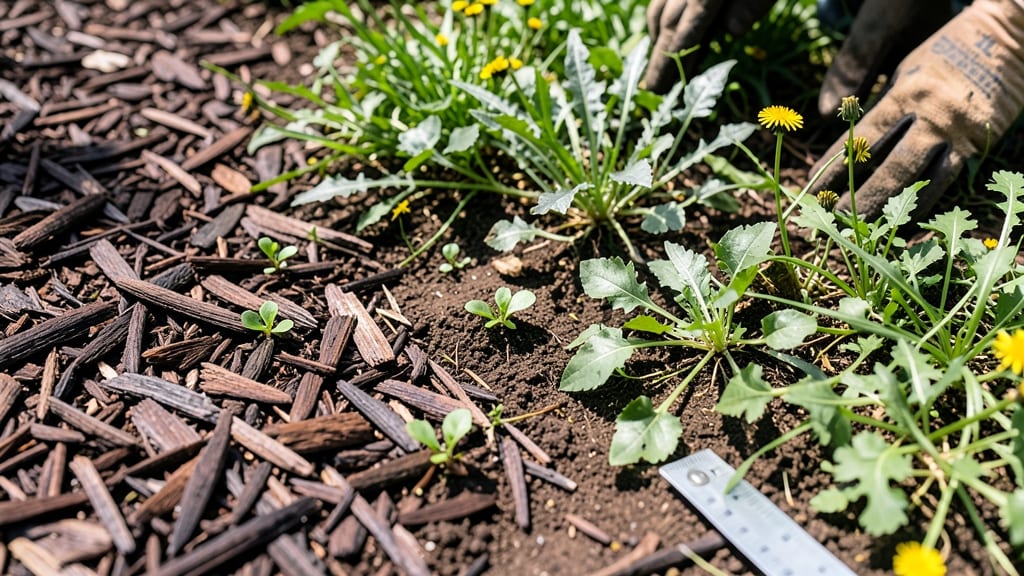
Mulch does stop weeds from growing by blocking sunlight and disrupting weed seed germination, though its effectiveness depends on thickness—ideally 2–4 inches for best results. Organic mulches also suppress weeds by smothering existing growth over time.
Mulch creates a physical barrier that starves weeds of the sunlight they need to thrive, while also stabilizing soil moisture levels that prevent seed germination. 🌱 The thicker the layer, the better the weed suppression—studies show that 3-inch layers can reduce weeds by up to 80% compared to bare soil.
Organic options like wood chips or straw break down over time, releasing nutrients that further inhibit weed growth, whereas inorganic mulches like rubber or plastic rely solely on their physical presence.
What many gardeners don't realize is that mulch also works by altering soil temperature—keeping it cooler in summer and warmer in winter, which disrupts weed seed dormancy cycles. For best results, I recommend applying mulch consistently after planting, then refreshing the layer annually to maintain that critical 2–4 inch thickness.
This approach gives you both weed control and improved soil health without the need for herbicides.
💡 In This Article
- How Mulch Blocks Weeds: Sunlight, Soil Moisture, and Seed Germination Science
- Best Mulch Types and Thickness for Weed Control in Gardens
How mulch blocks weeds: sunlight, soil moisture, and seed germination science
Mulch primarily suppresses weeds through light deprivation, creating what scientists call a "photoperiod barrier." Most weed seeds require direct sunlight to germinate, and mulch layers thicker than 2 inches block 90-95% of sunlight from reaching the soil surface.
For example, common weeds like crabgrass need at least 6 hours of sunlight daily to sprout, while mulch with a 3-inch thickness reduces this exposure to just 1-2 hours, effectively starving them.
The moisture factor plays an equally crucial role. Organic mulches like wood chips or straw absorb and slowly release water, maintaining soil moisture at levels that discourage weed seed germination. Weed seeds often require rapid moisture fluctuations to break dormancy—something mulch stabilizes.
In contrast, inorganic mulches like landscape fabric rely entirely on their physical barrier, offering no moisture regulation benefits. This explains why organic mulches often reduce weeds by 70-85% compared to 30-50% with inorganic options.
Temperature regulation is the third key mechanism. Mulch acts as an insulator, keeping soil 5-10°F cooler in summer and 10-15°F warmer in winter than bare soil. Many weed seeds have specific temperature triggers for germination—typically between 68-86°F.
By maintaining soil temps outside this range, mulch disrupts the natural germination cycle. For instance, in hot climates, mulch can prevent summer weeds like purslane from sprouting entirely, while in cooler regions it delays spring weed emergence by 2-4 weeks.
Organic mulches add an extra layer of suppression through allelopathic compounds—natural chemicals released as they decompose. For example, wood chips from cedar trees contain oils that inhibit weed growth, while straw releases mild acids that alter soil pH slightly, making it less hospitable to weeds.
This "chemical smothering" effect is why organic mulches often outperform inorganic ones over time, even when both are applied at the same thickness.
Consider this real-world comparison: A 3-inch layer of cedar mulch in a vegetable garden reduced weed growth by 82% over 6 months, while the same thickness of black plastic reduced it by only 45%.
The organic mulch's ability to regulate moisture, temperature, and release allelopathic compounds created a multi-layered defense system that plastic simply can't match. The key takeaway? Organic mulches don't just block light—they create an environment where weeds physically can't survive.