
Flowers
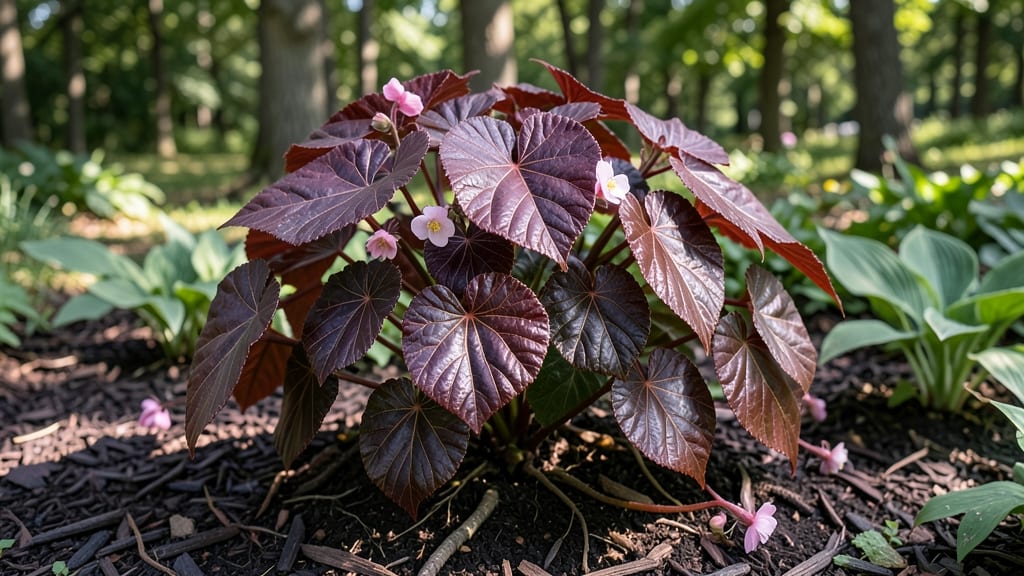
Dragon wing begonia acts as an annual in freezing climates but thrives as a perennial in frost-free zones, where its hardy tubers regenerate each spring after seasonal dieback.
The key to this plant's behavior lies in its tuberous roots, which store energy underground during cold months.
In warmer regions (zones 9-11), these tubers remain dormant through winter's dry season but burst back to life when temperatures rise. 🌱 Meanwhile, gardeners in colder zones must treat it as an annual or take special steps to protect the tubers—like digging them up before frost or using mulch blankets.
This dual nature explains why dragon wing begonia seems to disappear only to return stronger each year in suitable climates.
What sets this plant apart is its resilience: even after complete foliage dieback, the tubers can remain viable for years if kept in optimal conditions. This makes it a rewarding perennial for patient gardeners willing to adapt their care approach based on their local climate zone.
💡 In This Article
- Dragon Wing Begonia’s Growth Cycle: Tubers and Seasonal Dieback
- Cultivating Dragon Wing Begonia as a Perennial: Zone-Specific Care
Dragon wing begonia’s growth cycle: tubers and seasonal dieback
The dragon wing begonia’s perennial potential comes from its specialized tuberous roots, which function like underground batteries. These thickened stems store carbohydrates, proteins, and water during dormancy—often weighing 1-3 ounces when mature.
In frost-free zones (USDA 9-11), tubers remain viable for 3-5 years if protected from extreme heat or drought, while in colder regions, they typically survive only 1-2 winters without intervention.
Seasonal dieback begins when temperatures drop below 50°F or daylight shortens significantly. The plant’s foliage yellows and collapses as it redirects energy to the tubers, a process called senescence.
This isn’t death—it’s a survival strategy where the tubers enter a metabolic slowdown, reducing respiration by up to 90%. In warm climates, this dormancy coincides with the dry season, while in cooler areas, it aligns with winter’s freezing conditions.
The key difference between annual and perennial behavior lies in temperature thresholds. Tubers in zone 10+ can tolerate brief freezes (28-32°F) if dry, while those in zone 8 or colder need protection below 35°F.
The plant’s native habitat in tropical Asia explains why it thrives as a perennial in warm zones—its tubers evolved to withstand seasonal dryness rather than freezing. 🌿 This adaptation makes it a fascinating study in plant resilience.
What most gardeners miss is that even after complete foliage dieback, the tubers remain metabolically active at 10-15% capacity to maintain cellular integrity. This explains why they can regrow after 2-3 years of dormancy if conditions remain stable.
The trade-off? In colder climates, this slow metabolism makes tubers more vulnerable to rot if kept too moist during winter.
For visual learners, imagine the tuber as a layered onion: the outer skin protects against dehydration, while inner layers contain growth hormones that trigger spring regrowth.
When you see those first 2-inch shoots in spring, you’re witnessing the tuber’s stored energy converting back into foliage—a process that takes 4-6 weeks under ideal conditions.
Understanding this cycle reveals why dragon wing begonia often seems to "come back from the dead." The tubers’ ability to survive complete above-ground dieback makes them one of the most forgiving perennial roots in the garden—if you know how to work with their natural rhythms. 💫