
Orchid Care
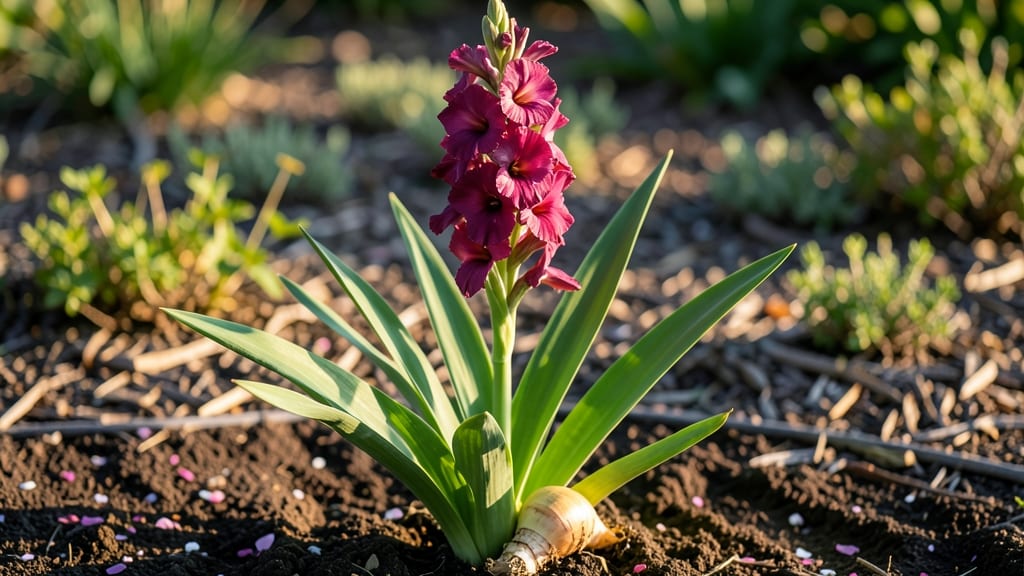
Gladiolus bulbs are technically perennial but treated as annuals because their foliage dies back each fall, requiring winter protection or replanting of fresh bulbs for regrowth. Their lifespan depends on climate and care.
Gladiolus bulbs confuse many gardeners because they behave like annuals despite being perennial plants. 🌱 The key difference lies in their cold sensitivity—when temperatures drop below 30°F, the foliage withers, and the bulbs enter dormancy.
Unlike hardy perennials such as daffodils, gladiolus bulbs don't naturally survive freezing winters without intervention. In milder climates, you can sometimes coax them back with proper overwintering techniques, but most gardeners simply replace bulbs each season for reliable blooms.
What sets gladiolus apart is their energy cycle. After flowering, the bulbs redirect nutrients to storage, leaving them vulnerable to winter dieback. This natural process explains why they're often grown as annuals—even though they could theoretically return if given the right conditions.
The trade-off? Fresh bulbs each year guarantee vibrant blooms, while overwintering requires careful soil prep and protection, which isn't always practical for home gardeners.
💡 In This Article
- Why Gladiolus Bulbs Appear Annual Despite Perennial Classification
- How to Extend Gladiolus Lifespan in Different Climates
Why gladiolus bulbs appear annual despite perennial classification
Gladiolus bulbs are classified as perennials because they have the biological potential to regrow each year—but their behavior in most gardens makes them function like annuals. The core reason lies in their cold sensitivity: these tropical-origin plants can't tolerate temperatures below 30°F for extended periods.
When frost hits, the foliage turns brown and dies back, leaving the bulbs seemingly "dead" until spring. This dieback isn't true death but a survival mechanism called dormancy, where the bulb conserves energy until conditions improve.
The energy depletion process begins after flowering. Gladiolus redirect nutrients from leaves to the bulb during late summer, leaving them with minimal reserves by winter. Unlike hardy perennials like daffodils (which store energy in 10-15°F tolerance) or tulips (with 5-10°F hardiness), gladiolus bulbs lack the protective layers to survive freezing.
Their thin, papery tunics offer no insulation—imagine wrapping a bulb in tissue paper versus the thick, waxy coating of a tulip bulb. This biological difference explains why most gardeners replant fresh bulbs annually rather than risk overwintering failures.
Here's where climate plays a critical role: in USDA Zones 8-10 (mild winters), gladiolus can sometimes survive with proper mulching (4-6 inches of straw or leaves). But in colder zones (5-7), even well-protected bulbs often fail to regrow.
The bulbs' natural dormancy cycle also differs from true perennials—they require 6-8 weeks of consistent warmth (60°F) before sprouting, while daffodils can break dormancy in 4-6 weeks at 50°F. This delayed emergence gives frost a second chance to damage emerging shoots.
What most gardeners miss is the bulb's corm vs. tuber distinction. Gladiolus grow from corms (solid, bulb-like structures) that produce new corms annually. Each year's growth is smaller unless given ideal conditions—similar to how a potato's "eyes" produce smaller tubers.
Without proper care, these corms weaken over time, leading to fewer or smaller blooms. This gradual decline is why replanting fresh corms every 2-3 years yields better results than struggling with weakened stock.
Consider this comparison: a daffodil bulb stores enough energy to push through snow, while a gladiolus bulb would shrivel like a dried apple left in winter. The key difference is their evolutionary origin—daffodils evolved in Europe's cold climates, while gladiolus thrives in Africa's warm, dry seasons.
This tropical heritage explains why they're often grown as annuals despite their perennial classification.
For those attempting overwintering, the critical window is late fall. After foliage dies back, cut stems to 2 inches above the corm and apply mulch before ground freezes. The goal is to maintain soil temps above 32°F—like insulating a house's foundation.
Without this protection, even healthy corms can suffer frost damage to their growth points, similar to how a frozen seed packet loses viability.