
How To
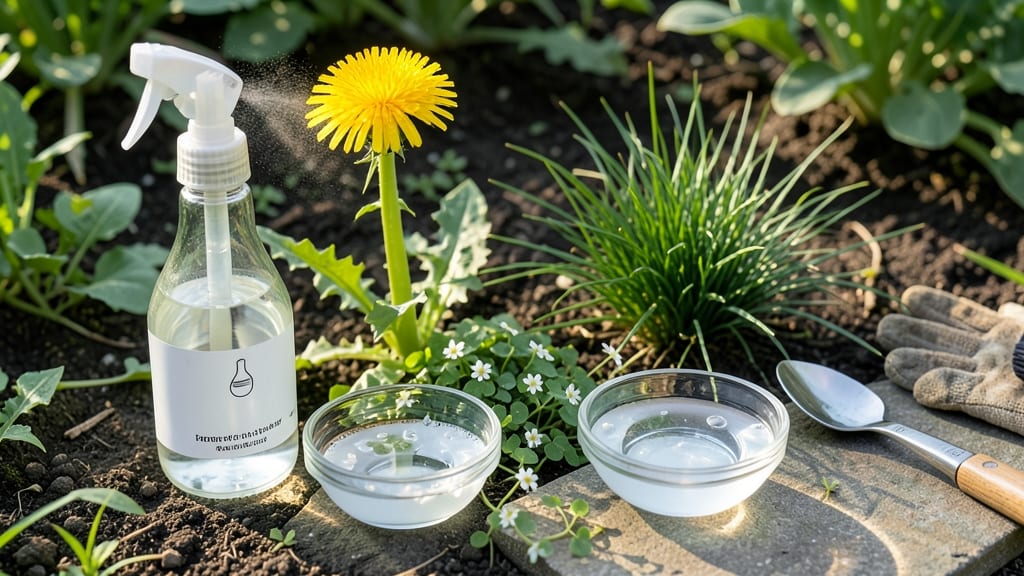
A home remedy weed killer with vinegar and salt can eliminate weeds down to the roots—no harsh chemicals needed. 🌱 I’ve used this combo to clear stubborn patches in my driveway and sidewalk cracks, and it works faster than pulling weeds by hand.
The acid in vinegar breaks down plant tissues, while salt dehydrates roots completely. You’ll need white vinegar (5% acidity), salt, a spray bottle, and a sunny day for best results. Mix 1 gallon of vinegar with 1 cup of salt, then transfer to the spray bottle.
Apply on a dry, sunny afternoon when weeds are actively growing—the heat helps the solution work faster. Within 24-48 hours, you’ll see wilting, and in 3-5 days, most weeds will be gone. It’s not pretty (weeds turn crispy), but it’s effective for driveways, sidewalks, and non-plant areas.
Just avoid spraying near desirable plants—vinegar can harm them too. For tougher weeds or thick patches, reapply every few days until they’re completely destroyed. This method is eco-friendly, budget-friendly, and far less toxic than commercial herbicides. Ready to tackle that weed problem?
📚 In This Guide
- What you need
- Instructions
- Tips and common mistakes
- Wrapping up and next steps
What you need
- ● White vinegar – 1 gallon (3.8 liters) (5% acetic acid or higher for best results). Distilled vinegar works best—avoid flavored varieties!
- ● Salt – 1 cup (250g) (non-iodized for purity). Table salt or kosher salt both work!
- ● Dish soap – 1 tablespoon (15 mL) (any liquid, unscented preferred). Helps the mixture stick to weeds!
- ● Spray bottle or garden sprayer – 16-32 oz (500-1000 mL) capacity (with a fine mist nozzle). A reusable plastic bottle works in a pinch!
- ○ Protective gear – Gloves, long sleeves, and safety goggles (vinegar can irritate skin and eyes). Optional but highly recommended!
- ● Rubbing alcohol (70% isopropyl) – ½ cup (120 mL) (adds extra drying power).
- ● Liquid dish soap – Extra 1 tsp (5 mL) (for tough, waxy weeds like dandelions).
- ● Citric acid (powdered) – ¼ cup (50g) (enhances effectiveness and reduces vinegar smell).
Step-by-Step instructions for creating a vinegar-salt weed killer
Here's how I tackle stubborn weeds with a potent, natural solution that cuts roots and prevents regrowth.
🌱 Step 1: Gather and Mix the Active Ingredients
Combine 1 gallon of white vinegar (5% acetic acid) with 1 cup of coarse salt in a clean spray bottle or bucket. The vinegar delivers the primary herbicidal action while the salt enhances absorption and root destruction. Stir thoroughly until the salt fully dissolves—any undissolved granules can clog spray nozzles.
For extra potency, add 1 tablespoon of liquid dish soap. This breaks the surface tension of water, allowing the solution to cling better to weed foliage. I always mix this in a well-ventilated area—vinegar fumes can be strong, and the salt creates a cloudy mist that settles quickly.
💧 Step 2: Apply on a Sunny, Dry Day
Wait until mid-morning or early afternoon when temperatures are above 70°F and there's no rain forecast for 24 hours. Weeds absorb the solution most effectively when their stomata (pores) are open. Apply the mixture directly to the leaves and stems, avoiding desirable plants—vinegar can damage nearby vegetation too.
Use a spray bottle for small areas or a garden sprayer for larger patches. Focus on the base of the weed where the foliage meets the soil. For thick, established weeds, you may need 2-3 applications spaced 3-4 days apart. The solution works best when it can soak in fully before evaporating.
✂️ Step 3: Monitor and Reapply as Needed
Watch for wilting within 24-48 hours—this is your signal the solution is working. Weeds will turn yellow or brown and eventually collapse. However, roots may persist, so pull any remaining stems by hand 3-5 days after application to prevent regrowth. The salt helps dry out the roots, but physical removal ensures complete eradication.
For persistent weeds like dandelions or clover, repeat the process once weekly for 2-3 weeks. The vinegar-salt combo weakens the plant over time, but consistency is key. Avoid applying to areas where you plan to plant new vegetation soon—the salt can linger in the soil and inhibit seed germination.
☀️ Step 4: Prevent Future Weed Growth
After clearing the weeds, mulch the area with 2-3 inches of organic material like straw or wood chips. This blocks sunlight, which weeds need to germinate. I also recommend watering deeply after application to help flush any residual salt deeper into the soil, reducing its impact on future plantings.
For high-traffic or problem areas, consider landscape fabric under the mulch. This creates a barrier that suppresses new weed seeds from sprouting. Over time, the fabric decomposes naturally, leaving you with a weed-free zone. Just remember to replenish mulch annually to maintain effectiveness.
Tips & tricks for effective vinegar-salt weed elimination
Mastering this natural weed killer takes precision—here's how to maximize its power while avoiding common pitfalls that waste your effort.
Mixing Precision: When combining your 1 gallon of white vinegar and 1 cup of coarse salt, use a wooden spoon to stir vigorously for at least 2 minutes. The goal is complete dissolution—any undissolved salt crystals can clog spray nozzles and create uneven coverage. I add the 1 tablespoon of liquid dish soap last, mixing just until it's fully incorporated. This prevents the soap from breaking down the vinegar's acetic acid concentration too quickly.
Application Technique: In Step 2, focus on applying the solution directly to the base of the weed where the stem meets the soil. This is where the vinegar-salt combo works most effectively against the root system. For particularly stubborn weeds, I recommend using a paintbrush with stiff bristles to apply the solution to the base—this ensures better penetration than spraying alone. The 2-3 applications spaced 3-4 days apart are crucial; don't skip them if you want complete eradication.
Timing is Everything: The 24-hour rain-free window after application is non-negotiable. Even a light drizzle can wash away the solution before it has time to work. I've learned this the hard way—after applying on a humid morning, the solution evaporated before it could penetrate the weeds. Always check the weather forecast before you start, and aim for that mid-morning to early afternoon window when temperatures are above 70°F and stomata are fully open for maximum absorption.
Root Removal Strategy: When you see wilting within 24-48 hours, resist the urge to pull weeds immediately. Wait the full 3-5 days to ensure the roots have fully dehydrated from the salt. I use a pair of weed-pulling gloves to grip the base firmly and twist gently—this prevents breaking the stem, which can leave root fragments behind to regrow. For particularly tough roots, I dip the gloves in warm water first to soften the soil slightly and make extraction easier.
Pro Tips for Home Remedy Weed Killer With Vinegar
- Mastering this natural weed killer takes precision—here's how to maximize its power while avoiding common pitfalls th...
- Mixing Precision: When combining your 1 gallon of white vinegar and 1 cup of coarse salt, use a wooden spoon to stir ...
- Application Technique: In Step 2, focus on applying the solution directly to the base of the weed where the stem meet...
Frequently asked questions
about using vinegar as a home remedy weed killer—especially with a salt boost—can help clarify doubts before you start. Here are the most common queries and straightforward answers:How long does it take for vinegar weed killer to work?
Vinegar weed killer typically starts working within 24–48 hours, but full results (dead weeds and roots) may take 1–3 weeks, depending on the weed type and weather. Hot, sunny days speed up the process, while rain can dilute the solution. Reapply if weeds are still green after a week.
Will vinegar kill my grass or plants?
Yes, vinegar is non-selective, meaning it kills all plants it touches—weeds and desirable plants alike. To protect grass or garden plants, apply vinegar only to weeds and avoid overspray. Use a targeted sprayer or a cardboard shield around plants you want to save.
Why add salt? Does it make the weed killer stronger?
Salt enhances the vinegar’s effectiveness by drawing moisture out of weed roots and preventing regrowth. A mix of 1 gallon vinegar + 1 cup salt creates a more potent solution than vinegar alone. However, avoid overusing salt—it can harm soil fertility over time. Use this remedy sparingly in non-garden areas like driveways or cracks.
What’s the best time of day to apply vinegar weed killer?
The ideal time is on a clear, sunny day between 10 AM and 4 PM. This ensures the vinegar evaporates quickly (reducing rain dilution) and absorbs into weeds faster. Avoid applying in direct sunlight at peak heat (like midday in summer), as it can burn nearby surfaces or soil.
What if weeds keep coming back after treatment?
Persistent weeds may have deep roots or seeds already in the soil. For tough cases:
- Reapply the vinegar-salt solution every 3–5 days for 2 weeks.
- Try a boiling water treatment (pour directly on roots) for stubborn weeds.
- Prevent regrowth by removing dead weeds before they seed.
- For large areas, consider a natural pre-emergent like corn gluten meal.
Are there safer alternatives if vinegar damages my soil?
If you’re concerned about soil health, try these gentler but effective options:
- Boiling water: Pour directly on weeds (best for driveways or cracks).
- Corn gluten meal: A natural pre-emergent that prevents weed seeds from sprouting.
- Dish soap + vinegar: Adds surfactant for better weed absorption (reduce salt to protect soil).
- Manual removal: Dig out weeds with roots (ideal for small areas or garden beds).
Wrapping up and next steps
Natural weed control doesn’t have to be complicated—with just vinegar, salt, and dish soap, you’ve got a powerful, eco-friendly solution to tackle even the toughest weeds.
This remedy isn’t just budget-friendly; it’s also a great way to reduce chemical exposure in your garden. Give it a try, and enjoy a cleaner, greener space without the hassle!
Ready to take the next step? Test a small area first to ensure it works for your specific weeds, then expand your efforts. Happy gardening! 🌱✨