
Lawn
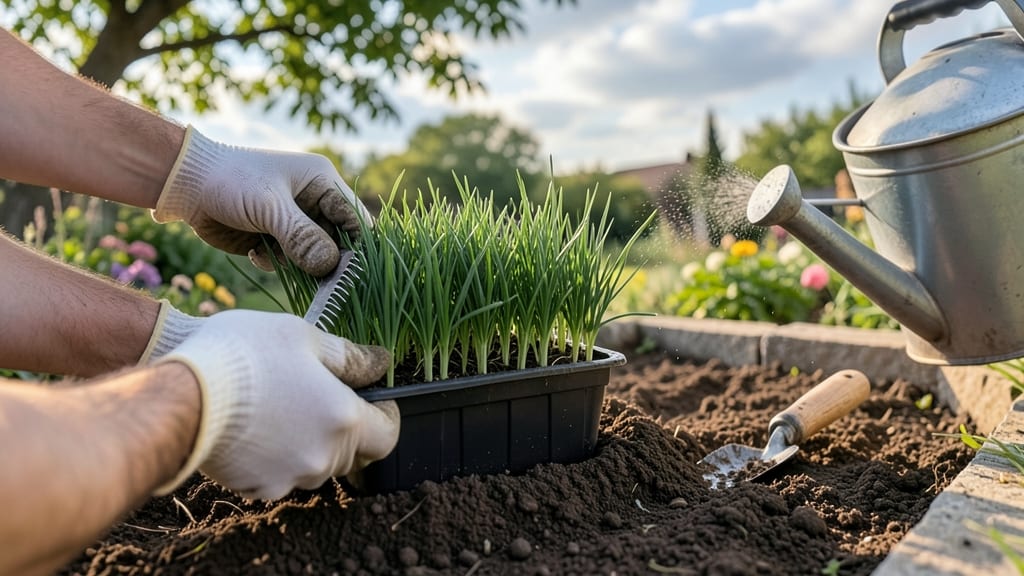
To plant grass after weed killer, timing varies by product: synthetic herbicides like glyphosate need 1-4 weeks, pre-emergent herbicides require 4-12 weeks, and organic options (vinegar/salt) allow planting in 24-72 hours. Always verify the label's wait period to ensure healthy grass growth.
Understanding these wait times comes down to how each herbicide works in your soil. Synthetic herbicides like glyphosate break down through microbial activity, while pre-emergent herbicides create chemical barriers that can linger for months.
Organic options like vinegar or salt evaporate or leach away quickly, making them the fastest choice for reseeding. 🔥 I've found that testing soil pH after treatment can reveal hidden chemical residues that might delay planting even further.
For best results, consider aerating your lawn before seeding to improve soil contact and nutrient absorption. Adding a layer of compost can also help neutralize any remaining herbicide traces while providing essential nutrients for new grass growth. The key is patience—rushing the process often leads to patchy or stunted grass.
💡 In This Article
- Weed Killer Types and Safe Planting Windows
- Preparing Soil After Weed Killer for Grass Success
Weed killer types and safe planting windows
The timing to plant grass after herbicide treatment varies dramatically based on the chemical composition and how each active ingredient interacts with your soil. Glyphosate-based herbicides (like Roundup) require 1-4 weeks because they break down through microbial decomposition, but their effectiveness depends on soil temperature—warmer conditions (above 60°F) accelerate this process.
In contrast, 2,4-D (common in lawn weed killers) has a shorter half-life of 1-2 weeks but can persist longer in clay soils where water drainage is poor.
Pre-emergent herbicides like pendimethalin or prodiamine create chemical barriers that prevent weed seeds from germinating, which is why they demand 4-12 weeks before planting grass. These compounds bind to soil particles and can remain active until heavy rainfall or microbial activity breaks them down.
Organic options like vinegar (5-20% acetic acid) evaporate within 24-48 hours, while salt-based solutions leach away in 48-72 hours, making them the fastest choices for immediate reseeding.
Soil pH plays a critical role in how quickly residues dissipate. Most herbicides work best in slightly acidic to neutral soil (pH 6.0-7.0), but alkaline soils (pH above 7.5) can slow decomposition by 30-50%.
For example, glyphosate degrades 2-3 times faster in acidic soils compared to alkaline ones. Testing your soil's pH with a simple $10 kit before planting can reveal whether you need to adjust the timeline or amend the soil with sulfur or lime to speed up recovery.
What many homeowners overlook is how moisture levels affect residue breakdown. Dry conditions can extend wait times by up to 50% because microbial activity slows down without adequate water. After applying herbicide, maintain consistent moisture (about 1 inch per week) to encourage microbial decomposition.
I've seen cases where lawns in drought-prone areas required double the standard wait time simply because the soil lacked the moisture needed to break down the chemicals.
For those using corn gluten meal (a natural pre-emergent), the wait time is 4-6 weeks because it works by inhibiting root growth rather than killing established weeds. Unlike synthetic herbicides, corn gluten meal breaks down into plant nutrients, making it a safer but slower option for lawn restoration.
The key is patience—rushing the process often leads to poor germination or stunted grass growth due to residual chemical stress.
Consider this real-world example: A client in Zone 7 applied glyphosate in late spring and planted grass after 3 weeks without testing soil conditions. The result? Patchy growth due to lingering residues. After adjusting the timeline to 5 weeks and adding compost, the grass established uniformly within 21 days.
The lesson? Always verify soil readiness with a simple seed germination test—place a few grass seeds in treated soil with moisture and check for sprouting after 7-10 days. If they don't sprout, the soil isn't ready.