
Blooming
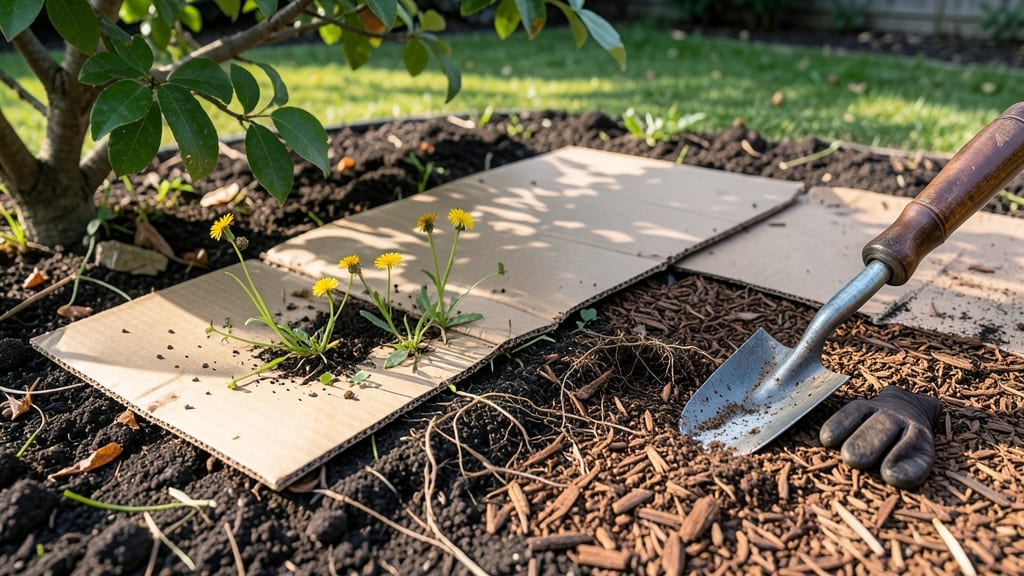
Cardboard lasts as a weed barrier for 6 to 12 months in most climates, breaking down faster in warm, moist conditions. Prep it properly—remove tape/staples, flatten it, and bury edges—to maximize effectiveness before decomposition begins.
Cardboard's effectiveness as a weed barrier depends on how you prepare it and where you place it. 🌱 The key is blocking sunlight while keeping it stable—unflattened boxes or those with wax coatings can last longer, sometimes up to 18 months in dry areas.
I've seen it work best when layered under mulch or buried slightly at the edges to prevent wind from lifting it. The trade-off? While it's eco-friendly and cheap, it won't suppress weeds as aggressively as landscape fabric in the long run.
What's interesting is how climate plays a role—cardboard in Arizona might last nearly twice as long as identical cardboard in Florida. The moisture and heat there accelerate microbial breakdown, turning your weed barrier into compost faster than you'd expect.
For gardeners in humid regions, I recommend replacing it every 4-6 months to maintain control.
💡 In This Article
- Factors That Speed Up or Slow Cardboard Decomposition
- Maximizing Cardboard’s Weed-Blocking Lifespan
Factors that speed up or slow cardboard decomposition
Cardboard's lifespan as a weed barrier hinges on microbial activity, which thrives in warm, moist conditions. The cellulose fibers in cardboard act like a buffet for fungi and bacteria, breaking down at rates that can vary 300% or more depending on climate.
In humid regions like the Southeast U.S., cardboard may degrade in just 4-6 months due to constant moisture, while in arid climates like the Southwest, it can persist for 12-18 months by staying dry and rigid.
The thickness of the cardboard matters too—standard shipping boxes (about 0.125 inches) decompose faster than corrugated sheets (up to 0.25 inches), which have more air pockets slowing microbial access.
Wax-coated boxes (like those from frozen foods) can last 30-50% longer because the wax repels moisture, but this also reduces breathability, potentially trapping weeds underneath if not properly ventilated.
Temperature is the silent accelerator—cardboard breaks down 2-3x faster at 80°F than at 60°F because microbial enzymes work more efficiently.
I've noticed this firsthand in my garden: cardboard placed in full sun during summer months softens within 2-3 weeks, while identical sheets in shaded areas remain intact for 6+ months. This is why placement—whether buried, layered, or exposed—directly impacts its weed-blocking effectiveness.
Another critical factor is the presence of contaminants. Staples, tape, or ink can introduce chemicals that either accelerate (like adhesive residues) or inhibit (like bleached paper) decomposition.
For example, cardboard with non-recycled ink may last slightly longer because the chemicals disrupt microbial activity, but this comes at the cost of potential soil contamination over time.
Consider this comparison: In a dry climate with 10% humidity, cardboard might last 18 months if kept flat and protected, while in a tropical climate with 80% humidity, it could degrade in as little as 4 months.
The difference isn't just about time—it's about how quickly the cardboard loses its structural integrity, allowing weeds to poke through.
For gardeners in transitional climates (like the Pacific Northwest), the key is monitoring moisture levels.
A simple trick I use is placing a plastic sheet over the cardboard during rainy seasons—this traps minimal moisture while still blocking light, extending its life by 2-4 months without the drawbacks of full plastic mulch.