
Blooming
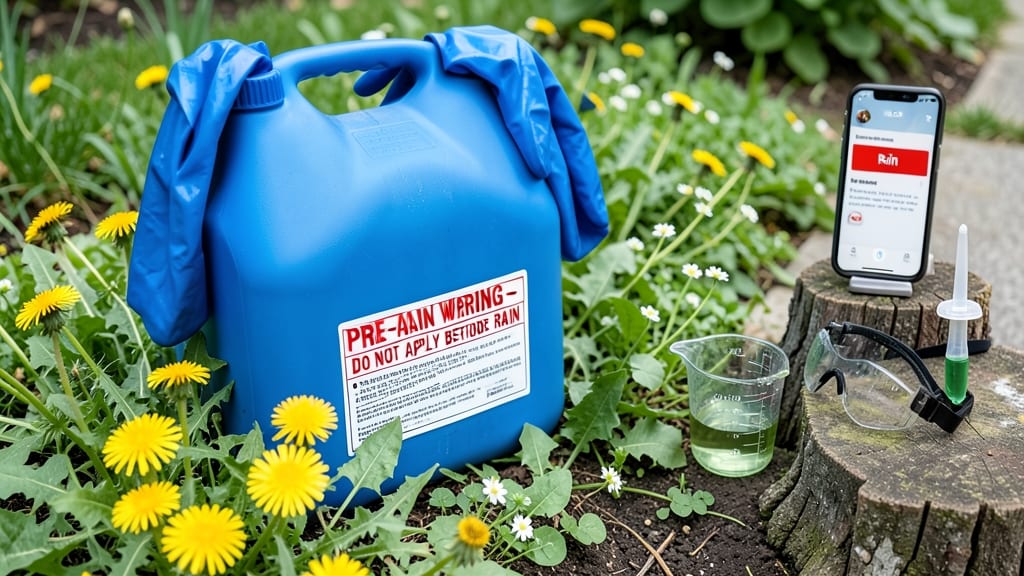
Waiting 24 to 48 hours before rain after applying weed killer is critical—most pre-emergent herbicides need this time to activate, while post-emergent sprays require 4 to 12 hours. Always check product labels for specific drying times to ensure effectiveness and avoid washing away active ingredients.
Rain can turn your weed-killing efforts into a waste of time and money.
The active ingredients in herbicides need time to penetrate plant tissues or bind to soil—anything from 4 hours for post-emergent sprays to 48 hours for pre-emergent formulas. 🌧️ For example, glyphosate-based products like Roundup need at least 6 hours of dry conditions, while 2,4-D formulations may require up to 12 hours.
Humidity and soil type can further extend this window, so always err on the side of caution when checking the forecast.
Even light rain can dilute concentrations below effective levels, reducing your herbicide's ability to kill weeds. Some products contain surfactants that help them stick to foliage, but these too can wash away if it rains too soon.
I recommend applying weed killer in the early morning when temperatures are cooler and humidity is lower—this gives the product the best chance to work before potential rain arrives.
💡 In This Article
- How Rain Affects Weed Killer Effectiveness
- Product-Specific Waiting Times for Common Weed Killers
How rain affects weed killer effectiveness
Rain disrupts weed killer effectiveness by interfering with the chemical's ability to bind to plant tissues or soil. Most herbicides work by either absorbing through leaf surfaces (post-emergent) or binding to soil particles (pre-emergent).
When rain hits too soon, it dilutes the active ingredients—like glyphosate or 2,4-D—below their required concentration to kill weeds. For example, glyphosate needs at least 6 hours of dry conditions to penetrate plant cuticles effectively, while 2,4-D requires 12 hours to fully absorb into weed foliage. 🌧️
The science behind this involves how rain physically washes away herbicides before they can complete their job. Post-emergent sprays rely on surfactants to help them stick to leaves, but even these can be rinsed off by light rain.
Pre-emergent herbicides, like those containing pendimethalin, need time to bind to soil particles and create a protective barrier against weed seeds. Rain can disrupt this process by either dissolving the active ingredients or moving them deeper into the soil, where they become less effective.
Humidity also plays a critical role. High humidity can cause herbicides to degrade faster, reducing their potency. For instance, in areas with 80% humidity or higher, the waiting period may need to be extended by 2-4 hours to compensate.
Additionally, the type of rain matters—heavy downpours are obviously worse than light drizzles, but even 0.1 inches of rain can significantly reduce effectiveness. Always check the weather forecast for both timing and intensity when planning your application.
Another factor is the chemical breakdown of herbicides. Many active ingredients, like triclopyr, are sensitive to moisture and can degrade prematurely if exposed to rain. This degradation isn't just about washing away the product—it's about the chemical structure breaking down before it can fulfill its intended purpose.
For instance, glyphosate breaks down more quickly in wet conditions, which is why waiting 24-48 hours is often recommended for this type of herbicide. 💧
Soil type also influences how rain affects weed killer. Sandy soils drain quickly, which can pull herbicides deeper into the ground, making them less effective against surface-level weeds. Clay soils, on the other hand, hold moisture and can trap herbicides near the surface, but they may also dilute concentrations faster.
This is why pre-emergent herbicides are often more effective in clay soils if applied correctly and given enough time to bind before rain arrives.
To maximize effectiveness, apply weed killer when the forecast shows dry conditions for the recommended waiting period. Early morning applications are ideal because temperatures are cooler, reducing evaporation and allowing the product to stay in place longer.
Always double-check the product label for specific instructions, as some formulations may require even longer drying times depending on the environmental conditions. 🌞