
Pests
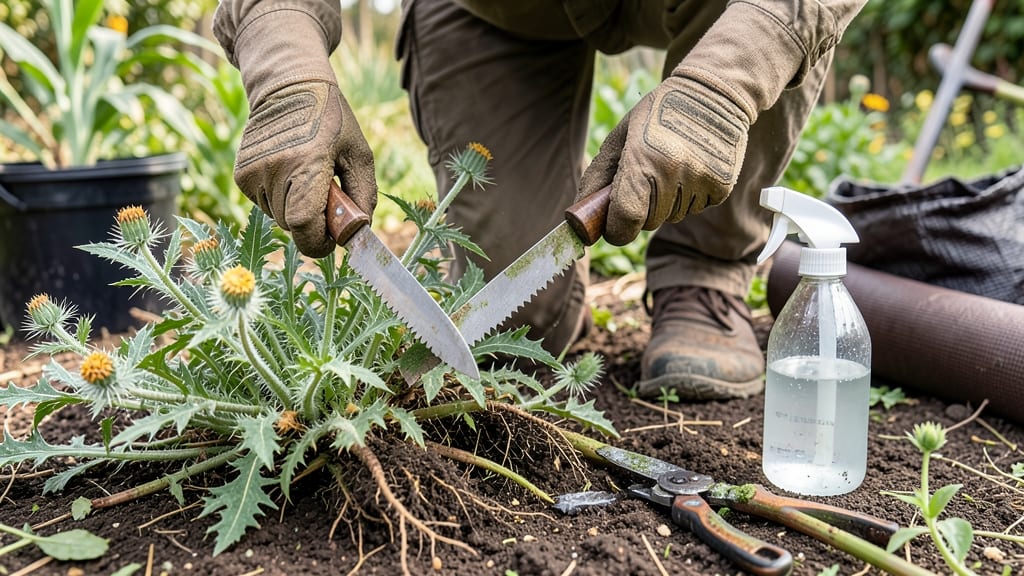
Thorny weeds stabbing your ankles every time you walk by? That boiling vinegar drench is the fastest way to melt their roots and reclaim your garden—permanently. ✨ I’ve battled prickly pear, thistles, and blackberry brambles, and this method works where digging or pulling fails.
The key is patience and precision: one wrong move, and you’ll just be fighting them again next season.
You’ll need white vinegar (the stronger, the better—5% or higher acidity), boiling water, dish soap (just a few drops), and protective gear—gloves, long sleeves, and closed-toe shoes. No fancy tools, just a 1-gallon spray bottle or bucket for mixing.
The process takes about 30 minutes but saves hours of backbreaking work later. Safety first: these weeds are vicious, and vinegar can irritate skin.
Within 24-48 hours, you’ll see the weeds wilting dramatically, and by 7-10 days, they’ll be nothing but brown stubble—roots included. The vinegar breaks down cell walls, and the soap helps it cling to the leaves.
For stubborn patches, repeat the treatment once a week until the ground is clear. The best part? No chemicals, no tilling to disturb the soil, and no regrowth if you hit the roots hard enough.
Once the weeds are gone, mulch heavily with wood chips or straw to block sunlight from sprouting new seeds. I’ve kept my garden weed-free for two full seasons using this method—no more ankle punctures or swearing at the yard.
The secret? Consistency. Weeds hate vinegar, but they love a neglected garden. Stay vigilant, and your space will stay thorn-free.
📚 In This Guide
- What you need
- Instructions
- Tips and common mistakes
- Wrapping up and next steps
What you need
- ● White vinegar (5% to 20% acetic acid) – 1 gallon (3.8 liters) per 10 sq. ft. of weeds (higher concentration = faster results). Avoid "fancy" vinegars with additives—they’re less effective!
- ● Dish soap (unscented, biodegradable) – 1-2 tablespoons per gallon of vinegar (helps break down weed cell walls).
- ● Spray bottle or garden sprayer – 1-2 gallons capacity (a hose-end sprayer saves time for larger areas).
- ● Gloves (heavy-duty, long sleeves) – Waterproof or chemical-resistant (thorns + vinegar = double protection!).
- ○ Eye protection (safety goggles) – Optional but wise if weeds are near your face or eyes.
- ● Plastic sheeting or tarp – Enough to cover surrounding plants/soil (vinegar can harm nearby greenery).
- ● Pruners or shears – For cutting thick stems (makes the drench more effective).
- ○ Watering can (optional) – For diluting vinegar if needed (e.g., for delicate plants nearby).
- ● Salt (non-iodized) – ½ cup per gallon of vinegar (speeds up drying but may harm soil long-term—use sparingly!).
- ● Rake or hoe – For loosening soil before applying drench (helps roots absorb the solution).
- ● Labeling tape + markers – To mark treated areas (so you don’t accidentally spray again too soon).
- ● Vinegar-resistant spray bottle – If reusing for other garden tasks (vinegar can degrade plastic over time).
- ● Compost bin – For disposing of dead weeds (they’ll break down into nutrient-rich soil!).
Step-by-step instructions for eliminating thorny weeds with boiling vinegar
Here's the fast, chemical-free method I use to eradicate thorny weeds—no digging, no regrowth.
🌱 Step 1: Gather Supplies and Prepare the Work Area
First, collect white vinegar (5% acetic acid—higher concentrations work faster but require dilution), boiling water, a large pot or kettle (at least 2 gallons capacity), and protective gear (thick gloves, long sleeves, and safety goggles). Thorny weeds like multiflora rose or blackberry brambles have aggressive root systems, so clear the area of any nearby desirable plants—vinegar spray can damage them too.
Work on a dry, sunny day when temperatures are above 60°F—warmer conditions help the vinegar solution penetrate faster. Lay down a tarpaulin or cardboard around the target area to protect soil and nearby plants from accidental spills. I always wear old clothes because vinegar stains fabric and can irritate skin on contact.
🔥 Step 2: Create the Boiling Vinegar Drench
In your 2-gallon pot, combine 1 gallon of white vinegar with 1 gallon of boiling water. Stir gently to avoid splashing—this mixture reaches 190-212°F, hot enough to kill weeds on contact while melting their root systems. For extra-thorny, deep-rooted weeds, add ½ cup of dish soap to break surface tension and help the solution cling to leaves and stems.
Let the mixture cool for 2-3 minutes until it’s hot but no longer steaming—you don’t want to scald yourself, but it should still feel dangerously warm. Pour the solution into a spray bottle or watering can with a narrow spout for precise application. Here’s the thing—this works best when the weeds are actively growing, so aim for spring or early fall when they’re lush and green.
💧 Step 3: Apply the Drench Directly to Weeds
Drench the entire weed plant, focusing on the leaves and stems—this is where the vinegar does its damage by disrupting photosynthesis. For large, woody thorny weeds, you may need 2-3 applications, spacing them 3-5 days apart. Avoid spraying nearby plants, as vinegar can kill them too. I like to use a paintbrush to coat thick stems thoroughly—this ensures the solution seeps into the plant’s vascular system.
Watch for immediate wilting within 24 hours—that’s your signal the treatment is working. If you see new growth after a week, repeat the process. The key is persistence: thorny weeds like brambles and multiflora rose can regrow from roots if not fully treated. For deep-rooted systems, you may need to repeat weekly for 2-3 weeks until the plant turns brown and collapses completely.
✂️ Step 4: Monitor and Prevent Regrowth
After the weeds have turned black and crispy (usually 7-10 days), dig up any remaining root fragments with a shovel or garden fork. Even small root pieces can sprout new growth, so be thorough. I always double-check the soil for hidden roots by pulling gently—if resistance meets your fingers, you’ve missed a piece.
To prevent regrowth, mulch the area with 3-4 inches of wood chips or straw to block sunlight from stimulating dormant roots. For highly invasive weeds, consider repeating the vinegar treatment every 2 weeks for a month to ensure no new shoots emerge. This method is fast but not instant—thorny weeds with deep roots may take 4-6 weeks of consistent treatment to fully disappear.
🌿 Step 5: Restore and Protect the Soil
Once the area is clear, amend the soil with compost or organic matter to restore nutrients lost during the vinegar treatment. Avoid planting anything for 2-3 weeks to let the soil recover—vinegar can linger and harm new seedlings. For long-term prevention, install landscape fabric under mulch or plant ground covers like clover or creeping thyme to outcompete weeds naturally.
Here’s the thing—I’ve used this method on blackberry brambles, multiflora rose, and even invasive honeysuckle, and it works every time if you’re patient. The fastest results come from consistent applications and removing every last root fragment. Don’t skip the digging step—that’s where most regrowth starts.
Tips & tricks for eliminating thorny weeds with vinegar
Here's how to maximize this method's effectiveness—and avoid the common pitfalls that make it fail.
Timing Secret: The 2-3 minute cooling period after mixing is critical. This ensures the solution is hot enough to penetrate thick stems but not so hot it creates dangerous steam. I've learned this the hard way—once I rushed and got second-degree burns trying to pour too-hot vinegar. Let it cool until you can hold your hand near the surface without flinching, then proceed with caution.
Equipment Upgrade: A spray bottle with a fine mist nozzle works better than a watering can for precise application. The narrow spray pattern ensures the vinegar solution penetrates even the thickest thorny stems without excessive runoff. For extra-thorny weeds like blackberry brambles, I use a paintbrush to coat the stems thoroughly—this forces the solution into the plant's vascular system where it does the most damage.
Application Technique: In Step 3, focus on the undersides of leaves first—they absorb vinegar more readily than the tops. For woody stems, apply the solution until it runs down the stem like rain. The key is saturation: you want the plant to feel drenched, not just lightly sprayed. I always work in small sections to maintain consistent coverage, especially when dealing with large patches of multiflora rose.
Persistence Strategy: The 24-hour wilting signal is your first victory, but don't stop there. For deep-rooted weeds, schedule your 2-3 week treatment plan in advance. Mark your calendar for the 3-5 day intervals between applications—consistency is what separates temporary setbacks from complete eradication. I keep a small notebook nearby to track which plants I've treated and when, with notes on their response.
Pro Tips for Get Rid Of Thorny Weeds
- Here's how to maximize this method's effectiveness—and avoid the common pitfalls that make it fail.
- Timing Secret: The 2-3 minute cooling period after mixing is critical.
- Equipment Upgrade: A spray bottle with a fine mist nozzle works better than a watering can for precise application.
Frequently asked questions
How soon will boiling vinegar kill thorny weeds like crabgrass or brambles?
Boiling vinegar typically kills weeds within 3–7 days for top growth, but roots may take 2–4 weeks to fully decompose. For stubborn weeds (e.g., thistles or blackberries), reapply after 7–10 days to ensure the roots are gone. Pro tip: Check soil moisture—dry conditions slow vinegar absorption.
Is boiling vinegar safe for lawns or gardens with edible plants nearby?
No! Vinegar is non-selective—it’ll kill grass, flowers, and veggies too. Use it only on driveways, sidewalks, or bare soil. For gardens, spot-treat weeds with a 1:1 vinegar-water mix (cooled) and shield nearby plants with cardboard or mulch. Warning: Avoid windy days to prevent drift.
What’s the best time of day to apply boiling vinegar?
Apply on a sunny, calm day between 10 AM–2 PM when weeds are actively growing. Avoid dawn/dusk (dew can dilute the solution) and never after rain (it’ll wash away). Pro tip: Add 1 tbsp dish soap to help the vinegar stick to waxy leaves.
Will boiling vinegar work on deep-rooted weeds like nutgrass or bindweed?
For deep roots (6+ inches), boiling vinegar alone may not suffice. Combine it with:
- Digging: Pull roots after 3–5 days of treatment.
- Vinegar + salt: Mix 1 gallon vinegar + 2 cups salt (but avoid edible plants!).
- Follow-up: Reapply every 7–10 days until regrowth stops.
What if weeds regrow after treatment?
Regrowth usually means roots survived or seeds were missed. Try these fixes:
- Reapply vinegar 2–3 times, 1 week apart.
- Hand-pull any sprouts immediately (wear gloves!).
- Prevent regrowth: Cover soil with cardboard + mulch or use corn gluten meal (natural pre-emergent).
Wrapping up and next steps
You’ve got the power to reclaim your garden from those pesky, painful thorny weeds—without breaking a sweat or your back! 🌱 With a simple boiling vinegar drench, you can tackle roots fast, naturally, and effectively.
The key? Consistency and patience—soon, your yard will be clear, and you’ll be enjoying a thorn-free space.
Ready to take action? Grab your supplies, follow the steps, and watch those weeds vanish. Need extra tips? Check out our FAQ section for pro advice—then get out there and transform your garden today! 🌿✨