
How To
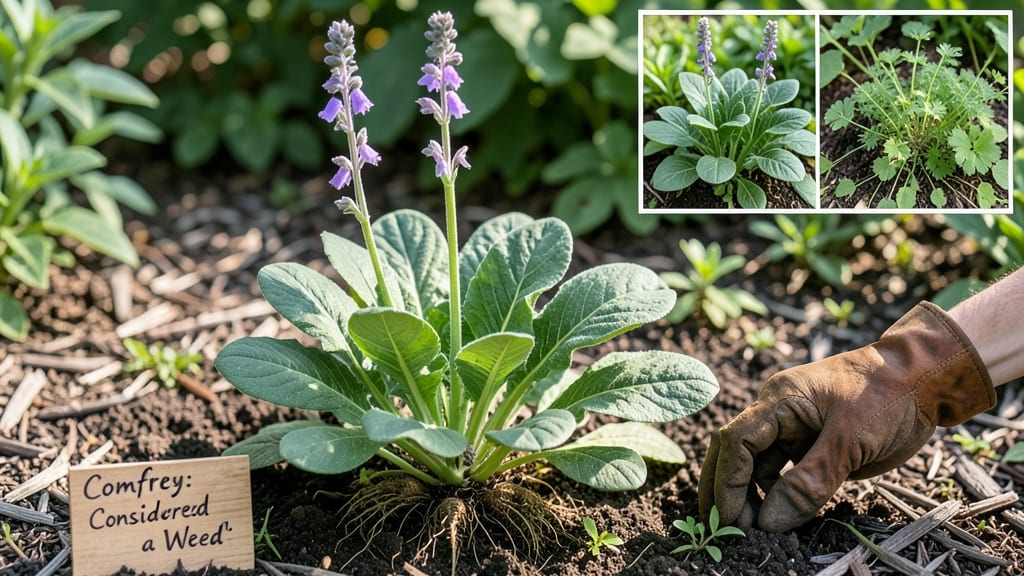
Comfrey isn't a weed—it's a highly invasive perennial that mimics weeds with its rapid spread and tough resilience. While gardeners prize its nutrient-rich leaves and deep roots, its aggressive growth requires strict control to prevent it from overtaking your garden.
Comfrey's reputation as a weed stems from its rhizome system, which allows it to spread underground and pop up anywhere in your yard. 💛 Unlike true weeds, though, comfrey has valuable uses—its leaves make excellent mulch or compost activator, and its roots help break up compacted soil.
The key is managing its growth before it becomes unmanageable, since it can quickly crowd out other plants if left unchecked.
Many gardeners actually cultivate comfrey in controlled spaces, like raised beds or containers, to harness its benefits without the chaos. For example, its high potassium content makes it perfect for fertilizing tomatoes and other heavy feeders.
However, its pyrrolizidine alkaloids mean it's toxic to livestock, so always keep it away from grazing areas.
💡 In This Article
- Why Comfrey Spreads So Aggressively in Gardens
- Practical Uses of Comfrey in Organic Gardening
Why comfrey spreads so aggressively in gardens
Comfrey's invasive nature stems from its rhizomatous root system, which can extend up to 6 feet deep and spread horizontally 10-15 feet in ideal conditions.
Unlike annual weeds that complete their life cycle in one season, comfrey grows as a perennial, sending up new shoots from these underground stems even after mowing or cutting. This makes it far more persistent than common weeds like dandelions or crabgrass, which rely on seeds for propagation.
The plant's rapid growth rate—up to 3 feet per year—combined with its ability to thrive in poor soil and low light, gives it a competitive edge.
Its large, hairy leaves (up to 2 feet long) create dense shade that smothers other plants, while its deep roots tap into water sources that shallow-rooted plants can't access. 🌱 What's particularly concerning is how easily comfrey fragments—even a small piece of rhizome can regrow into a new plant, making physical removal difficult without specialized tools.
Ecologically, comfrey's adaptability mirrors that of invasive species like kudzu or Japanese knotweed. It doesn't rely on seeds for spread (which many weeds do), making traditional herbicides less effective.
The plant's high biomass production—capable of generating 10 tons of green matter per acre annually—means it can quickly dominate landscapes, outcompeting native vegetation and altering soil chemistry through its nutrient accumulation.
Gardeners often compare comfrey to weeds because of its similar growth habits, but the key difference lies in its intentional cultivation. While weeds spread uncontrollably and harm ecosystems, comfrey's aggressive traits are harnessed in controlled settings.
For instance, its rapid growth makes it ideal for creating living mulch, but this same characteristic requires physical barriers like deep-rooted plants or buried edging to contain it in garden beds.
What most people don't realize is how comfrey's growth pattern actually benefits soil health when managed properly. Its extensive root system breaks up compacted soil, while its leaf litter provides continuous organic matter.
The challenge lies in balancing these benefits with its invasive tendencies—similar to how some gardeners grow mint in containers because of its aggressive spread, even though it has culinary uses.
For containment, many experienced gardeners recommend the "comfrey chop-and-drop" method: harvesting leaves regularly to starve the rhizomes of energy while still utilizing the plant's benefits. This approach turns what would be a weed's worst trait—its relentless growth—into one of its greatest assets for organic gardeners.