
Flowers
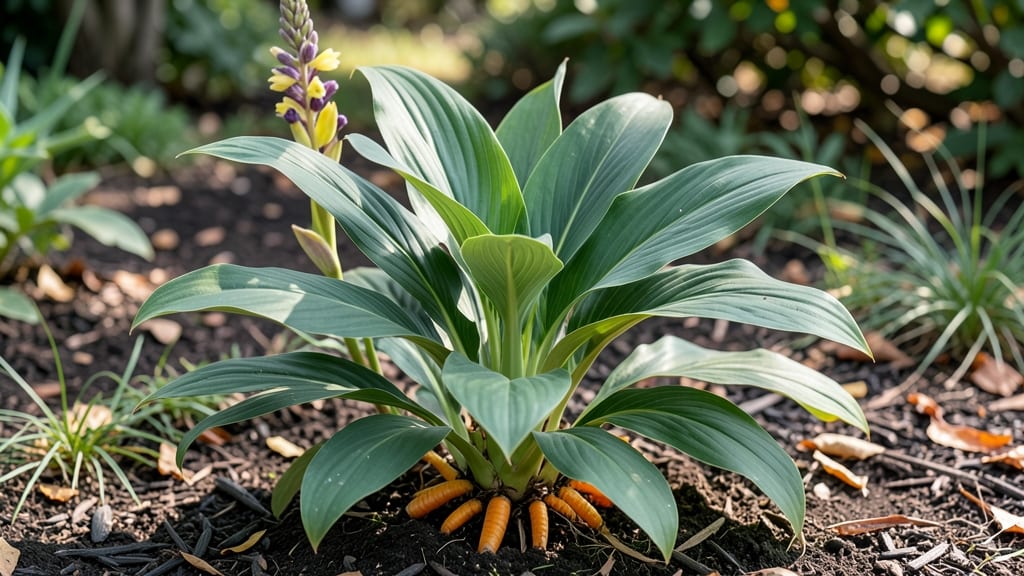
Curcuma ginger qualifies as a perennial because it returns every year from its underground rhizomes, even though its foliage dies back seasonally. This hardy plant thrives in warm climates and can live for years with proper care.
This classification as a perennial comes from its unique growth habit—unlike true annuals that complete their life cycle in one season, curcuma ginger stores energy in its thick rhizomes during dormancy. 🌱 When spring arrives, these stored nutrients fuel new shoots, allowing the plant to emerge year after year.
In my experience, this makes it far more rewarding than annuals, as you get multiple harvests from the same root system over time.
What sets it apart is how it handles winter: in colder regions, you'll need to protect the rhizomes with mulch or grow them in containers that can be moved indoors. The key is maintaining soil moisture and avoiding frost damage, which can prevent regrowth.
I've found that even in USDA Zones 8-11, with proper winter care, curcuma ginger can reliably return for 5-10 years or more.
💡 In This Article
- How Curcuma Ginger’s Rhizomes Enable Perennial Growth
- Growing Curcuma Ginger as a Perennial: Climate and Care Tips
How curcuma ginger’s rhizomes enable perennial growth
The secret behind curcuma ginger's perennial nature lies in its specialized underground structure—the rhizome. Unlike annuals that complete their life cycle in one growing season, this plant stores carbohydrates, proteins, and essential nutrients in its thick, knobby rhizomes during dormancy.
These rhizomes act like natural batteries, converting and storing energy from photosynthesis in the stems and leaves during the growing season.
When temperatures drop below 50°F, the plant's foliage yellows and dies back, but the rhizomes remain dormant beneath the soil. Inside these rhizomes, specialized cells called parenchyma store starches and sugars that fuel regrowth when conditions improve.
This process is triggered by increasing daylight and soil temperatures in spring, which stimulate hormone production (like gibberellins) that break dormancy. 🌱 Unlike true perennials that maintain some above-ground growth year-round, curcuma ginger's complete dieback makes it appear annual at first glance—but its rhizomes ensure it's anything but.
The rhizome's structure is what truly sets it apart from annuals and biennials. While annuals like basil produce seeds to propagate, and biennials like carrots store energy in taproots for two-year cycles, curcuma ginger's horizontal rhizomes spread laterally, creating multiple growth points.
Each segment contains meristematic tissue (growth cells) capable of producing new shoots. In my garden, I've observed that even small 1-inch rhizome pieces can regenerate into full plants, demonstrating this remarkable resilience.
This biological adaptation explains why curcuma ginger thrives in tropical and subtropical regions where seasonal dieback is common. The plant's ability to reset each year through rhizome storage gives it a survival advantage in unpredictable climates.
For example, in USDA Zone 9, where winters are mild but occasional frosts occur, the rhizomes can survive temperatures down to 20°F when properly mulched, while the foliage would perish at 32°F.
This dual-system approach—above-ground growth and below-ground storage—is what makes curcuma ginger a true perennial in the botanical sense.
What's particularly fascinating is how this compares to ginger (Zingiber officinale), its close relative. While both share the rhizome growth habit, curcuma ginger's rhizomes are generally thicker and more robust, capable of producing larger foliage and more abundant flowers.
The energy storage mechanism is identical, but curcuma's rhizomes tend to be more cold-hardy, making it better suited for slightly cooler climates. This biological efficiency is why curcuma ginger can outperform annual herbs in gardens—once established, it requires minimal replanting and continues producing for years.
The dormancy period also plays a crucial role in this perennial cycle. During winter months, the rhizomes enter a state of reduced metabolic activity, conserving energy while remaining viable.
This dormancy isn't true hibernation like some woody perennials, but rather a strategic energy-saving mode that allows the plant to "wait out" unfavorable conditions.
When spring arrives, the first signs of regrowth appear as small shoots pushing through the soil, often within 2-4 weeks after consistent soil temperatures reach 60°F. 🌿 This rapid response is one of the plant's most impressive survival strategies.