
Flowers
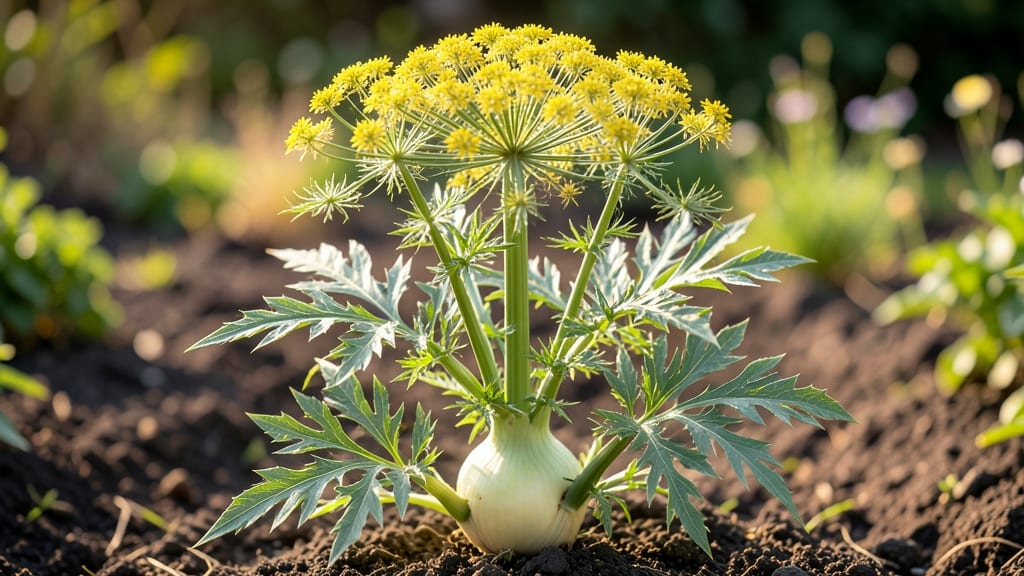
Fennel acts like a perennial in mild climates, but it's not truly perennial in most regions. Its hardy taproot can survive and regrow after winter, though freezing temperatures often kill it back completely, forcing gardeners to replant for new harvests each season.
Fennel's survival depends on where you live—think of it as a hardy annual with a stubborn taproot. 🌱 In zones 8-10, it often regrows from the same root, but in colder areas (zones 5-7), the plant typically dies back to the ground, leaving you to start fresh each spring.
The key difference? True perennials like asparagus or rhubarb survive winter above ground, while fennel relies on its root system—one that's easily damaged by frost.
This is why gardeners in colder climates often treat it as a biennial, harvesting leaves in the first year and flowers/seeds in the second before replanting.
For those wanting to maximize fennel's lifespan, mulching heavily with straw or leaves before the first frost can help protect the crown. Moving potted fennel to a garage or unheated shed during winter is another trick I've used successfully in zone 6.
The plant's resilience comes from that thick taproot, but don't expect it to bounce back like a true perennial—it's more like nature's version of a "restart" button for your garden.
💡 In This Article
- Fennel’s Growth Cycle: Why It Acts Like a Biennial
- How to Extend Fennel’s Lifespan in Different Climates
Fennel’s growth cycle: why it acts like a biennial
The botanical mechanics behind fennel’s growth explain why it behaves more like a biennial than a true perennial. In its first year, fennel focuses all energy on developing a robust taproot (often reaching 3-4 feet deep) while producing lush, feathery fronds for harvest.
This root system stores nutrients like a battery, allowing the plant to survive winter—but only if temperatures stay above 20°F. When frost hits, the above-ground growth dies back completely, leaving just the root in dormancy.
Here’s where it gets interesting: in its second year, that stored energy fuels the plant’s reproductive cycle. Fennel sends up a flower stalk (up to 6 feet tall) and produces seeds, completing its life cycle. The issue? Cold climates disrupt this process.
In zones 5-7, the taproot often succumbs to freezing soil, while in milder zones (8-10), it may regrow—but even then, the plant’s energy is exhausted after flowering. This is why fennel rarely returns year after year without human intervention.
The confusion arises because fennel’s taproot can survive, but survival ≠ perennial behavior. True perennials like rhubarb or asparagus regrow from crowns or rhizomes above ground, while fennel relies entirely on its root’s resilience—a strategy that fails when winter lasts longer than its storage capacity.
Think of it as a plant with a one-season memory: it remembers how to regrow, but only if conditions cooperate.
What most gardeners don’t realize is how soil temperature (not just air temperature) determines survival. Fennel’s taproot can tolerate 15°F soil temps briefly, but prolonged freezing (20°F for 2+ weeks) kills it.
This is why mulching with 12+ inches of straw adds a critical 10-15°F of insulation—a difference that can mean the gap between regrowth and replanting.
For visual learners, imagine fennel’s life cycle as a three-phase battery: Year 1 charges the root (leaf production), Year 2 discharges it (flowering), and Year 3? The battery’s dead unless you reset it.
This is why even in mild climates, fennel often needs replanting every 2-3 years—its energy reserves are finite, and winter’s unpredictability resets the clock.
The takeaway? Fennel’s taproot is its superpower, but it’s not a magic bullet. Without protection or strategic replanting, its biennial nature wins out every time. 🌱